Articles like this miss the main point and instead focus on culture war material. There are plenty of sites that would happily accept more nuclear being built, but all other forms of energy have undercut the cost of nuclear. It's no longer cost competitive, and places like China that adopt a "let's try everything and see what works best" approach have heavily pulled back on nuclear.
The issues aren't safety, waste, and environments opposition. There are plenty of climate hawks that support nuclear too. It's all excessive costs.
They briefly mention the cooling retrofits for Diablo Canyon in San Lui Obispo, but they don't mention that they bids from Bechtel to simply build a modern cooling system were all billions of dollars of expense. Just the cooling system is more expensive than alternatives.
And this is a trend we will see in the future. For primary generation of electrons, steam based thermodynamic cycles are pretty much obsolete. The number I typically hear is that it's $1-2W to build, say, a cooling system for coal steam. A nuclear plants cooling is pretty much identical. Solar and wind are going to undercut that cost very soon.
So the name of the game is now storage. Attaching four hours of storage to a solar generation farm, just enough to get through the duck curve, is now slightly cheaper than coal.
The best estimate of what the cheapest possible future grid looks like is: solar/wind capacity at 4x of total demand (thermal generators are roughly at 2x on the current grid), with 3-4 days of storage. This translates to world with abundant energy, at certain times, that's generated at zero marginal cost. There are still lots of transmission costs however. The future of energy is all about spatial and temporal arbitrage of renewable electrons.
Afaik, nuclear energy is more expensive only because it is regulated far beyond what any other form of energy for the same level of risk.
Disposal of nuclear waste is a huge expense, but the main waste product generated by natural gas (CO2) gets away scot free despite literally being the cause of what might be our generation's biggest problem.
The end-of-life expenses of nuclear plants are included in the cost sheets, but dams get away scot free.
Material procurement is justifiably expensive, since security measures for handling nuke-fuel are far more stringent. But, that is more a virtue of global politics than the actual cost of nuclear energy.
Another cold-start problem is that the USA does not have the same experience with frequently building nuclear plants, vs say a country like France has. Thus, any new contractor spends extra money to be the first to wade through bureaucratic / training related challenges that would otherwise have been resolved if building nuclear plants was more common place.
Just saying, the numbers for energy source comparison aren't always as fair as they look.
_______
> Attaching four hours of storage to a solar generation farm, just enough to get through the duck curve, is now slightly cheaper than coal.
Wow, I didn't know we were that close to dealing with the storage/temporal variability problem. If we can solve that problem with money to spare, then I can see the adoption of solar + wind going up through the roof.
That's simply not true. Nuclear has always and is still receiving significant indirect subsidies. A huge subsidy that nuclear power gets is that plants are not insured against incidents (because essentially nobody is willing to sell them insurance), so it's essentially the state that does it. Also many argue that the nuclear waste storage costs are significantly underestimated, I mean I understand estimating cost for safe storage for thousands of years is difficult.
Interesting you mentioned France, the only project they are building is Flammanville 3 which started in 2007 with an estimated cost of ~3 billion euros, it is now estimated to go online in 2022 with an estimated cost of 19 billion euros. That's just construction cost.
Regarding the cost for decommissioning, the European commission has actually called out France for currently significantly underfunding the cost by a factor of 3 or 4.
Part of the problem with Flamanville is notoriously that France hasn't built a new nuclear reactor for 20 years, and a lot of the expertise has been lost; also, the ASN's safety regulations have become a lot stricter in that time.
I used to hear stories about using a breeder reactor to recycle used waste, which reduces the storage requirements for the remainder to a few centuries. Not sure if that is a pipe dream though.
> Afaik, nuclear energy is more expensive only because it is regulated far beyond what any other form of energy for the same level of risk.
This is a (very) common misconception.
A MIT study found that safety and regulatory increases contributes less than 1/3 of the cost increase in nuclear plants since 1975 (after adjusting for inflation):
Since many of the researchers are in the Department of Nuclear Engineering at MIT, they are able to go through and connect the cost changes to specific motivations and check these connections by looking at patents and journal papers that describe the ideas driving these changes.
Some of the driving factors are definitely regulatory. After the Three Mile Island accident, for example, regulators "required increased documentation of safety-compliant construction practices, prompting companies to develop quality assurance programs to manage the correct use and testing of safety-related equipment and nuclear construction material." Putting those programs in place and ensuring that documentation both added costs to the projects.
But those were far from the only costs. They cite a worker survey that indicated that about a quarter of the unproductive labor time came because the workers were waiting for either tools or materials to become available. In a lot of other cases, construction procedures were changed in the middle of the build, leading to confusion and delays. Finally, there was the general decrease in performance noted above. All told, problems that reduced the construction efficiency contributed nearly 70 percent to the increased costs.
> Figuring out what's causing those changes involved diving into detailed accounting records on the construction of these nuclear plants; data on that was available for plants built after 1976.
My understanding was that the cost of nuclear started skyrocketing around the mid-late 70s, so around the period this study period begins to get data.
And I thought the nature of the cost increases was things like being stuck iterating on designs optized for being part of a weapons program rather than safety or economics, and making it difficult enough to get approval that only companies of the "win the contract, then hold the sunk costs to random for more money" sort would bother trying to build them.
> And I thought the nature of the cost increases was things like being stuck iterating on designs optized for being part of a weapons program rather than safety or economics
That's not what the data says - although lots of nuclear proponents claim this. The data seems to show the opposite being true: new designs cost more to produce.
It is not just a misconception. It is a Big Lie, endlessly repeated, endlessly debunked. Continuing to repeat it makes one a Big Liar.
When you need to lie to make your case, you don't have one.
People started lying about nuclear power before it even existed: "Too cheap to meter", they said. Now with FOIA we have documentary evidence that they knew at the time it would always be a high-cost choice. But on the back of Red Scares and nuclear weapons tie-ins, they got and still get monstrous public subsidies, so we all pay, wherever we get our power.
In recent years, the agency that had once collected payments from nuke operators for waste placement has instead been paying out huge amounts to remaining operators, who pocket it.
The only bigger liar is fusion research. There, the only tech the feds will fund is hot-neutron fusion; that's the giveaway that it is really just a jobs program for hot-neutron physicists, to maintain a population to draw on for weapons work.
There will never be one lonely erg of commercially-viable Tokamak fusion. It can never even begin to approach competitiveness with solar + wind + storage, even without counting the enormous sunk cost of decades of $billions/year with nothing meaningful to show for it.
The continued hemmorhage of money for Tokamaks starves actually potentially-viable fusion programs.
The reason administrators like huge centralized projects like nuke plants always are is that they provide almost unlimited scope for corruption: steady, year-over-year corruption. Cost overruns are not accidental; they are the whole point of the operation.
Small modular nuke plants don't offer scope for as much corruption, so they would face an uphill battle even if they could be made compretitive. But even with huge subsidies and high pricing, they weren't competitive, nothing new has made them cheaper, and prices are still plummeting.
It's a legitimate misconception exactly until one has seen it debunked. After that, it's tendentious dishonesty. Everybody gets the chance to misunderstand, once.
But, identically the same people are seen to repeat the falsehood. One cannot in earnest assume good faith of one who has already been seen to repeat a particular lie, deliberately, again and again and again. Repeating a lie over and over is a specific, and historically very successful, disinformation method with the technical name The Big Lie, most famously connected with Joseph Goebbels but explained by his proud teacher, Edward Bernays. Calling out instances of use of disinformation is an essential defense of any open forum.
> Afaik, nuclear energy is more expensive only because it is regulated far beyond what any other form of energy for the same level of risk.
Nuclear's problems are neatly encapsulated by one number. It's called the learning rate. The learning rate is how the unit cost of production changes as production increases. As a general rule the more you make, the better you get at it and so the costs reduces. The fast the cost reduces the greater the learning rate.
The point the paper was making is "gosh, we are bad at measuring learning rates". Even so, you could make two predictions based on those 2015 ranges:
- Solar PV is going to crush everything else,
- Nuclear is totally screwed.
And that's now looking like how it will turn out. It's nice to see predictions come true.
Getting worse do doing something the more you do it is difficult to imagine, getting -38% worse demands an explanation. As it turns out -38% is the figure for the USA. Other countries returned +6%, so perhaps regulation is it as you suggest.
But now turn your attention to the other end of the range. Nuclear is +6%, even in the best country. Everything is better than that. Solar is +47%. No matter how you look at it, Nuclear is still screwed on cost.
It's not hard to understand guess reasons why it's a low +6% either. Gas, wind, solar - they churn out thousands to millions of units a year, so there is lot of opportunity for experimentation and learning. For nuclear it's maybe 10 units a year.
Solar is great but until you can store a week's worth of backup power while the weather makes demand spike and while clouds block 70% of the sunlight not accounting for snow and ice covering it I think we are going to need fossil fuel unless OR nuclear. Unless you want to see what happened in Texas last week X10
The intermittency of renewables was not what happened to Texas. Texas made a conscious choice to build their own isolated grid. Then they failed to invest in winterization of their grid sufficiently. The rolling blackouts were caused by gas turbine plants going offline, though the intermittency of solar and wind in Texas didn't help.
You can often run these numbers in ways with varying hyper parameters that can get you to nuclear or others as cheaper. I know Brookings did one such analysis in 2014 (note higher solar and wind prices back then)[0] where they included carbon costs at $50/ton and found nuclear to be fairly cheap in that respect. I've also seen some do health and that gives nuclear an edge too. But these are difficult to accurately do and honestly exemplify the complexity of the issue at hand.
The major problem with these comparisons is that people are treating sources as if they are equal and placed on an arbitrary piece of land. As you kinda elude to in your comment with the batteries, that has to be taken into account with wind and solar, but just making it through the duck curve isn't enough since storms exist and everywhere isn't as sunny as southern california. Land mass also matters. Materials for the batteries, etc. This is an extremely complex issue that everyone is overly simplifying and are pulling articles that they don't realize are making simplifications that the authors and experts understand but the linkers don't.
The reason I hate these conversations on HN (and Reddit) is because people are comparing things as if they are equal (I'd expect HN to know that this is the first rule of analysis: compare apples to apples) and then getting really aggressive about a singular metric (anti-nuclear: costs, anti-renewables: batteries, etc. Please don't let these become dog whistles). Being pro nuclear isn't "nuclear vs renewables" it is "nuclear + renewables vs fossil fuels". It is simply not taking it off the table. It is "if the experts think that would be best for the situation then I, as a member of the public and not an expert, am okay with trusting the experts and letting them do what they need to do." If there is an area where nuclear fits best, use it. If it doesn't, don't. One power source for everything is just an idiotic idea. It literally comes down to trusting the experts or not.
Personally I get defensive when people pit nuclear as a solution to the climate disaster because I am skeptical that it is. And worse I think considering nuclear as a solution to be harmful to the effort to combat the climate emergency. It reminds me of how people would pit GMO as a solution for world hunger, when better food distribution is a better solution; or when people pit self driving cars to combat traffic congestion when public transit infrastructure is a better solution.
I consider this harmful because in some cases it might affect public policy. See example of city governments delaying or canceling needed public transit infrastructure because of the promise of the self driving car, or hyperloop and whatnot.
New nuclear sounds to me like a similar pipe dream. It is not a good solution to combat the climate disaster (renewables are), and people advocating for it risk affecting public policy that might get much needed renewable infrastructure delayed or cancelled.
> It reminds me of how people would pit GMO as a solution for world hunger
You lost me here. How is this not? Because Monsanto is a bad company? GMOs can be good and Monsanto can be bad at the same time.
Also I stressed a lot in my comment that you don't have to use nuclear, just don't take it off the table. My comment complaining about how people are saying "only nuclear" vs "only renewables" is being replied to as if I said "only nuclear". Sorry, this is exactly what I'm upset about.
Climate is complex. It is strange to me to hear a bunch of non-experts talk with so much confidence about one of the most complex topics we face in science.
Like I said, I get defensive when people pit nuclear as a solution to the climate crisis, this is regardless of the context. I get equally defensive if the pit is “nuclear + renewables” or “nuclear only”. The reason is that I am skeptical of the claim that it is (there are ample nibling comments that demonstrate why) and that a false premise might affect public policy that hinders politicians from pursuing real solutions (like renewables).
I mentioned GMO as a prime example of this, as—if I remember correctly—the debate was most heated about a decade ago. The argument went that we needed GMO in order to get food security for our growing population. This was a distraction (or a red herring if you will) food security was not a problem of technology but of distribution. This distraction caused politicians to focus on the wrong things to solve world hunger. Instead of looking to change market regulations in order to distribute food more equally, politicians were contempt to lift trade restrictions on GMO crops and technology which solved nothing.
What I am saying is not that GMO is bad, or a lousy technology, but that GMO is not a solution to world hunger, and pitting it as such is distracting from actual solutions. Nuclear fits exactly the same bill in today’s world of the climate emergency.
> Like I said, I get defensive when people pit nuclear as a solution to the climate crisis, this is regardless of the context.
I'm sorry, I get defensive when people go against expert advice and think their own opinions supersede decades of research by those that devote their lives to the subject matter. I've worked in nuclear technologies (not reactors) and closely with energy and climate people. I trust their advice (not mine, theirs) and my work experience put me in close proximity to allow me to ask an annoying amount of questions (to refine my understanding of their advice). What I'm upset about here is this comes off as some random person on the internet being aggressive about a subject matter that is extremely complex (extremely is an understatement), where they have no expertise, and goes against the expert consensus. Such claims come off as exceedingly arrogant and I honestly don't see it as any different from the anti-vaxers who think a few youtube views and blogs makes them experts on difficult subjects. You're throwing your gut feelings against the livelihood of many researchers. This is an unacceptable thing in our society and doubly so on HN.
> GMOs
You're over simplifying (which was my original complaint). It isn't a food security problem or a distribution problem but a food security problem and a distribution problem that also got highly politicized. It is not an either or situation but an and. Besides, many GMOs are also aimed at increasing the shelf life of foods, which directly affects the distribution and logistics aspect. It was also discussed about how to make plants more resilient, provide extra vitamins, and grow in places they couldn't before. We've directly seen this increase the well being of many (and would be more if golden rice wasn't controversial simply for the fact that it is a GMO and nothing else). But this problem is itself complicated since transporting food is a traveling salesman problem. There's also a question about food security in America and The West vs elsewhere. In the former it isn't that large of an issue but in the latter it is a huge issue and we can't conflate the two. As for the politicization, you need to differentiate the scientific consensus from the media consensus. When the news starts being shitty, go to the source. If the source is wrong stop trusting the source. If the source tells a different story, stop trusting the soapbox (but not the source). If the source disagrees with you, maybe it is you that is wrong (sure, you might also be right, but chances are someone who has dedicated their life to studying a subject is more knowledgeable about said subject).
Or just stop politicizing everything and listen to the experts (news and science evangelists aren't actually experts btw). "Trust but verify" is great (and _highly_ encouraged) but "distrust and find reasons to ridicule" is not okay. We're talking science, not politics. Opinions aren't what matters, evidence is.
I think it is a mistake to deflate the political aspect of things. There is a ton of politics involved when arguing policy (duh). There is no way to not politicize debate about whether to use our public funds to subsidize nuclear power or renewable power. These things are inherently political, and should be argued with political framework in mind. A good example is in a nibling comment which states the risk of the nuclear lobby (or worse the fossil fuel lobby) spreading misinformation with the agenda of getting the industry they have a stake in to get top funds. It would be a mistake to ignore this.
Listening to experts is also not a good advice on it own, there is a lot of domain specific knowledge out there. A nuclear physicist might be an expert on how to generate nuclear power, but they need a geologist with their own expertise to help them mine the uranium ore needed for the process. They also need electrical engineers to figure out where the powerplant would fit the grid, and a civil engineer to figure out if the plant is needed at all. Being an expert in nuclear power does not make you an expert in nuclear policy.
Off course I am non of these things, my expertise is in front end web development. I am less then a layman in nuclear or power policy. However I am worried about the climate emergency, and I do worry that experts giving advice in favor of nuclear power are misguided—or worse—have their own agenda. I don’t think this puts me on a high horse or—more accurately—under a tin foil hat. Experts failed to stop the climate catastrophe before it was an emergency. Energy experts in the seventies knew the risk fossil fuels posed to the climate, but they failed to influence public policy to stop it. Worse they failed to even warn government officials on it. And worse still, they still influenced politicians to enact policy that made matters worse and doubled down on fossil fuel. I think history shows that blind faith in experts can be misguided.
Again I am not an expert on what I am talking about. And I think I am a fairly typical HN member in that. When reading commentary on HN I usually try to filter out the people that seem to know what they are talking about. I certainly don’t fit that category, reading my comments I would think to my self: “This person is making good points, but they are not providing any meaningful information.” There are other commentators elsewhere in this thread that know a lot more what they are talking about then me, and provide excellent reasons for why you should be skeptical of people promoting nuclear as a solution to the climate crisis.
> I think it is a mistake to deflate the political aspect of things.
It is also a mistake to inflate, which is what I'm concerned with. I'm under the impression that the political aspect is being inflated because this is an aspect that the average person can more easily understand.
> Listening to experts is also not a good advice on it own, there is a lot of domain specific knowledge out there.
This is why I specifically mention consensus and the vast complexity of the problem. You can easily replace the instances of nuclear in this paragraph with any power source and the basis would still hold true (honestly even the concerns of lobbying from the above paragraph). But there are experts in nuclear power, experts in solar, experts in wind, etc then there are people who have worked in these industries for decades that lead these groups (usually the leaders of these groups hold multi-domain knowledge and there are several members). This hierarchical structure provides the communication network for these people. The mistake you're making here is assuming that these people are working in isolation. Go to any DOE lab and you will find reactor researchers eating lunch with solar researchers. These people talk. They talk a lot. It is their job to talk to one another. Half the models that the climate scientists do wouldn't work if these people weren't talking to one another. You're over simplifying the reality of the situation by creating nice and neat boxes for researchers to sit in. I'm not saying "listen to a nuclear expert" I'm saying "listen to the consensus of several disciplines." Having been in those lab settings I don't see the nuclear researchers being anti-solar or anti-wind, but I do see them being anti-fossil fuels. Similarly I don't see the solar or wind researchers being anti-nuclear (actually the opposite) but I do see them being anti-fossil fuels. Even the researchers studying fossil fuels there are anti-fossil fuels and pro nuclear and renewables. There's a very clear consensus here. They disagree about the proportions of the energy portfolio, but not the components. And honestly their disagreement on proportions isn't large and all sides are making different assumptions about technologies that do not yet exist, and they will gladly admit this.
> Off course I am non of these things, my expertise is in front end web development. I am less then a layman in nuclear or power policy. However I am worried about the climate emergency, and I do worry that experts giving advice in favor of nuclear power are misguided—or worse—have their own agenda.
Do you question that of fossil fuels? Solar? Wind? Hydro? If not, why? What's the difference here? Why do you have faith in one set but not the other? They all have their own agendas, and for the most part they are the same (though applied to their own technology). But a researcher also has a very different agenda than the company providing the energy product. Clearly the latter has a more biased position than the former and I'm saying to listen to the former.
> I don’t think this puts me on a high horse or—more accurately—under a tin foil hat.
These are the same. The tin foil hat is often associated with believing that the scientists have missed something that is clear to you. The tin foil hat is the know it all manager who micromanages but doesn't have the first clue about the technical aspects of your work. We've all had that manager. We all know that manager's ego and how frustrating they are. How they make it more difficult to get work done.
> Experts failed to stop the climate catastrophe before it was an emergency.
I'm not sure where this diverges from my main point. It is exactly the problem I'm concerned with. The experts say one thing. That thing gets politicized. The politicization takes over and manipulates the perception of what the experts say to fit the political narrative. Population becomes confused and argues. Policy fails as we fight and experts are scrambling to clarify what they actually mean and how that's different than what people are saying that they mean.
> Again I am not an expert on what I am talking about.
Then don't take a hard position, but rather a soft one. That is all I'm arguing for here. I'm not sure how many times I need to say this, but I'm not advocating for nuclear so much as "let the experts." If that's a controversial position then I'm highly concerned. We can only do the best we can do. I'm quite certain that the best efforts of experts is vastly superior to the best efforts of laymen. Sure, the laymen will have a few wins now and then, but the likelihood of success is magnitudes higher by going with experts. (Again, I'm not saying don't be critical, I'm just saying that if you're a layman don't bring a baseball bat to the debate. Doing so represents extreme arrogance and leads to a regression in progress)
> When reading commentary on HN I usually try to filter out the people that seem to know what they are talking about.
This is great and should be done, but HN is not highly populated by climate nor energy experts, although there are some here. It's easy to say things that sound intelligent without them actually being.
Edit: I want to add, in my original post I also did shit on the typical pro-nuclear commenter, complaining about how they are talking about things they don't know about (thorium, SMRs, liquid, breeders, etc). It should be explicitly clear that my comment is more "hey guys, maybe this is a complex subject and we should stop arguing so strongly and see what the experts say" and not "fuck yeah nuclear power screw those renewables." I'm tired of anything remotely suggesting nuclear is anything but evil is equated to the latter.
GP was not saying that proponents of nuclear are arguing for "only-nuclear" but that arguing in favour of nuclear might be a net negative in the progress against fossil fuel.
This happens everywhere, every movement needs to be both diverse (to avoid being too close minded to the complexity of the problem at hand) and focused (to avoid wasting efforts in pipe dreams). You and GP disagree on where to apply the cut off line of this separation.
(G)GP is arguing against the scientific consensus in a extremely complex subject matter. My comment was about the arrogance of people going against expert consensus in complex subjects. We call anti-vaxers out for specifically this reason and I'm tired of pretending like climate (or many other hot topics) is any different. When it comes down to it, if it is some random person on the internet vs someone with decades of domain experience, I'm going with the advice of the latter. It is insane not to.
I am perfectly fine (and actively encourage) asking critical questions of the experts. I encourage getting domain knowledge. But there's a large difference between having some expertise and being an expert. We can argue over that line but that's not what the (G)GP was doing, or the vast majority of these threads.
Rereading your comment (but not the related, thread) I think there was a slight miscomunication. I guess you cared more about the GMO than nuclear (of both of them), while I considered the GMO as a one-off comment distinct from the main argument and focused on (G^n)P argument against arguing in favour of nuclear.
Without GMO foods you'd already be starving. Also GMO is another great example about emotional based arguments - corn is GMO grass from cross breading. Yes, they did it over hundreds of years instead of a few dozen in a lab - but it's still GMO.
As for nuclear, molten salt reactors are also well understood technology. There are new designs that address many of the issues with current reactors. And the burn the existing waste. Instead of arguing about where to bury it, let's use it for energy!
More smaller distributed reactors also help dramatically lower transmission costs and reduce our vulnerability we currently have with our fragile electrical grid.
That's just one article - there is plenty more out there. Pretty sad when China is the biggest proponent of molten salt reactors.
Energy drove the industrial revolution. Access to abundant and plentiful energy did more to lift the majority of the world population out of poverty and into relative opulence. Think opulence is outlandish? We can walk over to a thing on a wall and adjust the temperature of our dwellings - if you don't appreciate how significant that is just consider as little as a few hundred years ago even Kings didn't have that luxury.
Nuclear is here. It's well understood. It works all the time - whether the sun is out or the wind is blowing. It doesn't require acres of space nor does it kill millions of birds. It doesn't generate noise pollution. Yes it has some maintenance costs - every technology does. If you truly look at it holistically, it's pretty hard to argue against it.
>Being pro nuclear isn't "nuclear vs renewables" it is "nuclear + renewables vs fossil fuels".
Since nuclear competes with renewables for subsidies it is kind of a competition.
Propaganda is dictates by market realities. We likely wouldn't be seeing this much pro nuclear stuff pushed to the front of hacker news if nuclear didn't require subsidies and hence favorable public opinion to survive in the face of cheaper green competition.
>It is "if the experts think that would be best for the situation
And if the experts are paid off by the in question? Brookings has a pretty long history of this and takes money from Lockheed, general dynamics, etc. who would be keen to profit from nuke subsidies by building next generation nuke plants.
The reason that we see this much articles being posted on hacker news is that we are still using fossil fuels and there is no active plans to stop it. Everyone* agree that climate change is happening. Everyone agree that burning fossil fuel for power is bad. And then there is a void for what to do next.
Can we all agree that we should stop subsidize existing fossil fuel infrastructure? No more paying oil power plants just so they can exist and be used when demands goes up?
Can we also all agree to stop expanding capacity for more fossil fuels? What we are burning today is bad enough, we should not expand capacity for more.
Can we then also agree to stop repairing and extending the lifetime of existing power plants that uses fossil fuels?
We are done when the answer is yes on all of those, and then the market will find out what technology works and what doesn't. If any of the answer is no, then the discussion about fossil fuels are not done and so we need to continue discussing about it.
>We are done when the answer is yes on all of those, and then the market will find out what technology works and what doesn't.
The market can only really work when it's allowed to. Between the subsidies, perverse incentives and outright FUD being spread around I doubt there is a market that will solve this automatically.
It's going to have to be fought for.
Perfect example - I was in San Diego in the mid 90's. There was a project to recycle wastewater to use for irrigation and eventually work back into the water supply. Some news organization sensationalized it - dubbed it "Toilet to tap", got everyone riled up and the community voted it down. All my co-workers were congratulating themselves on not drinking toilet water until I pointed out the majority of water they were using to make the coffee they were drinking came out of the Colorado River. Towards the end of the Colorado River. They were already drinking "toilet water".
Bah. I also predicted since we were in a desert, the project would happen anyway within 20 years. I was wrong, it ended up being within 7 and about four times the cost to boot.
So yeah, I see much of the consternation around nuclear in the same light. It's going to happen sooner or later, and later always costs more. Speaking of higher costs - in the meantime we continue to burn fossil fuels which means we are still emitting significant amounts of CO2. If you are really concerned about CO2 being existence threatening, we should be doing nuclear, solar, wind and whatever else we can throw at the problem - not sitting around arguing what the "best" is while the house is still on fire.
>Can we all agree that we should stop subsidize existing fossil fuel infrastructure?
Yes, but that's not what this article is about.
>Can we also all agree to stop expanding capacity for more fossil fuels?
Yes, but that's not what this article is about.
>Can we then also agree to stop repairing and extending the lifetime of existing power plants that uses fossil fuels?
Yes, but that's not what this article is about.
This article is a fluff human interest story about an "environmental activist" who suddenly "saw the light" and realized that nuclear power can generate "energy at all hours unlike solar" (their words).
I'm sure the New Yorker journalist is not unaware that solar and wind are a lot cheaper than nuclear power even accounting for variability but it's barely hinted at in the article. It doesn't serve their agenda.
One thing that is mentioned is the "onerousness" of safety regulations piled on after Fukushima.
If you think this article wasn't explicitly written on behalf of the nuclear industry trying to garner some green points I've got a coal fired plant scheduled to break ground in 2024 to sell you.
If you're wondering why they'd spend money campaigning for this, well, it's because they desperately need taxpayer money to stay viable.
This conversation match pretty well the phrase "Talking past each other". Environmental activists that are also in favor of nuclear power are not interested in nuclear power for nuclear power itself. The goal is to get rid of fossil fuels, with the strategy to do so simply left open for both storage and nuclear.
Since we are in an agreement on the questions about fossil fuels then everything else are unimportant. Lets implement those things we agree on! Where I live, the government and the green party which decides on the current energy strategy has the opposite strategy. Their strategy for handing grid stability is to subsidize oil power plants and to expand the capacity to buy coal energy from nearby countries. No intention at all to allow existing power plants that uses fossil fuels to shut down. The stated goal of emission free energy grid is reached the moment where the total export of renewables over a year is higher than the import of coal.
I don't need to wonder who is desperately campaigning to get tax money. The government budget for energy subsidizing is public information. It is listed under the term of "reserve energy".
> Environmental activists that are also in favor of nuclear power are not interested in nuclear power for nuclear power itself. The goal is to get rid of fossil fuels
And the is the point with the anti-nuclear campaign. It is to argue that nuclear is not a solution to the climate crisis (or at least a very bad option next to renewables). I would argue that environmental activists that argue for nuclear are doing the cause a disfavor. We might be in an agreement that fossil fuel is bad, and we might agree that renewables are good. But we are in disagreement about whether nuclear is good (hence we argue).
> Since we are in an agreement on the questions about fossil fuels then everything else are unimportant
Quite the contrary. Where we go from here is very important. Firstly because there is world after the climate crisis (hopefully!), and we should be careful how we build that world. Secondly it might turn out (and evidence suggest) that nuclear is not a solution the climate crisis. This is important—as GP suggests—because renewables and nuclear are competing for attention of public policy makers. My government representatives might tomorrow start making the case that we should focus more on nuclear and allocate money and time that would otherwise have been spent on renewables to the nuclear pipe dream. Worst case scenario. New nuclear power plants are build over the next decade instead of renewable infrastructure, and a decade from now we are still emitting more carbon into the atmosphere. This the nightmare we in the anti-nuclear campaign are trying to avoid.
It would look a bit more sincere if the anti-nuclear green party would not be the one talking warmly (in more than one sense) about using oil power plants as reserve energy and increasing the capacity for importing coal energy.
I am sure not all anti-nuclear green activists are like this, but its the reality in the here and now. This is why I started the conversation about those issues. Oil and coal is not the way forward, and since that is the proposed deal currently on the table on the renewable side then I reject it and look to someone who can offer a better deal.
I would be much more open to the anti-nuclear side if they clearly came out against the practice of using fossil fuels for grid stability and reserve.
It's not that the compete for subsidies, it's that they don't work well together on a grid. Nuclear needs to be selling at a high average price; renewables crash the price too often to let the average stay high.
You can't wipe a continent out with the worst case coal plant failure. A reactor going critical and exploding, however "impossible" would do just that. Look at the Saudi plant going up. It is jokingly referred to as "a car with no seatbelts".
You’d be surprised how many people die every year from coal power exhaust.
People naturally overweight low frequency high impact events like a nuclear meltdown but drastically undervalue high frequency low impact events. Someone dying early because they lived too close to a coal plant doesn’t make the news, but in terms of actual human impact it trounces nuclear’s impact by multiple orders of magnitude.
You can't even wipe out a continent with a fusion bomb, how would a nuclear power plant even have enough material to be that damaging? Yeah, it might spread a bit of radiation if the entertainments cracked open like an egg, but that would be very obvious if terrorists, say, were trying that.
>There are plenty of sites that would happily accept more nuclear being built, but all other forms of energy have undercut the cost of nuclear.
Honestly ... it isn't just about cost. Nuclear is expensive but it isn't prohibitively expensive. The big picture is we know that nuclear can power an economy, it does not emit global warming gasses, and also places a tiny footprint on the surrounding ecosystem.
Solar and wind cannot power an economy. But let's pretend they can so as to not get bogged down on this point. Let's also pretend they are non-trivially cheaper than nuclear. Even under those assumptions nuclear still wins in my eyes.
Global warming is only one environmental problem we have to solve and it may not be the most important one either. The other one is regular environmental collapse due to needing to support 7-10 billion people. In this context, solar and wind are atrocious and a total disaster because they have massive land-use requirements (land-use around mining for necessary materials, deployment and maintenance of the collectors, and finally land-fill once out of use). And they will always have those horrendous land-use requirements because solar and wind are diffuse energy sources. Worse, we're going to need to increase solar and wind collector production by several orders of magnitude (and come up with a battery technology that doesn't exist today) to fully support a fossil fuel transition. What cost do you think the environment will bear for that compared to nuclear infrastructure?
> In this context, solar and wind are atrocious and a total disaster because they have massive land-use requirements.
No, they don't. There is a lot of empty land in the world that isn't useful for people to live in or to grow crops due to lack of rainfall, which also makes those sites more valuable for solar energy.
We'd consider a utility-scale solar array that's a couple square miles to be absolutely huge, but plotted on a map of, say, the United States it would be a barely visible dot in a massive sea of land-that-isn't-devoted-to-solar-power. The Earth is very big, and when you get outside the areas where people congregate there's a lot of wide open spaces.
This says that US electricity consumption was 3.9 trillion killowatt-hours in 2019:
39 quadrillion watt hours divided by (36524) gives us average power consumption in watts.
Let's say a pretty good solar panel gets 100 watts per square meter, then reduce that to 30 to account for night-time. If we divide average power consumption by 30 watts per meter and divide by 1,000,000 to convert to square kilometers, we get:
So, about 15,000 square kilometers of solar panels would satisfy current US electrical needs. Let's double that to be conservative, that's 30,000 square kilometers. Sounds like a lot, right? That's a rectangle 100 km by 300 km. It's slightly more than 10% of the land area of Nevada. Definitely big, but attainable. Compared to the land we use for farming, it's barely anything (and it can be done in places that we don't farm). And in practice it would be spread out, not just in one place. And it also assumes we get 100% of our power from solar, which we wouldn't.
>There is a lot of empty land in the world that isn't useful for people to live in or to grow crops due to lack of rainfall, which also makes those sites more valuable for solar energy.
There is no such thing as 'empty land'. Every square meter of Earth is part of some ecosystem that is under stress due to human activity. Solar and wind compound this problem.
>then reduce that to 30 to account for night-time
How about reduce that to 0 for night-time? I have yet to see a solar panel that works at night, or works well in cloud weather, or when covered by a layer of snow.
>Sounds like a lot, right? That's a rectangle 100 km by 300 km.
You missed some detail of land-use requirements in calculations. Like accounting for the battery technology that doesn't exist in order to bridge the intermittency of solar and wind. Also, even if this mythical battery technology existed, you would need to over-build wind and solar because after all, when the sun is shining you need to collect enough energy for right now + enough energy to save for later. Given that estimates say that we would need a minimum of few day (but more likely few weeks) of stored energy, for each day of power you generate, you need to over-generate a few days (or weeks) extra to store for later. Also, the population is growing. Our per-captia energy use is growing.
But let's set that aside. That is a lot of land. How can you say it's not!!!?? Every single one of those panels will be land-filled and replaced continually ... forever. So you have 100km x 300km (+ whatever materials you need to support and maintain those panels) of shit going to landfills that then you will need to subsequently dig up again to replace ... forever. And that's just one country. Our ecosystem is already stressed!
A tremendous amount of material goes into building a nuclear reactor, ton after ton of rebar and concrete. If you look at the total mass of materials for a GW reactor, it's not so different than a GW of solar panels.
If you are honestly worried about this, compare the amount of material that goes into a solar panel to the quantity of fuel needed to generate an equivalent amount of energy in that panels lifetime. Yet the damage we complain about with fossil fuels is not the mining damage, it's the change to the atmosphere. If this amount of material is really so stressful to you, compare the amount of material we use to just build the housing necessary for the world, to the amount of material needed to provide their energy needs. A typical single family roof has more than enough square footage to fully provide for all the energy needs of a household, now think of the orders of magnitude more material that are below that roof than the solar panels consist of.
However far more of the panels are recyclable, and valuable enough to be recycled. There's aluminum, glass, etc.
Solar also really works very well dual purposed with other land uses. Whether that's farming, or over parking lots, or on roofs. For dual purposing solar and farming on the same land, each use loses less than 50% productivity.
Land use and pane waste are complete red herrings that don't pass a sniff test. They persist because there are powerful forces that keep on repeating these concerns, but to be truly concerned about them, one should be far far far more concerned about every single aspect of modern life. Since I never hear the people bemoaning solar pane waste also advocate for banning single family homes and more than 30 m^2 of living space per person, I'm not sure these complaints can be taken as good faith.
No, GP is averaging out across the whole day. If you get 100W during daylight and 0W during night, you can average to 50W for an entire 24-hour period. GP took 30W as a conservative estimate, which is entirely reasonable.
Where are you getting sufficient batteries in sufficient quantities to store that theoretical 50% overnight?
And on top of that were are you getting the additional batteries to provide extra capacities for when the sun is shining at less than 100% of optimal?
And then where are you getting all the materials for those batteries? And what are you doing with all the waste from those batteries once they end their serviceable lifespan?
If you seriously are concerned about the latent costs with nuclear power plants then you should do more than gloss over the storage issues with solar.
And many of your concerns about nuclear fall apart if you don't assume we would continue to build reactors with the issues you point out. There are new designs like micro molten salt reactors that address in pretty signifiant ways the concerns you note. A lot fewer construction materials, greatly simplified designs and designs that don't rely on active cooling to prevent a meltdown. Designs that if the reactor systems are interrupted, the reactors coast to a shutdown naturally.
It's not science fiction - its proven technology we've had since the 50's that was refined in the 70's but squashed because of politics and fear mongering.
Maybe after China starts eating our lunch we'll take it seriously? Ha - probably not even then, unfortunately.
Thanks for clarification. But don't you find it misleading to amortize panel power generation across day and night? It makes it seem like you just need more panels to cover power demand in the evening and night .. when in reality, no amount of panels will ever work.
I think that if you consider storage, then you can in fact amortize panel power generation across day and night, because you need more panels during the day to create the extra power that will be used at night (when none of the panels are actively generating power).
Then you have to over-build your infrastructure, not just for daily intermittency but also seasonal intermittency. So you have to add that to your calculation. But this point is moot anyway, because there is no battery technology that is capable of that much storage.
There is no such thing as 'empty land'. Every square meter of Earth is part of some ecosystem that is under stress due to human activity. Solar and wind compound this problem.
Hi from Australia.
We have huge unpopulated deserts and humans aren't really causing any stress on their ecosystems outside climate change.
We are about to take a tiny, tiny part, put some solar panels on it and send the electricity to power Singapore.
> Every single one of those panels will be land-filled and replaced continually ... forever. So you have 100km x 300km (+ whatever materials you need to support and maintain those panels) of shit going to landfills that then you will need to subsequently dig up again to replace ... forever.
>We have huge unpopulated deserts and humans aren't really causing any stress on their ecosystems outside climate change.
Unpopulated by humans you mean.
>humans aren't really causing any stress on their ecosystems
If you place tens of millions of solar panels in a region you will destroy the ecosystem of that region, and yes, deserts are ecosystems too. Maybe you feel that is a fair trade and we will need to make these kinds of trade-offs ... but what if there was an alternative that used 100 times less land area for the same amount of power generated and works at night too? Would you still make the trade?
Also, there is this weird assumption made by proponents that only deserts or 'undesirable' land is going to be used for renewable deployment. That's not true today, and it will not be true in the future as we scale up the renewable infrastructure.
Sure. This was in response to this: Every square meter of Earth is part of some ecosystem that is under stress due to human activity.
> If you place tens of millions of solar panels in a region you will destroy the ecosystem of that region, and yes, deserts are ecosystems too.
This is untrue. This solar farm will take up 120 sq km (out of the 10,000 sq km cattle property), and is unlikely to cause any environmental issues from the panels themselves, since they'll just shade some areas of sand.
> > There is a lot of empty land in the world that isn't useful for people to live in or to grow crops due to lack of rainfall, which also makes those sites more valuable for solar energy.
Agriculture uses orders of magnitude more land than energy generation (half of all habitable land on Earth). If you are worried about global habitat loss, start by figuring out how to make food production more space- and resource-efficient.
After that you can move on to reducing the amount of space we have devoted to suburbs; the amount of water, sand, and metal we use; the amount of plastic we dump into the ocean; the infrastructure and energy required for our transportation networks; etc.
Cutting down on space for solar panels is way way way down the list.
>Agriculture uses orders of magnitude more land than energy generation (half of all habitable land on Earth).
Agriculture is a problem. If you add renewables, you now have TWO problems. And funny you should mention agriculture because one of the proposed solutions to get around renewable intermittency problem is to burn bio-fuels or bio-mass. This means we would be using land not just for agriculture for human consumption, but also to grow corn or trees or whatever to burn to support the renewable infrastructure. Here's a pellet advocacy group (https://www.youtube.com/watch?v=bOzj-d83kFM) touting how green Denmark is because it burns wooden pellets! This is the technology of future: growing trees to burn. I'm not against this by the way, and it's a nice way to reuse discarded saw dust, but we also live in a world with little renewable deployment. When we scale up renewable infrastructure there will be dedicated land to just growing bio-mass to support renewables.
Anyway, the general problem is that renewables compound every other problem we need to solve around ecosystem collapse.
Solar cells can be recycled, and windmills killing birds is minuscule next to the rate introduced species do. These arguments are made in bad faith, you could spin nuclear in the exact same direction to make it look equally unsustainable.
This is not to say we shouldn’t strive for sustainability (we should), it is to say that discounting renewables on grounds of non-sustainability is illogical, or done in bad faith.
The point rather is: there are a ton of things that we build or do which kill birds: we clear habitat, eliminate food sources, dump pesticides and other toxic materials into the environment, build buildings and power lines, drive fast vehicles all over, keep predators as pets, etc.
I'm sure many birds are killed by wind turbines (estimates I can find in a quick search indicate 100–300k per year), and by all means we should try to site wind farms away from migration routes and take whatever steps we can to make the turbines themselves safer for birds, and possibly even retrofit or decommission wind farms in sites which turn out to be especially deadly.
However, it is not reasonable to look at this problem in isolation. If wind farms can drive coal power out of business faster, on net that is saving a huge number of birds and other wildlife.
Ultimately global climate change is going to lead to mass extinction if our current trajectory is not altered very quickly. Wind power is one way to significantly reduce greenhouse gas emissions.
> also makes those sites more valuable for solar energy.
Unfortunately, you don't need the energy where people do not live, and transporting energy has a efficiency cost as well. In other words, it's massively more efficient to produce energy where you use it.
>No, they don't. There is a lot of empty land in the world that isn't useful for people to live in or to grow crops due to lack of rainfall, which also makes those sites more valuable for solar energy.
Yes, I grew up near a lot of that land. Unfortunately that land is also far, far away from most of the population in the US and thus where energy is needed.
You do realize transmission loss is a thing, right? And then what do you do when the sun isn't shining? We still consume power at night.
If this was such a trivial problem we wouldn't still be talking about it, no?
It’s disingenuous to factor in mining requirement for solar panels but not uranium.
Sure the supply chain to support the infrastructure required for 10 billion people is a lot on the environment, and we certainly could do a lot better. But these include better recycling of existing minerals (this includes solar panels), better forest management, better land use for food production, more careful road design that doesn’t fragment the wildlife, etc. And of course (most important of all) stop emitting greenhouse gases into the atmosphere and stop warming the planet.
How much land solar and wind farms use seems kind of minuscule next to all these efforts. And given how urgent the climate disaster is, complaining about land use from solar farms seems like a distraction.
Given the timescale we have to react to and reverse the climate crisis the best technology that we have right now is wind and solar. We don’t have the technology nor infrastructure anywhere in the world to replace the fossil fuel plants with new nuclear plants in anywhere close to the timescale needed. Our best bet today is wind and solar (and geothermal and hydro where applicable) even with existing battery technology, it is still a better bet then new nuclear. This thread will tell you why.
Nuclear fuel is several orders of magnitude more energy dense than solar or wind, so the amount of fuel required is shockingly low, especially compared to how many resources all those panels and windmills require to build and transport.
> How much land solar and wind farms use seems kind of minuscule next to all these efforts. And given how urgent the climate disaster is, complaining about land use from solar farms seems like a distraction.
No, it's part of the equation for picking energy sources. Solar and wind both work better in some areas than others, and none of the equipment maintains itself. The 100 acre solar farm you build instead of a 1 acre Nuclear plant is going to have its' own environmental and maintenance challenges. It's not clear why it is a priority to limit roads through wildlife, but not apply the same principles to energy policy.
> Given the timescale we have to react to and reverse the climate crisis the best technology that we have right now is wind and solar.
What are you basing this on? Nuclear technology is being held back by regulation and economics, not by engineering or technology.
> The 100 acre solar farm you build instead of a 1 acre Nuclear plant is going to have its' own environmental and maintenance challenges
What specific environmental and maintenance challenges? Solar farms are incredibly low maintenance. The land is graded before construction if it is not flat enough and besides that the only maintenance required is:
- Cleaning the panels periodically
- Replacing broken equipment
Top tier panels can come with 25yr manufacturer warranties, and inverters can come with 12yr warranties.
Cleaning the panels periodically on that size farm means continuous maintenance, especially in the desert, where most people seem to want to put them. If you clean them with water, that's going to have to come from somewhere (I'm not sure if high pressure air would be good enough). In utility terms 25 years isn't that long. Nuclear plants are good for ~80 years, so you'd need to 2-3x the capital costs right off the bat. I'm not under the impression we have storage where it needs to be either, so that's additional cost + infrastructure that's already baked into nuclear.
Grading the land destroys the existing ecosystem, and putting panels on top of the ground will obviously have an impact on that area of the biome. Deserts are important ecosystems, and if we thoughtlessly destroy them to build solar farms, we'll have to deal with the consequences 30 years down the road. I'm not against solar farms, I'm just not religious about them. They have downsides and there is a lot of money to be made, so it's worth being weary of magic bullets.
> Nuclear fuel is several orders of magnitude more energy dense than solar or wind, so the amount of fuel required is shockingly low, especially compared to how many resources all those panels and windmills require to build and transport.
You miss the part where nuclear fuel needs to be enriched. You don't just dig ore out of the ground and put it into a reactor. You need to enrich the fuel which means that much more ore needs to come out of the ground and be processed than the fuel end product.
> Nuclear fuel is several orders of magnitude more energy dense than solar or wind
I think that you'll find the comparison in fuel densities between nuclear and solar/wind does not show nuclear in a good light.
Since nuclear fuel doesn't get converted into energy on its own, you had better also include the reactor, turbines, and cooling system if you are going to talk about comparisons of density.
And once those get factored in, nuclear plants are found to be absolutely massive, with nuclear and the fuel-less solar and wind needing the same order of magnitude of mass to generate electricity.
> What are you basing this on? Nuclear technology is being held back by regulation and economics, not by engineering or technology.
The bad economics are driven by the engineering and technology. And the regulations are also driven by the very nature of the technology. It's not great technology for the modern world.
I have looked into it and I don't find that at all. I agree that solar and wind are more profitable in the short term, and they fit the private-equity model of funding much better than Nuclear. That has nothing to do with engineering and technology, nor about what the actual best long-term solution for securing our energy needs is.
Even if Wind/Solar-only was viable (it's not), available everywhere (it's not), and substantially cheaper over the lifetime of the plants (it's competitive) it would not make sense to rely only on wind and solar. Besides the intermittency, it still takes 3.125MM solar panels for a 1GW plant according to the USDOE. By my math, that requires 1,400 acres of land just for the space the panels cover. Even if you improve on that, you are still talking about ~1,000 acres. And we'd need to build over-capacity to charge the batteries (more mining-intensive materials) for when power generation is low, it would require 2-4x the land.
That's a LOT of land! It would still make sense to me to replace NatGas with cheap, carbon-free nuclear power and it's small physical footprint.
Many crops benefit from partial shade, as do industrial-building roofs, and parking lots. So, claiming that land used for solar can't be used for anything else, and must be new development displacing ecosystems, is not honest.
There are numerous viable storage alternatives; the only open question is which will turn out to be cheapest. Underground compressed air is interesting because it can use otherwise-mothballed turbines. Gravity storage, in the form of a 20,000 ton weight raised and lowered, is low tech. Ammonia and hydrogen are marketable or even directly useful on their own, when tankage is full.
> Many crops benefit from partial shade, as do industrial-building roofs, and parking lots. So, claiming that land used for solar can't be used for anything else, and must be new development displacing ecosystems, is not honest.
Rooftop and parking lot solar are not nearly enough to meet our energy needs. 1,400 acres per GW! Are there fully-functional farms that can operate on 1,400 covered acres?
Is there a functional gravity storage system on the market today that can store the output of a 1GW plant (besides existing dams, obviously)? Storing hydrogen is a nightmare, and neither Haber-Bosch, Sabatier, nor electrolysis are free.
It's dishonest to hand-wave away the obvious flaws of a technology. It's useful, and we should use it. It's not a panacea.
If absorbing radiation were the problem to be solved, there would not be billions of dollars changing hands over the problem. But you knew that, and wrote what you did anyway.
Ordinary aluminum contains hydrogen without incident. And, as noted on Wikipedia, "coal gas, 50% hydrogen, was carried in cast iron pipes for a half century without any embrittlement problems".
The long-term problem is about politics and education, not engineering or technology. But you knew that, and wrote what you did anyways (the multiple accusations of bad faith are noted, and completely unwarranted by the way).
Carried and stored are different things, tho I'm not an expert on either. I'm getting my info from the US Department of Energy, who reports "Durability of hydrogen storage systems is inadequate. Materials and components are needed that allow hydrogen storage systems with a lifetime of 1500 cycles.". I'm not saying there aren't situations where hydrogen is valuable, but you still haven't demonstrated that we can go carbon-free without nuclear. No one has, because the math doesn't add up, at least not so far.
> Are there fully-functional farms that can operate on 1,400 covered acres?
"Benefit from partial shade" means exactly that. Any 2800-acre farm that welcomes 50% shade, or any four such 700-acre farms, can. But there has thus far been no demand for the technique, because there is in fact no shortage yet of land for 100% coverage. I have personally seen a large number of fully shaded parking lots; I daresay you have, too.
Solar farms do not need 1400 connected acres. Fourteen 100-acre solar farms are more useful, producing a peak 71 MW each. In my immediate area, just recently, a decommissioned 20-acre landfill ("It’s not exactly a tourist area") was turned into a solar farm, producing useful power the very same year as it began construction.
<https://highlandscurrent.org/wp-content/uploads/2018/06/Sunl...>
Canals in India are being roofed over with solar panels, reducing evaporation loss. <https://en.wikipedia.org/wiki/Canal_Solar_Power_Project> Panels are being floated on hydroelectric dam reservoirs, all over the world, for the same benefit, with easy access to the power grid. Los Angeles could float 175 acres of panels over its municipal reservoir, replacing the black plastic balls it floats today to absorb sunlight that would produce bromates. <https://www.sciencealert.com/here-s-what-s-really-going-on-w...>
Railroad rights-of-way are similarly available.
A large fraction of carbon-neutral power comes from wind turbines, which also have encountered no difficulty locating space to operate, already often shared with existing farms and ranches.
Air compression is familiar tech.
So, the only remaining question is which of the others will turn out to be cheaper than air. Hydrogen is essential feedstock in many industries, where storage and handling have long since been worked out, so synergy may push H2 over the line, particularly once it becomes the dominant aviation fuel. There is of course no difficulty with storing or using ammonia, and similar synergies apply. Modern catalytic methods are much more efficient than traditional Haber-Bosch, Sabatier, or electrolysis processes, so costs are plummeting, and the ultimate winner, if there is only one, is unpredictable. In other words, they are all viable, and getting better.
In all cases the costs are still in free fall, so nukes, as already mature tech, fall progressively farther behind.
> Nuclear fuel is several orders of magnitude more energy dense than solar or wind, so the amount of fuel required is shockingly low, especially compared to how many resources all those panels and windmills require to build and transport.
This is an interesting thread but not applying the principle of charity to the person you're in discussion with, when they've done nothing worthy of putting charity aside, really lowers the tone.
There are a lot of other ways to put your riposte without questioning the motives of those responding to you simply because they or - even just a point they've made - disagrees with you.
> It’s disingenuous to factor in mining requirement for solar panels but not uranium.
Because Uranium is much much much much more dense in terms of energy than anything used to make solar panels. That's why mining uranium does not even register in the equation.
Uranium can be extracted from seawater, and my understanding is that there's enough uranium in the oceans to last 10s (maybe 100s?) of thousands of years at current energy consumption levels. It's also renewable, albeit on a very long timescale -- but the timescales of consumption and renewal for uranium in seawater are much closer in length than the consumption/renewal timescales for fossil fuels.
Wikipedia informed me that uranium concentration in seawater is estimated at 3.3 parts per billion (0.0033ppm)[1] while lithium concentration in seawater is estimated at 0.14 to 0.25 parts per million with pockets existing with concentration up to 7ppm[2].
Surely by the time we come up with the technology to harvest uranium from seawater, nuclear fission technology will be rendered obsolete as storing power from solar will be much much cheaper with lithium-ion batteries harvested from the same oceans, but with 100 times more efficiency.
It's disingenuous to pretend that the mining requirements for wind and solar (and the lithium required address the duck curve) are remotely comparable to nuclear power. Uranium's energy density is such that extremely little uranium is necessary to produce power.
>It’s disingenuous to factor in mining requirement for solar panels but not uranium.
It would be if it wasn't for the fact that nuclear power is incredibly energy dense so mining requirements for Uranium or Thorium or whatever iteration of nuclear we have, are not even in the same universe as what we will need to scale solar and wind.
> But these include better recycling of existing minerals (this includes solar panels)
I don't know what to say to that. Solar panels are not recyclable. Neither are wind mills. Both are high-tech devices. They may never be recyclable. Also recycling, especially recycling of high-tech devices, is not free as it tends to be incredibly energy intensive. In most situations it's more efficient to just bury the darn thing.
>better forest management, better land use for food production, more careful road design that doesn’t fragment the wildlife, etc. A
The problem is that by going with solar and wind you're compounding all these problems, and the general problem of ecosystem collapse.
>Given the timescale we have to react to and reverse the climate crisis the best technology that we have right now is wind and solar.
That's not true. It's where the mindshare inertia is (notice the deployment of wind and solar is pathetically low on a global scale), but if we truly internalized the danger of not just global warming but environmental collapse, we could pivot on a dime and we could expand our nuclear infrastructure probably in around two decades (we already lost 50 years by the way). It's like what happened with this pandemic. It takes a decade or more to roll out a new vaccine, unless a global pandemic shuts down the global economy and kills millions of people. Under those constrains, it turns out you can develop a vaccine in a year, and take another year to roll it out.
The other aspect is that there are no technical or engineering barriers to nuclear deployment. It's solely regulations and cost (though not prohibitively impossible costs. I'm willing to concede that nuclear is more expensive than things like natural gas). Wind and solar, on the other hand, still have unsolved technical challenges. You can't will those into existence.
But again, we haven't really internalized the dangerous of global warming and ecosystem collapse, so we're dicking around with wind and solar because it feels right.
> Solar panels are not recyclable. Neither are wind mills
I don’t understand why you say that. If a wind mill blade is made out of aluminium, it can be recycled as aluminium after it has been decommissioned. It being used in a high tech device doesn’t change that fact. Same if solar cells are primarily made out of glass and silicon, both could be recycled into anything else that requires glass or silicon.
I also don’t understand how you are so willing to give existing challenges of nuclear a break because “regulation and cost” are preventing it from being realized, but you are not willing to give recycling solar cells and wind mill parts the same break. Arguably the only hindrance to recycling high tech devises is economic and the economy of recycling could just as easily—and arguably more easily—be regulated and subsidized such that recycling high tech devises becomes a viable option.
But I feel like we are dancing around the issues here. There are plenty of things we are doing wrong as inhabitants of the planet, inefficient land use is one of these. In many cases we would only need to initiate trivial changes which would result in us keeping our standard of living while stopping doing sustained damage to the ecosystem. I honestly think that renewable energy infrastructure is one of these things. We could (and should) do it in a more sustainable way. Abandoning it in favor of nuclear because we cannot do it 100% sustainable is just silly (especially since neither can we do nuclear 100% sustainable).
EDIT: I honestly don’t know anything about solar cell technology (it being made out of glass and silicon is a guess). So I opened Wikipedia and found this[1].
> Most parts of a solar module can be recycled including up to 95% of certain semiconductor materials or the glass as well as large amounts of ferrous and non-ferrous metals.
EDIT 2: As children have clarified wind mill blades are mostly made out of fiberglass and not recyclable. This doesn’t though void my point as there is a lot we could do to make our impact more sustainable, including making wind turbines out of recyclable materials or finding ways to reuse fiberglass blades in new wind mills, etc. Most parts of a nuclear power plant aren’t easy to recycle either, so in either case complaining about the sustainability of wind turbines but not nuclear power plant is disingenuous.
> Edit: ... Most parts of a nuclear power plant aren’t easy to recycle either,
A nuclear power plant is compact compared to the energy produced, and has an exceptionally long lifetime in comparison to current "renewables".
The components of a solar panel are individually recyclable, but that doesn't mean that anyone has really figured out how to recycle the actual finished panels in any kind of significant energy/resource saving way.
Similarly, the amount of fuel needed to be mined for nuclear energy is trivial, especially if one allows reprocessing.
Nuclear power plants are absolutely massive, and don't have big wins when it comes to the amount of material needed versus, say, solar. Here's a presentation touting the AP1000, which needs ~5x less concrete than Sizewell B's design (slide 11):
At 2500kg/m^3 of concrete, and excluding the rebar, that's roughly 4.5W/kg of material. For Sizewell B, than's 0.9W/kg.
Meanwhile, a 300W solar panel weighs ~40 pounds, and even if it has massive mounting structures that weigh twice as much as the panel itself, that's 5-10W/kg.
A nuclear powerplant has a lifetime of 40-60 years. Solar panels have warranties of 25 years, but often operate a decade or more longer. Nuclear does not have an "exceptionally long lifetime" in comparison.
Nuclear power plants built in the past were massive.
That doesn't mean we have to still build them. Technology marches on - we have improved designs. Micro-reactors solve a lot of issues - including transmission loss/electrical grid fragility/diversification of generation.
I was hopeful about this, but sadly, it's just not true. NuScale is a great example. They're failing because they can't hit the cost numbers on their pilot project, and note that this project is cited on DoE land that did not require any form of political negotiation with voters or anti nuclear activists.
I'd be ecstatic if someone figures out how to change the ROI on nuclear, but I'm no longer optimistic about it. Just saying the words "small modular reactors" isn't a solution.
> Meanwhile, a 300W solar panel weighs ~40 pounds, and even if it has massive mounting structures that weigh twice as much as the panel itself, that's 5-10W/kg.
Someone's forgetting capacity factor-- 10 to 30%.
I also don't think looking at mass-- and primarily concrete-- is the best way to measure resource usage.
> A nuclear powerplant has a lifetime of 40-60 years. Solar panels have warranties of 25 years, but often operate a decade or more longer. Nuclear does not have an "exceptionally long lifetime" in comparison.
A nuclear powerplant might have a design lifetime of 40 years, but we're finding that there is little issue with operating them to 80 years and beyond with maintenance and retrofit programs.
> Someone's forgetting capacity factor-- 10 to 30%.
Which puts solar and nuclear on completely the same scale...
If you don't think mass is a good way to compare, and you're concerned about resources, please suggest the metric that will somehow make nuclear look good. Because that concrete is not very recyclable. So the 95% recyclability of solar panels is making them look a looooot better than nuclear once we move beyond mass to something more nuanced.
I think the capacity factor of nuclear is much closer to 95% or higher these days, but call it 100% for simplicity
PV capacity factor is typically 16%-28% [1], which adjusting the W/kg, gives us:
Solar PV: 0.8W/kg - 2.8W/kg, capacity factor adjusted (with supporting infrastructure weighing 2x the panels, a total spitball)
Nuclear: 0.8W/kg - 4.5W/kg, capacity factor adjusted, two different modern reactor designs, concrete only.
With this ratio, higher numbers mean better power densities, and the ranges completely overlap between nuclear and solar PV. Nuclear isn't achieving orders of magnitude better power density over solar.
The materials in a solar panel are recyclable, but practically speaking it’s extremely difficult since they’re epoxied together. There’s also the issue of heavy metal content like cadmium.
My point with the above comment was that pointing to the unsustainability of renewable infrastructure is disingenuous, especially if you are not doing the same with nuclear infrastructure. Both are unsustainable currently, both can be made sustainable, arguable renewables even more so.
GP was complaining about the fact nuclear would be a better overall option because of sustainability issues that renewables have. I believe GP was being disingenuous and says so in bad faith. The fact is that we as a species have a terrible track record in unsustainable behavior. Renewables are not exempt from this. We can (and should) do better (including subsidizing e-waste recycling; putting tariffs on—or taxing—new aluminum that underbids recycled; etc.).
Not doing renewables because of this unsustainable track record is just plain silly, and arguing for such is probably done in bad faith, especially if nuclear is not held to the same standards.
The thing about land use that always got me was that solar can be implemented as a roofing system in parking lots. We have a lot of parking lots out there.
IMO the model used for parking at Lego Land looks like the ideal approach for solar expansion to me.
>The thing about land use that always got me was that solar can be implemented as a roofing system in parking lots.
That's not enough. Rooftop solar panels on a single family home roof cannot provide adequate power for even that family (forget even trying to use appliances like washer/dryer/stove when on solar, much less charging your electric car). And if they cannot do that, then how the hell are they going to provide power to even moderate-density housing (e.g. a small apartment building), much less high-density buildings and housing (like office buildings), or heavy industry and transportation (from electric cars, to buses, to trains).
Solar and wind are diffuse energy sources. That will never change. So you will always have to have a large number of collectors. Our population will continue to go up for a few more decades. Our per capita energy use will also keep going up for a few more decades.
So you're going to have to build huge solar and wind farms and place them somewhere. You're going to have to mine necessary minerals to build those farms from somewhere. You're going to have to landfill the collectors somewhere.
ever since putting panels on my roof a few years ago I've got kinda slack about consumption (I got a second fridge, and I now run aircon whenever I feel like it) while still producing ~2x my needs. My home has a pool pump and a very busy washing machine.
Solar panels on my roof provide so much excess power that when my family next buys a car, we'll be able to power it too.
lots of homes in my neighbourhood have same, and I see big banks of panels on churches, schools and shopping centres.
solar is totally up for it. Yes there are plans in my region to build large plants, but that's more about capitalising on new abundant cheap energy than your false claim of rooftop shortfall.
Come on. Don't be disingenuous. What do you do in the evening? at night? on cloudy days? Just not use electricity?
I'm not against solar, nor wind and I'm happy you're happy with your rooftop solar deployment. Both have their niches. But I don't see renewables powering a modern economy.
the panels on my roof produce around double my power requirements. When I have too much, I sell it to my neighbours (the grid). At night, I'm pulling from the gas plant.
Out bush, I ignore the grid and run a couple of small batteries to keep the fridge going and the lights and wifi on. In town, I'll get the home battery set up once that's cost effective (I'm guessing this will be about the time we get the electric car)
this isn't niche: this config is pretty common both in the suburb where I live and in the rural area where I have my weekend hideaway, and its the way my whole region is quickly heading. Our governments are planning new solar + battery plants that can provide our current energy demands many times over. This is the shape of a modern economy.
>You are vastly overstating the mineral requirements.
No I didn't.
A typical solar panel weighs around 40 pounds. All that material has to be mined from somewhere, then transported, then processed. Some of that material are rare earth minerals that have an outsized mining requirement (like for every 1 pound, you need to turn over 1000 pounds or 10000 pounds of earth). All of that material will need to be landfilled at some point in the future as well, no matter how recyclable the solar and wind collectors are (and today, they aren't recyclable at all).
>Wind power can share land with other uses.
Sure. I didn't say it couldn't or it won't. I'm saying that you will need vast new tracks of land regardless of that fact. Why? Because you need to scale wind and solar collector deployments by several orders of magnitude.
>There is a staggering amount of land out there that's not suitable for even grazing but will support utility scale solar.
I have no idea why you think only 'grazing' areas are the only ecosystems we need to protect.
Every square meter of Earth is part of some ecosystem that is already under tremendous stress due to human activity - that includes areas like deserts, mountains, ocean floors.
Yes. You did. Solar panels do not use rare earth minerals. Go google it.
Rare earth magnets are used in some wind turbines, but alternatives exist there. That does change the cost calculations a touch, but not enough to invalidate the viability of a renewables + storage solution.
> I'm saying that you will need vast new tracks of land regardless of that fact.
People have done the math. Land availability is not a bottleneck on this.
> I have no idea why you think only 'grazing' areas are the only ecosystems we need to protect.
Because I didn't.
The big picture environmental imperative is to decarbonize as fast as possible. Nuclear is not competitive vs that goal due to the very high capital costs, garbage ROI, and very long time scales compared to renewables. This is the cold hard dollars math that you see regardless of politics, as the same economics are showing up in authoritarian states.
If nuclear was the slam dunk you're assuming, China would just do it. And originally that was looking like the outcome of their "build everything then decarbonize after building the economy" long term energy strategy. But now they're pulling back from their original scale goals for nuclear. Even though they're building more plants than anyone now, they've consistently reduced the number in the long term plan, to the extent that they likely won't be starting projects that aren't already in motion.
>As of March 2019, China has 46 nuclear reactors in operation with a capacity of 42.8 GW and 11 under construction with a capacity of 10.8 GW.Additional reactors are planned for an additional 36 GW. [1]
China is planning to double their nuclear generation capacity. It is staggering to think they have 11 1000 MW plants under construction and plans to build another 36. The USA has lost the ability to build even 1 plant economically. I think China is “just doing it” when it comes to nuclear, as much as they can, which is a lot.
In comparison usa has 95 plants for 98,000 MW and has shut down 34 plants.
> People have done the math. Land availability is not a bottleneck on this.
I'm sorry but people have done the maths and consider land availability to be a major bottleneck for solar and wind (with the fact that it is intermittent). That's like one of the first point put forward in the Bill Gates'book everyone seems to be talking about nowadays. Offshore capacity means it's harder to estimate the ceiling for wind production but it doesn't seem to be the slam dunk you would like it to be especially when you consider that the world consumption will likely keep rising for decades as population grows and more and more get access to electricity.
> If nuclear was the slam dunk you're assuming, China would just do it.
China has scaled down its nuclear investment under the dual pressure of significant public opposition after the Fukushima disaster and a need to tighten its investments (China's debt situation is tricky to manage and the CCP absolutely wants to avoid a situation comparable to what happened to Japan in the 90s).
China isn't the be all end all regarding energy policies.
I don't understand why people are screaming at each other to do the math, or referring to others who have hypothetically done the math, or accusing each other of lying, or claiming that solar panels are made out of rare earth elements (!!), instead of just doing the math themselves here in the comments. It's almost as if they're more interested in being vicious to one another than in finding out the truth.
World marketed energy consumption is 18 terawatts. Terrestrial insolation is 127 petawatts (below the atmosphere. Also my earlier figure here of 41 was incorrect.) Common PV solar panels are 16–24% efficient, so the total PV resource is 20–30 petawatts, 1000–1500 times larger. Utility-scale PV capacity factors (relative to the nominal 1000 W/m² peak insolation) in polar countries like Germany and the Netherlands are around 10%, which is abysmal, but in California they average 29%, and in more equatorial countries with less clouds they're presumably higher (I'd be grateful for more data here but I've only found what look like trustworthy, transparent operational reports containing this data from the US, Germany, and the Netherlands).
Let's look at three cases here: a worst case, a best case, and a plausible case.
In the worst case, all our solar panels are in terrible places like Germany with a 10% capacity factor, and they're all cheap 16%-efficient panels, and also the world marketed energy consumption doubles to 36 terawatts. In that case they take up 2.3 million square kilometers, a circle of 850 km radius. This is about 13% of the area of Russia or 17% of the area of Siberia.
    You have: double 18 TW / 10% / (1000 W/m^2) / 16%
    You want: km^2
            * 2250000
            / 4.4444444e-07
    You have: double 18 TW / 10% / (1000 W/m^2) / 16%
    You want: circlearea
            846284.38 m
    You have: double 18 TW / 10% / (1000 W/m^2) / 16%
    You want: 17125191 km^2
            * 0.1313854
            / 7.611196
In the best case, world marketed energy consumption goes down slightly to 16 terawatts, all the panels are using expensive 24%-efficient monocrystalline solar cells, and they're all located in places like the Atacama, the Gobi, and the Sahara, so there are no clouds, it virtually never rains, and the sun is nearly directly overhead, so their capacity factor is even better than California's. Say, 35%. In that case we only need 190 thousand km², a 246-km-radius circle. This is a little bigger than Tunisia or about 36% of the area of Yemen:
    You have: 16 TW / 35% / (1000 W/m^2) / 24%
    You want: km^2
            * 190476.19
            / 5.25e-06
    You have: 16 TW / 35% / (1000 W/m^2) / 24%
    You want: circlearea
            246232.52 m
    You have: 16 TW / 35% / (1000 W/m^2) / 24%
    You want: 527968 km^2
            * 0.36077223
            / 2.771832
For the plausible case, let's figure on a nominal capacity factor of 25% (like Arizona), 20% growth in usage to 22 terawatts, and low-cost 16%-efficient panels, even though PERC is starting to see mass adoption. This is 550 thousand km², a circle of 420 km radius (groovy, mang!), about 80% of the area of Texas:
    You have: 22 TW / 25% / (1000 W/m^2) / 16%
    You want: km^2
            * 550000
            / 1.8181818e-06
    You have: 22 TW / 25% / (1000 W/m^2) / 16%
    You want: circlearea
            418414.19 m
    You have: 22 TW / 25% / (1000 W/m^2) / 16%
    You want: 695662 km^2
            * 0.79061383
            / 1.26484
This 18 TW figure isn't just electricity; it includes human energy use in forms like jet fuel, diesel for trucks, bunker fuel, and oil for heating, but not firewood, livestock feed, or human food. And it's world marketed energy consumption, not just the US: that Texas-sized area would be powering Australia, China, Brazil, and Madagascar too.
So, no, land availability is not a bottleneck on this.
I'd like to challenge you all collectively to step up your epistemological game a bit from the profoundly disappointing "I'm sorry but" level you seem to be stuck at. It's just not that hard. There's a lot of concrete, verifiable information out there, and it's easy to do the calculations. Then if you're wrong you'll change your mind to agree with the people who were right, and if you were right the other people who will wrong will change their minds to agree with you. Either way you won't have anything to fight about. Unless they're just looking for an excuse to be vicious.
You should be ashamed of yourselves. You do not become a hacker by attacking people and repeating talking points you don't understand. You become a hacker by figuring things out.
The problem with "shut up and calculate" is that sometimes you forget to take things into account. People objecting on grounds of land use elsewhere in this thread have been worried about the size of the infrastructure and mines supporting the manufacture of the solar panels. I have no idea what the ingredients of a solar panel are, or how to calculate W/m^2 after taking area for manufacture into account, but it's plausibly "not quite so many". Then you need to start thinking about batteries for energy storage at night, and so on, and the area increases.
It's important to take all of those things into account, and moreover to consider that we may have differing values and may need to compromise; but, in order to do that, we first need to be able to arrive at a correct understanding of the basic facts of the situation. For example, whether there is or is not enough land for solar power to replace current energy production from coal, other fossil fuels, and nuclear power (there is, with almost three orders of magnitude to spare); whether solar panels do or do not contain rare earth elements (they do not and never have); which mines produce products needed for solar-panel manufacture or nuclear power, and in what quantities, producing what quantity of environmental damage; how much lithium is available for batteries; and so on.
Lacking a correct understanding of even the most basic facts of the situation, we cannot hope to reason about the consequences of possible courses of action.
As you can see above and elsethread, I've spent some time and effort to try to figure out some of the basic facts of the situation. I'm certainly no expert — for example, I only found out this year that solar panels include screen-printed silver paste, which accounts for on the order of 10% of the cost of photovoltaic modules and on the order of 10% of global silver production — and so I'd appreciate some help.
>or claiming that solar panels are made out of rare earth elements (!!)
I responded to so many messages and I tried my best to always refer to 'solar and wind' in tandem (because without wind as a kind of a complement, solar is completely not feasible), and the one message where I got sloppy and referenced only solar panel with a passing reference to 'rare earth minerals' and that's the only aspect that is picked up. OK. Let's move past this. Let's say neither windmills nor solar panels use any rare earth minerals, just for argument's sake. That's not really true, certainly not for windmills, but let's say that it's true ... because that's not the salient point here.
Re: your calculations. You forgot that Solar and Wind need to be overprovisioned because they not only need to collect enough energy for right now, but also enough to store to bridge the daily, seasonal and inter-annual intermittency. There are no batteries capable of that, but if there were, you have to add that in there somewhere as well because that road leads to more land-use and more ecosystem stress.
>This is 550 thousand km², a circle of 420 km radius (groovy, mang!), about 80% of the area of Texas
That is an insane amount of land - I don't understand why so many are so flippant on this point. After all, you're placing high-tech devices in that area. Devices that need maintenance. Devices that break-down. Devices that need to be decommissioned and landfilled and then replaced. If you're covering an area of 550 thousand km² with panels, there is an equivalent volume that you need to dig up somewhere else, ship and process, and of course you then have to landfill, and you have to do that every few decades forever. Right? Are we OK with that? Is the environment OK with that? After all, this is on top of everything thing else we will be doing, like agriculture and transportation.
And this is for TODAY. The world is projected to grow to around 10-12 billion. At the same time, per capita energy use will continue to increase.
>You should be ashamed of yourselves
This kind of emotional appeal is not conducive to good discourse. I made an argument how I see things today. For all the talk about wind and solar being the energy of the future, I don't actually see where solar and wind are actually powering a modern economy. I see a lot hope and handwaving. I see Germany building pipelines to ship natural from Russia and signing multi-decade contracts with that nation while being held up as a model nation. Why not invest in solar and wind deployment instead, especially since Russia is a geopolitical adversary in many ways?
I don't understand how the intermittency gap is bridged given that there is no battery technology capable of storing excess generation enough to last a minimum of a a few days, but more likely several weeks. And finally, I see a world that while growing in population to around 10-12 billion, will exponentially increase per capita energy requirements at the same time. I look at all that, I shudder at the amount of solar and wind collectors that will be required to manufacture and deploy and the stress it will put on existing ecosystems. I don't understand why so many pretend this is a solved-problem, especially since we have an energy-dense alternative, with no engineering challenges to solve and with decades of experience.
If any of Texas, Thailand, or Botswana can singlehandedly power the entire planet's marketed energy consumption, which is what that "insane amount of land" adds up to, there's no land shortage for solar.
> If you're covering an area of 550 thousand km² with panels, there is an equivalent volume that you need to dig up somewhere else
550 thousand km² times "40 pounds" per m² is only ten billion tonnes, which is the weight of a 1-kilometer-radius sphere of rock. Botev Peak in Bulgaria, say, or the Matterhorn, although of course in practice you'd want to use ten or twenty billion tonnes of sand and bauxite that don't require climbing mountains to get them. Please do the math yourself before bringing up irrelevant trivialities like this.
> For all the talk about wind and solar being the energy of the future, I don't actually see where solar and wind are actually powering a modern economy.
Well, it's possible you're unaware of the relevant facts, so I'll explain.
Until four years ago, solar energy was more expensive than other sources of energy, so modern economies were built on those other sources of energy. Until about seven years ago, solar was much more expensive. Now, solar energy is cheaper. But most power plants are more than four years old; I think the median age is something like 15 years old, 30 years for nuclear plants, 40 years for both US nuclear plants and US coal plants. Typically planning and building a power plant is a process that takes a few years, too, and utilities and regulators are justifiably cautious about innovations.
So let's look at new installations rather than installed capacity.
For example, China built 38.4 GW of coal capacity last year https://www.reuters.com/article/us-china-coal-idUSKBN2A308U and 71.7 GW of wind capacity and 48.2 GW of solar capacity https://www.reuters.com/article/us-china-energy-climatechang.... Taking into account typical capacity factors of 40% for wind, 25% for solar, and 60% for coal, that adds up to 23 GW average new coal, 29 GW average new wind, and 12 GW average new solar. That last number doubles about once every three years. So I think it's fair to say that, even in the coal-heaviest country in the world, the transition to solar (and, I grudgingly admit, even more toward wind) is quite clear: the great majority of new power plants are running on renewable energy.
You may not be aware of this, but Peabody Energy, the world's largest coal company, went bankrupt in 02016. They've emerged from bankruptcy but their latest annual report says they lost US$211 million in 02019, after turning a profit briefly the year before — but nothing compared to how they lost US$2 billion in 02015.
Their latest quarterly report from 02020 has them losing US$1.6 billion in 9 months.
One of the factors in Peabody's problems is that in the Southwest of the USA, where some of their major customers are, continuing to operate already built coal power plants like the San Juan Generating Plant and the now-defunct Navajo Generating Station is no longer economic; solar energy has driven down prices (averaging US$26.58/MWh at the Palo Verde trading hub in 02019 according to this article) well below the coal plants' operating expenses (for example, US$44.90/MWh at the San Juan Generating Plant).
> I see Germany building pipelines to ship natural[sic] from Russia and signing multi-decade contracts with that nation while being held up as a model nation. Why not invest in solar and wind deployment instead,
This is another question I answered in the comment you are purportedly responding to: Germany's solar capacity factor is an abysmal 10%.
Let's unpack what that means. A 280Wp solar panel module in California with a 28.1% capacity factor produces 79 watts average (690 kWh/year, worth about US$28 at a wholesale price of US$40/MWh); the same module in Germany produces about 28 watts (245 kWh/year, worth about US$9.80 at wholesale). But the module costs about US$50 wholesale in both places, or US$300 if you buy it on Amazon. So, absent subsidies, a solar plant is a much worse investment in Germany than in, say, Qatar.
Why is Germany often held up as a model nation? Germany was an early pioneer in a variety of energy reforms (the "Energiewende"), including massive investment in utility-scale solar, rooftop solar, and utility-scale wind, as well as energy-efficiency programs like Passivhaus. Still, in Germany it's still cheaper to run existing coal and gas plants than to build new solar plants, so Germany is no longer a leader in this field; the leaders are now countries like China, India, Qatar, and Chile.
Also, I didn't mention this, but Germany uses about 80 gigawatts in only 357 thousand km² of land, largely due to its high population density of 230 people per km². By contrast, the world has about 50 people per km², using 18 terawatts in 150 million km². So Germany, despite its high efficiency, uses about 0.2 W/m², almost twice as high as the world's 0.12 W/m².
So, in summary, Germany has a higher energy demand, higher competition for land, and a terrible solar resource, so it's one of the last places in the world you'd expect solar to be cost-competitive.
> I look at all that, I shudder at the amount of solar and wind collectors that will be required to manufacture and deploy and the stress it will put on existing ecosystems.
If you were to chop down a forest to build a PV farm, it would put stress on an existing ecosystem, but in a desert it will provide shade and windbreaks, and in arable land it will return cultivated land to being a habitat usable by native plants and animals. And those are typically much cheaper than chopping down forests. (They also don't concrete over the site anymore. Too expensive.) And, as outlined above, the mining and manufacturing are of a trivial scale compared to the deployment. So there is no reason to suspect that the environmental effect of solar energy will be net negative in the next couple of decades, even if compared to a nuclear alternative.
It's likely that in 20–50 years, as solar energy production vastly exceeds current world energy production, that it will become environmentally devastating, as people desperately seek to cover any scrap of land or ocean with increasingly efficient solar panels to harness every last little bit of terrestrial insolation. Unless we have greener ways of making such decisions by then.
> we have an energy-dense alternative, with no engineering challenges to solve and with decades of experience
Now that solar is so cheap, the alternatives are too expensive except for niche uses, and most of the alternatives are also wrecking the climate — nuclear, hydro, and geothermal being the exceptions. Even in the 1970s, before Three Mile Island, nuclear power plants cost over US$1 per average watt, which is about twice what PV plants in favorable locations cost now.
> This kind of emotional appeal is not conducive to good discourse
You know what's conducive to good discourse? Basing your
discourse
on easily verifiable facts instead of easily falsified
nonsense is conducive to good discourse.
Rigorous arguments based on specific, easily checkable
calculations are conducive to good discourse.
Responding point by point
to what other people have actually said,
instead of baselessly accusing them of
"forgetting about" one of the primary topics
of their comments,
is conducive to good discourse.
Trying to inundate careful consideration of relevant points
with piles of nonsense you haven't done the most
basic consistency checks on,
thus challenging others to do your homework for you
if they want to disagree — that
is not conducive to good discourse.
And that is what you were doing.
I don't know how to appeal to you to step up your game,
if not emotionally.
It looks to me like you're trying to monkeywrench
good discourse and prevent it from happening, and you're
immune to appeals to your shame.
>One of the factors in Peabody's problems is that in the Southwest of the USA, where some of their major customers are, continuing to operate already built coal power plants like the San Juan Generating Plant and the now-defunct Navajo Generating Station is no longer economic; solar energy has driven down prices (averaging US$26.58/MWh at the Palo Verde trading hub in 02019 according to this article) well below the coal plants' operating expenses (for example, US$44.90/MWh at the San Juan Generating Plant).
And thank you for providing the context for CA's rolling blackouts.
Drive base load generation off the market for the current darling "renewables", then when the renewables that ARE NOT predictable or consistent do the inevitable and fluctuate, the base load plants are no longer available to fill the gap.
I'd be right there with you celebrating the solar win if solar was able to 100% replace the functionality of those plants. But it can't!
Eliminate the plants but don't replace the functionality and what do you get? Rolling blackouts. A common occurrence in CA. Why visit the 3rd wold when you can just bring it home?!?
I don't think this is the full context for CA's rolling blackouts, although it's true that the Navajo Generating Station did sell to California.
The California rolling blackouts were back in the summer, when solar energy production is highest. If reliance on solar were the whole story, those blackouts would have gotten worse and worse from summer through fall and winter. Instead, they only lasted a total of about three hours over two days.
> Officials have consistently said that intermittent power sources such as solar panels and wind turbines didn’t cause the rolling blackouts.
> Energy providers collectively under-scheduled the amount of electricity they expected to need. That allowed power plant operators to sell their juice to customers in other states, resulting in thousands of megawatts being exported even as the Independent System Operator warned that rolling blackouts were imminent.
But "officials" turned out to be wrong. Intermittent power sources did cause the rolling blackouts — though they weren't alone.
> the three major causal factors contributing to the August outages were related to extreme
weather conditions, resource adequacy and planning processes, and market
practices. In summary, these factors were the following:
> 1. The climate change-induced extreme heat wave across the western United States resulted in demand for electricity exceeding existing electricity resource adequacy (RA) and planning targets.
> 2. In transitioning to a reliable, clean, and affordable resource mix, resource planning targets have not kept pace to ensure sufficient resources that can be relied upon to meet demand in the early evening hours. This made balancing demand and supply more challenging during the extreme heat wave.
> 3. Some practices in the day-ahead energy market exacerbated the supply challenges under highly stressed conditions.
If I'm reading this report right, the immediately precipitating event was that the Blythe Energy Center, a gas plant, went down, so when solar generation had declined enough at 18:38 on August 14, there wasn't enough reserve power, so they started rolling blackouts on half a million people until 20:38, when solar generation was just about at 0.
Then, the next day, storm clouds and lowered winds reduced the power generation available throughout the peak-usage afternoon hours, until the CAISO scheduling coordinator erroneously ordered the Panoche Energy Center (another gas plant) to ramp down generation. So at 18:28 they started rolling blackouts, which lasted 20 minutes until 18:48.
The Governor appealing to people to conserve electric power, and no more big gas generating stations failing, allowed them to avoid rolling blackouts in the following days.
So it sounds like they need more batteries. Two more hours of batteries would have been sufficient in this case (for about 5% of their 45 GW load, about 2500 MW: 5000 MWh, or 16 TJ in SI units), but ultimately you'll need a few days of batteries, over a million MWh for California, about 3 or 4 PJ. (Pessimistically assuming there's no demand response or other storage.)
At the US$111/kWh cost for lithium-ion batteries cited in https://dercuano.github.io/notes/energy-storage-efficiency.h... this means about they would have needed US$555M in batteries in this case, or probably about a billion dollars for the whole facility, and a million MWh of batteries to move California entirely to solar would of course be US$111B of batteries, which could be invested US$11B per year over the next ten years. This is a significant investment, but hardly unaffordable — PG&E, for example, has about US$17B in yearly revenues, and Southern California Edison US$12M, so even the financial savings from switching to cheaper solar energy are likely enough to pay for storage. Presumably as battery prices come down these numbers will shrink further, and there will probably be substantial demand response due to the residential TOU migration described at greater length below.
Part of the problem is that their planning process was structured around peak demand, which is the hardest thing to handle with baseload-type plants like coal and nuclear; but, in this case they handled peak demand fine, even in the face of higher-than-usual loads! The problem was after the peak-demand hour: demand declined, but solar generation declined even faster, which was a thing they hadn't taken into account in capacity planning!
Another aspect of the problem was that the gas plants they were relying on for peaking couldn't operate at their normal capacity at such high outdoor temperatures, so the very heat wave they were struggling to survive in was also impairing their generation capacity.
With respect to the potential impact of things like the Navajo Generating Station and the San Juan Generating Plant, they California's imports were limited not by available generation capacity but by available transmission capacity:
> The imports category includes both non-resource-specific resources as well as resource-
specific imports like those from Hoover Dam and Palo Verde Nuclear Generating
Station. Total import bids received in the day-ahead market were between 2,600 MW
and 3,400 MW (40-50%) higher than the August shown RA requirements from imports.
Despite this robust level of import bids, transmission constraints ultimately limited the
amount of physical transfer capability into the CAISO footprint.
So, for the reduction in coal generation in New Mexico or Arizona specifically to be a causative factor in California's blackouts, someone would have had to build more transmission lines from Arizona. But the transition to renewables in general, that was a causative factor.
(However, it's not entirely clear to me that all the transmission lines were operating at capacity — they emphasize the California–Oregon lines.)
One of the big things they're doing in response is moving residential customers to time-of-use rates, which means that they'll be able to save money on your electrical bill by using energy during the day instead of at night. That should make it possible to sell appliances that save money by, for example, freezing ice during the day and using it for cooling in the afternoon and at night.
It's hard to tell through the insane level of CYA bureaucratese in this report but it looks like they're also installing more battery capacity.
Have you seen any numbers for the life expectancy of grid connected batteries? I heard A solar project in Hawaii expects to replace the batteries every 5 years with daily cycles. So for California it would be $111 million /yr in battery costs. Manageable, but not a trivial amount to be factoring in to the cost of firming up the capacity of wind/solar.
The life expectancy is a really important point, and one I hadn't taken into account in my calculations! The thread at https://news.ycombinator.com/item?id=26231021 talks a bit about this. Laptop Li-ion batteries typically last only a few hundred cycles, but presumably you can do better than that if that's what you're optimizing for; Sir Bearington claims 1500 to 2000 discharge cycles, which sounds vaguely plausible and matches the 5 years you're suggesting, but I'd be interested in a deeper dive. Do you know the name of the Hawai‘i project?
I think US$111 billion over 5 years works out to US$22 billion per year, not US$111 million per year, which is probably just past the "manageable but not trivial" level.
I mean, suppose California needs 45 GW of power at the worst moments, as the CAISO report linked above suggests, and you want to provide that with nuclear power at a ballpark 01970s figure of US$1.50/watt (rather than the current contentious figures of around US$7/watt). Further, let's suppose that USA nuclear power's typical 90% capacity factor https://en.wikipedia.org/wiki/Capacity_factor#Nuclear_power_... is not something you can control (for example by scheduling refuelings to not coincide with summer) and that opex is zero. So you need 50 GWe of nameplate capacity, which hypothetically costs US$75B using 01970s practices and wages. If we simply divide by 30 years (rather than using debt financing and calculating an IRR) we get US$2.5 billion per year. At modern USA nuclear construction costs of US$7 per peak electric watt we end up with US$17.5 billion per year, which would still be less than the US$22 billion cost of replacing US$111 billion of batteries every 5 years. Debt financing makes these numbers a little better, but not a lot, and it reduces the cost of short-term projects like 5-year batteries a lot more than it reduces the cost of medium-term projects like 30-year nuclear plants.
(Does that seem backwards? At 5% interest, an infinite-lifetime annuity can be purchased for 21 years of its yearly earnings. If the annuity expires after 30 years, like a nuclear plant, the NPV is reduced to 16 years' worth of earnings, and if it expires after 5 years, like a battery, it's worth 4.5 years of earnings. So if you debt-finance your nuclear plants you end up paying 46% of your money to the bank and only 54% to GE or whoever builds the plants, while if you debt-finance your 5-year-lifetime batteries you pay 91% of your money to Panasonic and only 9% to the bank. So a 5% yearly discount rate drops the value of nuclear-plant joules by about 40% because most of them are so far in the future.)
Right now, batteries and other storage are only used a couple of hours a day at most, rather than the 22 hours or so that add up to my "million MWh" figure, so the battery price is actually an order of magnitude lower. (And we can expect that when we're just paying the cost of recycling old batteries into new batteries, rather than the cost of mining all that lithium, the price will go down.) So, right now, Li-ion batteries are far more economical than nuclear plants, but to bear the base load over days of low sun, either:
· Li-ion batteries will have to get substantially cheaper;
· wind, other forms of generation, or other storage technologies like lead-acid and compressed-air storage would have to be able to supply most of the load, as gas and coal do at present;
· some of the batteries would have to be borrowed from other uses (such as electric vehicles) that pay for most of their cost;
· demand response and efficiency improvements will have to be able to cut demand by a factor of two or three; or
· some combination of these.
For example, you could very plausibly imagine a conjunction of Li-ion batteries getting 25% cheaper than the US$111/kWh (US$31/MJ) price cited above, down to US$83/kWh (US$23/MJ); wind supplying 25% of power demand when the sun is down or clouded; drawing on an additional 30% "spinning reserve" of parked Teslas feeding energy back to the grid; and demand response reducing off-peak power usage by 25%. So our 45 GW of power demand drops to 33.8 GW from demand response; parked Teslas supply 23% of that, and wind supplies another 25% of it; and so the demand on the utility-scale storage plants is only 18 GW. 24 hours at 18 GW is 430 GWh, which costs only US$36 billion rather than the US$111 billion cited above.
We can hope to do a lot better than that, but it seems like an eminently achievable set of improvements.
> without wind as a kind of a complement, solar is completely not feasible
This is not correct, and there is no reason to even suspect it might be true.
> the one message where I got sloppy and referenced only solar panel[sic] with a passing reference to 'rare earth minerals'
It wasn't a passing reference; it accounted for the vast majority (99.9% to 99.99%) of the resource and environmental impact you attributed to "a typical solar panel":
> A typical solar panel weighs around 40 pounds. All that material has to be mined from somewhere, then transported, then processed. Some of that material are rare earth minerals that have an outsized mining requirement (like for every 1 pound, you need to turn over 1000 pounds or 10000 pounds of earth). All of that material will need to be landfilled at some point in the future as well, no matter how recyclable the solar and wind collectors are (and today, they aren't recyclable at all).
Your describing it as "a passing reference" reinforces the impression that you have no interest in what might or might not be true, only in finding excuses to attack people. The question of whether making a 40-pound solar panel requires 30 kg of rock or 20 000 kg of rock is absolutely central to your purported primary concern here: the environmental impact of mining and waste management. Yet you dismiss this as "a passing reference"? How is it of no consequence to you whatever if a problem you are concerned about is literally a thousand times less serious than you had thought?
The only correct thing in your paragraph quoted above is that a typical solar panel weighs around 40 pounds (18 kg in non-medieval units), and that materials cannot be incorporated into a panel without being mined, transported, and processed. (And some stuff about wind generators I'm not even going to address.) As you can easily verify, a square meter of 100-μm-thick silicon wafer only accounts for 230 grams of that; the other 98% of the weight is mostly glass, aluminum, silver, and copper, which are extremely recyclable and have been thoroughly recycled since their discovery — centuries at least, millennia in some cases.
It's true that nobody's recycling the silicon at present, but that's not because it's difficult — it's that there isn't enough scrap solar-grade silicon out there to recycle, because the vast majority of the panels ever made are still being used, not scrapped.
> You forgot that Solar[sic] and Wind[sic] need to be overprovisioned
I did no such thing. I referred to PV capacity factors explicitly in about half a dozen places in the comment you are responding to. Depending on how you count, about a third of the text in the comment to which you are responding, saying that it "forgot that solar...need[s] to be overprovisioned" is specifically about capacity factors; that is to say, it is specifically addressing the fact that solar needs to be overprovisioned, and calculating by roughly how much. I could not be further from forgetting that solar needs to be overprovisioned.
As for wind, my comment didn't mention wind at all.
> also enough to store to bridge the daily, seasonal and inter-annual intermittency
No, that is a bad idea. You may need to store energy to bridge daily intermittency, but for seasonal and interannual intermittency you need to overprovision. (Except in the Arctic and Antarctic, where you should probably just get fuel or electricity shipped to you.) Where do you think the seasonal and interannual intermittency problem is worst, and how bad is it? Then we can calculate by how much extra we need to overprovision to handle it, or how far we need to run transmission lines to avoid it. Please stop this vague gesturing at potential problems and provide specific, verifiable data and careful reasoning, as I have done.
> you're placing high-tech devices in that area. Devices that need maintenance. Devices that break-down. Devices that need to be decommissioned
Solar panels do not need maintenance, although they are more efficient if you dust them occasionally. Some of them do break down, but this is unusual, usually due to design or manufacturing defects or very extreme weather. They generally do not need to be decommissioned. Typically they have a design lifetime of 25 years but continue to produce slightly reduced amounts of power for decades after that. https://www.nrel.gov/state-local-tribal/blog/posts/stat-faqs...https://www.nrel.gov/pv/lifetime.html Silicon solar cells haven't existed for long enough for us to see how long they last naturally; the first ones manufactured 60 years ago are still working.
Inverters and charge controllers do break down and need to be replaced every ten years or so, but there are many fewer of those; the maintenance load is similar to that of any other kind of power plant serving the same load.
I didn't handwave it off. Nobody had mentioned the cost-effectiveness of chemical batteries in the thread so far. I wrote a 1000-word essay about the issue two years ago, exploring the resource ramifications, which I linked from the above comment, and this other 600-word essay here which goes into more details on battery costs and expected internal rate of return on batteries under different incentive schemes: https://dercuano.github.io/notes/energy-storage-efficiency.h...
The easiest way is to distribute that Thailand-sized area of solar panels around the globe, close to the point of use. This won't help Germany, which will still need either 2000-km-long transmission lines from Extremoduro or Algeria or something, or a lot more 10%-capacity-factor solar panels than they already have, but for electrical power in most of the world, photovoltaic power tends to decrease transmission losses (which are already included in the world marketed energy consumption numbers) rather than increase them. That's because thermal electric power plants tend to be in the 100MW–10GW range where they're most cost-efficient, while PV generation can be economically scaled down to 0.3 kilowatt at present.
Indeed, if the prices of modules and power electronics keep dropping as they have been, there's a point where it becomes uneconomic for most energy users to pay for offsite generation, transmission, distribution, and billing; around 02013 there was a lot of talk about the risk of a "utility death spiral" as more and more grid users deserted the grid for their own private PV farms, leaving the remaining grid users (steel mills, diamond foundries, Bitcoin mines, and the like) to pay higher and higher prices to maintain the stranded infrastructure. So far this has not materialized and probably will not.
However, of those 18 terawatts, about a third are transport fuels, mostly gasoline for cars and diesel for land shipping, but also passenger trains, bunker fuel for cargo ships, and jet fuel for airliners and air shipping. Although ships can plausibly tow their own PV rafts, the others will probably be the last strongholds of fossil fuels due to the low efficiencies of electrolysis (typically around 60%) and the Fischer–Tropsch process (typically 50%), which adds up to "transmission losses" of around 70%, relative to how they're measured in the IEA's report today. And if you're doing this to power your Antarctic research base's electrical needs, you lose another 60% (total losses: 88%) to Carnot.
The good news there, though, is that the electrical part of the equation gets a "Carnot boost": a kilojoule of coal or gas burned to generate electricity only yields 400 J of electrical energy. So we only need 400 W of PV generation to replace each kilowatt of coal mining for electricity!
Okay, I've answered three of your questions. Now it's your turn. How much are current transmission losses typically, and in maximal and minimal cases? How are they affected by transmission-line distance, and how much does the step-up and step-down equipment cost for different voltages? How does HVDC help? Are there better alternatives to water electrolysis followed by Fischer–Tropsch? How does the global distribution of current human energy use relate to the distribution of solar resource?
>There is a staggering amount of land out there that's not suitable for even grazing but will support utility scale solar.
yes, but how much of that land is also near where the energy is needed??
Transmission loss is a thing. Also how are you handling the whole "sun doesn't shine at night" thing? We still have no economical ways of storing vast quantities of electrical energy.
Long distance power transmission is actually quite efficient, particularly using modern high voltage DC. We totally understand how to move power across continents, and in fact are doing that right this moment globally. The technology is solid enough people are looking seriously at intercontinental power shifting now too.
Cost of storage has been falling dramatically. Lazard has slide decks that summarize the economics as levelized costs. I'd suggest browsing through them, as you've gotten the wrong impression of the real economics. We're crossing the threshold where renewables + storage is economically viable. That's not to say it'll be trivial to scale up the industry, but it's not the economic impossibility you're assuming.
Note that there's a very intense and effective PR campaign around this stuff intended to convince you that the economics are impossible.
>>There are plenty of sites that would happily accept more nuclear being built, but all other forms of energy have undercut the cost of nuclear.
>Honestly ... it isn't just about cost. Nuclear is expensive but it isn't prohibitively expensive. The big picture is we know that nuclear can power an economy, it does not emit global warming gasses, and also places a tiny footprint on the surrounding ecosystem.
What do you call prohibitively expensive? It's expensive enough that it's essentially uneconomical to build any new plants by a large margin and that margin is increasing compared to wind and solar.
>Solar and wind cannot power an economy.
That's not true, they can using a sufficiently large grid and overprovisioning.
>But let's pretend they can so as to not get bogged down on this point. Let's also pretend they are non-trivially cheaper than nuclear. Even under those assumptions nuclear still wins in my eyes.
>Global warming is only one environmental problem we have to solve and it may not be the most important one either. The other one is regular environmental collapse due to needing to support 7-10 billion people. In this context, solar and wind are atrocious and a total disaster because they have massive land-use requirements (land-use around mining for necessary materials, deployment and maintenance of the collectors, and finally land-fill once out of use). And they will always have those horrendous land-use requirements because solar and wind are diffuse energy sources. Worse, we're going to need to increase solar and wind collector production by several orders of magnitude (and come up with a battery technology that doesn't exist today) to fully support a fossil fuel transition. What cost do you think the environment will bear for that compared to nuclear infrastructure?
So you're including mining for solar/wind but not nuclear? Also you're talking about that we need to increase solar and wind production by several orders of magnitude, well we would need to do that with nuclear as well. And you conveniently ignore the fact that uranium is a limited resource. Also regarding your space requirements, it's true that nuclear power plants have a relatively small footprint, however we are limited to where we can build them and the footprint for power distribution is considerable. That is one of the big plus points of decentralized power sources you can produce the power were you need it (which also significantly reduces additional space requirements). Let's not even talk about the energy loss from long distance distribution.
>So you're including mining for solar/wind but not nuclear?
We have hundreds of years of "waste" that could be burned before we would ever need to mine anything. Only thing stopping it is a gross combination of politics and fear :p
It doesn't have 100% nuclear or 100% renewables, that's why it's called an energy mix. Nuclear does play an important role as France has shown time and time again. Compare France's energy mix (70% nuclear, 2% coal) with Germany's (47% renewables, 30% coal). Shutting down nuclear almost always means burning fossil fuels. Remember, these are NPPs that have already been built and can continue to generate electricity for many years to come. Closing them down one reactor at a time can be easily done after renewable capacity is installed to compensate for the closures.
There are 2 main concerns I think "only renewables" solutions miss:
1. Impact on land usage. The sheer amount of land required to provide 3-4x global use is impractical and has major environmental consequences. It's not free to pave over large areas with solar panels or make huge swaths of air unsafe for birds.
2. Cost of storage is usually projected using current prices with some decline due to production efficiencies. However, producing grid-sized storage would put such pressure on the supply of critical metals that the subsequent price rise would put bitcoin's performance to shame.
Whereas, we know we can scale nuclear to meet global demand, at least as a major base load supply as part of a mixed-generation strategy.
Compare your best estimates of land usage to the amount of land the US uses to grow corn for ethanol.
Or compare it to the amount of land used for parking. Or for roads. Or for roofs of buildings.
I've never, not once, ever seen a comparison of this sort that sounded the least bit scary.
2. I'm a bit flabbergasted that you think we can scar nuclear production to what we need. We can't even scale nuclear production to hit replacement rate of our existing reactors. Nuclear does not scale, because it can not be built.
And I'm similarly flabbergasted that you think storage would hit scaling problems, when we build new factories for storage all the time, use new chemistries all the time to reduce the use of limited input components.
Storage production is growing at a massive pace, problems are getting solved all the time. Nuclear is shrinking all the time, gets more expensive all the time, and we can't even figure out basic concrete pours and welding. These industries are hugely contrasting, but I don't know how you can reach your conclusions when looking at the reality of storage and nuclear as they are in the real word.
Nuclear is actually intentionally crippled through legislation under over-hyped concerns over dirty bombs accidents (for the right and left politically inclined respectively).
Nuclear can be done safe, efficient, cheap and at-scale. All it requires is to allow for the secondary market of spent fuel like was originally started when nuclear first starting to get rolled out. The security concerns can be handled in other ways than crippling nuclear from being self-sustaining I think.
I used to be of the same opinion, but I gotta say that Fukushima really did have an impact on me (on the long-run, it didn't have an immediate impact). But I have been wondering, if an incredibly advanced nation such as Japan faces very serious issues with their nuclear power-plants, is it really the right choice? Can we really guarantee that nothing goes seriously wrong, ever? Cause that's the standard those plants have to operate under, what if there's an earthquake in Indonesia right next to one of those nuclear power plants, is Indonesia in a better position to deal with such a disaster than Japan?
Nuclear power plants have zero tolerance for serious accidents. And zero-tolerance is never a good margin to operate on.
This is especially worth considering in light of what recently happened in Texas. Say we get a really good setup: teams of nuclear and process engineers doing the best work of their careers, money is no object when it comes to safety, etc. and build infrastructure safe against once-in-10ky events and everything is executed perfectly.
All of that costs money, and sooner or later some MBA / politician is going to ask why we’re spending so much on something which hasn’t come anywhere near a major event – surely we’d be just as safe spending 10% less and using the money for something else like rewarding shareholders? Setting up governance structures which can resist that kind of pressure for millennia isn’t something we have much experience with.
That’s a different question. The real underlying issue in Texas was that every producer had an incentive to be cheaper but not to winterize, because they’d immediately see wins from being cheaper on the marketplace and could gamble on going years without a winter failure — by which time the person who made that call might not even be working there any more.
When talking on this kind of scale about a system level failures, the social issues are going to dominate unless it’s something like a fire-and-forget space probe. If you want to see nuclear succeed, the first thing I’d be thinking about is how to ensure that someone doesn’t cut safety to boost their profit margin, accounting for possible future regulatory capture and austerity budgets. Since nuclear is never even going to be within one order of magnitude as distributed as wind/solar, I’d especially think about what would prevent some unscrupulous CEO from pocketing the difference comfortable in the knowledge that their family doesn’t live anywhere nearby.
It's worth noting that, even taking second-order effects into account, the total number of deaths from nuclear accidents is actually quite low compared to other methods of generating electricity. https://www.youtube.com/watch?v=Jzfpyo-q-RM
Nuclear seems more dangerous for the same reason planes seem more dangerous than cars—when something goes wrong, it's a big news event.
Aside from Chernobyl (which happened some 35 years ago), nuclear exclusion zones are pretty small & don't have a significant impact (Deepwater Horizon well was arguably larger in terms of the area impacted).
Data is cherry-picked. For example, if 60 000 people die because of Chornobyl radiation to 2005 (estimation from video) doesn't mean that they will stop dying after 2005. How many people will die after 2005? Video gives no answer.
Also, the video indirectly suggests that we can replace flood protection with nuclear energy. :-/ Dams are built mainly to protect population from floods, so they SAVE millions of lives every year, while also generating electrical energy, which is used to upkeep dams.
Banqiao incident is pictured like Chornobyl`, but, in reality, a bunch of people lives was SAVED by lower dam. The flood broke 62 dams. Just imagine what may happen when 10 nuclear reactors and/or nuclear waste sites will be flooded instead.
Fukushima happened after the biggest Earthquake in over 1000 years of recorded Japanese history hit at the right spot to produce an enormous flood wave at the reactor.
I'd be careful to draw conclusion from such an outlier.
> outside the geographical areas most affected by radiation, even in locations within Fukushima prefecture, the predicted risks remain low and no observable increases in cancer above natural variation in baseline rates are anticipated.[13] In comparison, after the Chernobyl accident, only 0.1% of the 110,000 cleanup workers surveyed have so far developed leukemia, although not all cases resulted from the accident.[14][15][16] However, 167 Fukushima plant workers received radiation doses that slightly elevate their risk of developing cancer.
The hysteria of your statement doesn’t appear to be substantiated by a dispassionate look at the facts.
Considering the magnitude of the damage as well as how rare it is, is a very valid point.
And it's sometimes forgotten that 10s of thousands of people had to leave their homes.
Though some googling reveals that the main contaminant is Cesium-137, which has a 30 year half life. That will fade into background radiation long before that, even ignoring cleanup operations.
They've already reopened parts of the closed area.
At the pace we're going, we're tolerating to make the whole planet a burning hell for the comming millions of years. So I would say we have a pretty high tolerance to disaster, as long as it's happening to our children rather than us.
It's been years so I can't recall the name or find a source, but I recall reading at the time that there was in fact an engineer working on Fukushima's design that loudly protested that the sea wall and related preparations were inadequate based on historical records. Basically that they planned for the 100 year event but should have planned for the 1000 year event. It also wouldn't have been a huge cost burden. Putting the gensets on piers would have prevented the worst of it.
Nuclear loses to alternatives on a pure ROI basis. Even in places where political opposition or legislation is a total non issue (eg China) you see exactly the same bad math when it comes to the $.
I feel like a broken record posting this in every thread about nuclear. There's too many people on this forum that have some sort of smug attitude about not being "scared" of nuclear power and don't bother to learn what's actually constraining things.
Nobody was under any impression that decarbonizing the energy sector would cost more than continuing to emit carbon.
The reality is that renewables have no plan to eliminate carbon emissions that isn't contingent on a massive breakthrough in energy storage. The US currently had under 10 minutes of energy storage. Renewables offer better carbon emissions reductions on a dollar by dollar basis until they saturate the market during peak production. Then they don't help.
Sure, nuclear is more expensive but it is the only existing solution that aims to actually eliminate carbon emissions. Not just supplement fossil fuels.
Go through Lazard's levelized cost of energy storage slides. We're currently hitting the tipping point where renewables + storage wins based on pure $ without subsidy.
It's completely disingenuous to claim that nuclear is the only solution that aims to eliminate CO2 emissions.
And what form of storage are you using? There's only 20 minutes of storage available via lithium ion batteries with current mining methods. Others like hydroelectric are geographically dependent, and are large concrete and earth moving projects much like nuclear plants.
Lazard uses current commercial cost figures. If people actually tri d to deploy grid storage on a wide scale, prices would skyrocket as supply fails to match demand.
The sweet spot in most models is a mix of hydro, batteries, and H2.
While scaling up the industry isn't trivial, it's absurd to claim it's impossible or that demand outpacing supply will somehow reduce investment in greater supply.
Well let's hear it then. What is the mix? How many GWh of each storage type are we going to use? Typically plans for renewables + storage assumes some magical silver bullet like hydrogen or thermal storage that will make storage nearly free. Except neither of those have actually seen commercial deployment so they're no telling if they'll actually pan out.
You haven't actually given a plan to provision this much storage - or even specified how much storage we'll need for that matter - so yeah I'm still very comfortable in claiming it is not possible. At least not without some massive breakthrough in storage technology, which doesn't yet exist.
I feel like a broken record when people always focus on ROI and up front costs and completely ignore the millon+ people that did every year from fossil fuel usage
Thank you for making this point. I completely agree. I make the ROI argument here because it's the one people listen to, sadly. Living next to a coal or oil fired power plant is one of the worst decisions you could make health wise, particularly for children.
Can you explain this a bit more? I don't see how these things could have helped any of the construction failures that have plagued all nuclear attempts.
Operating costs are low for nuclear, it's the construction that is the problem.
Correct answer. Floating nuclear power plant recently went operational , supplying arctic city with electricity ; it was built in two years, top to bottom.
I wonder if couple of those in the Gulf of Mexico could've secured oil refineries' energy supply, allowing grid operators to divert more conventionally generated power to residential areas, diminishing blackouts
The floating power plants from Rosatom are like 70 megawatt, a pittance vs the blackouts Texas saw. The root problem in Texas was insufficient winterization of the grid, caused by the incentives of their energy market approach. This would have still been the case even if Russia had 100 reactors floating off the Texas coast ready to hook up.
There's significant latency in oil supply chains. Weeks if not months. Keeping a refinery online does not somehow keep a power plant online or the lights on in the cities in the proximate sense. Oil refineries are irrelevant to what happened.
I wouldn't be so sure about cobstruction costs either. Reactors are being built elsewhere in the world all the time, and I doubt foreign finance guys are less smart or safety codes are less strict
It's not that nuclear cannot be built. It's that America is incapable of building... Pretty much anything in the 21st century. If the interstate system were to disappear tomorrow, for example, we simply wouldn't be able to rebuild it.
It's not because concrete is some arcane technology that isn't cost effective, or doesn't work. It's because we just aren't very good at building things anymore.
That and we can’t displace black people anymore to build national highways thru residential areas. /s
However I do agree. Our politicians prefer to wank over unimportant things instead of working on things that actually would benefit the people. And the government contracting system is horribly broken.
There is no incentive to putting in the hard work to accomplish projects like before.
Land usage is not much of an actual problem. For one sunlight falls pretty much everywhere. You don't need to put a solar plant out away from cities like coal and oil plants. You can cover the acreage of a city with solar panels. Just putting panels up over parking lots in suburbs/exurbs contributes significantly to the area's power needs.
Offshore wind is also extremely productive and eats up no arable/useful land. Farmland is also great siting for wind because there's enough uninhabited acreage to safely put up large turbines. A lot of wind power in Texas for instance comes from turbines on farms and ranches.
That's in addition to more site limited renewables like hydro, tidal, and geothermal.
There's lots and lots of untapped energy hitting the Earth every day. The Earth is also really big. To handle a few integer multiples of human power needs with renewables by tapping a tiny fraction of that is not outside the realm of possibility or even all that difficult. It's more a question of will than technical capability.
On point 2, you're ignoring that nuclear has the same problem only even worse. There are very few companies in the world that can make reactor vessels and related stuff. In particular a lot of projects are bottlenecked on one company in Japan.
In any case, I think it's a weak point. We can scale up battery production. I'm not a fan of the Elon Hype Squad, but he's right about this point.
About 0.5% of the US needs to be covered in solar panels to meet the US's current energy requirements (about the size of the Mojave desert).
About the size of New Mexico needs to be covered to meet the whole world's energy consumption.
In the grand scale of things, and considering how much sunny, arid desert land there is in the world (and without even thinking of floating solar farms) that's really not a lot...
The direct impact of turbines on wildlife (e.g., from direct strikes) may be negligible. But the secondary effects of carving-up large blocks of intact grasslands in the Great Plains with infrastructure like service roads, wallpapering desert soils with panels, or placing high-capacity transmission lines, are not. This clearly contributes to habitat fragmentation and scientists have not thoroughly studied how recent infrastructure change is influencing habitat for wildlife.
I'm not arguing that increasing green energy production like wind and solar should stop. Because climate change is arguably a larger existential threat to the planet. But we do need to do a better job planning where infrastructure lands so we can mitigate habitat fragmentation. Habitat fragmentation doesn't really factor into the planning calculus at all.
I grew up on the Great Plains, sadly there aren't many "intact" grasslands[1] at this point. Wind turbines are integrated into grain agriculture commonly these days[2], which seems mostly harmless (given that the farm roads and electrical infrastructure are already in place).
Yes. We've lost the tall grass prairie to corn. But there are still vast portions of short and mixed-grass prairie in the southern great plains on land that was never suitable for crop production. The Texas and Oklahoma panhandle region, for instance. The only thing you can grow there is cows. These places are critical migratory habitat for grassland bird populations moving from Canada to the tropics. And even some endemic shorebirds like long-billed curlew. These same landscapes are also where most of the new wind energy development is landing. And new development is happening very quickly. Too quickly to monitor what it means for wildlife populations that are used to flat, open plains with only cattle to contend with.
If we arent careful, we'll lose the shortgrass prairie to energy development just like we lost the tallgrass prairie to corn.
Desert solar is certainly going to be part of the story, but I can’t imagine that we can feasibly power the whole country with desert solar alone, and I don’t think residential solar will be a significant contributor because you lose the efficiencies of scale afforded by acres and acres of collocated, homogeneous, ground-level panels for construction, maintenance, and operation. Consider even the overhead of dealing with thousands of individual property owners rather than a single land owner (if that—the utility may own the land for a solar farm outright).
> I don’t think residential solar will be a significant contributor because you lose the efficiencies of scale afforded by acres and acres of collocated, homogeneous, ground-level panels for construction, maintenance, and operation.
But what you lost in scale you gain in:
- Lack of distribution costs. Roof-top solar (esp. when combined with storage) can be consumed at the point of generation.
- Distribution of maintenance costs. Right now the biggest cost is installation. But it doesn't seem at all infeasible that this could be simplified to the point that it is something that people could easily install themselves.
Places like Germany already have somewhat significant contributions from rooftop solar.
What are the "distribution costs"? Presumably any cost besides the cost of infrastructure to connect to the grid are negligible, and you have to pay the infrastructure cost anyway (or rather, if you pay to over provision on production and storage such that you can be truly off-grid, then you're going to be paying far more than the infrastructure costs).
> Distribution of maintenance costs. Right now the biggest cost is installation. But it doesn't seem at all infeasible that this could be simplified to the point that it is something that people could easily install themselves.
I doubt it. First of all, making plans based on some unknown innovation seems, uh, unwise to put it nicely. Secondly, it's very unlikely that such an innovation would reduce the cost of rooftop solar but not farmed solar. Thirdly, such an innovation seems very unlikely since we already have ubiquitous tasks that every home needs (electrical, plumbing, roofing, dry-wall) for which we still hire professionals--the ubiquity hasn't manifested an innovation that lowers the technical barrier enough that we all do these things ourselves.
Moreover, economies of scale work in the other direction. It's much cheaper to maintain a single 1MW solar farm than it is to maintain 50 20KW rooftop installations.
However, we don't need to speculate about tradeoffs. According to https://www.solarreviews.com/blog/what-is-a-solar-farm-do-i-..., rooftop solar costs 2-3 times as much as farmed solar, so it seems the economies of scale dwarf any advantages rooftop solar might convey.
> Places like Germany already have somewhat significant contributions from rooftop solar.
If I'm understanding https://en.wikipedia.org/wiki/Solar_power_in_Germany correctly, solar only accounts for 8.2% of German electrical capacity and of that 14% comes from rooftop solar. So something like 1% of Germany's capacity comes from rooftop solar?
All those individuals will respond to the incentive of cheaper energy bills by installing roof solar voluntarily. Provided their government doesn't pass pro-fossil fuel legislation that actively punishes that decision, as some have.
Once the subsidies dried up, the snake oil salesmen came out. Timeshare hawkers are evil, but they have NOTHING on rooftop solar companies.
And in Nevada the regs changed and now people aren't getting paid for what they generate at anywhere near the same level which further levels the "value proposition".
Home solar was always propped up and if adoption has dropped off significantly in climates that are prime for it - it has zero chance elsewhere in the country.
I’m not talking about persuading people to install solar, I’m talking about the sheer bureaucratic work (on the part of the utility) to manage contracts with thousands of property owners instead of just one. Similarly, the overhead of servicing thousands of roof-top installations (scheduling appointments, driving to sites, climbing onto the roof, etc) versus a single contiguous site at ground level. I don’t think residential solar is a major feature of any serious green energy plan, and for good reason.
I don’t follow. You could make the same argument about communal water heating versus having a heater in each home, yet of course such a position would be absurd.
Millions of individual homes running their own solar, even with everybody hooked up for exporting, is quite feasible. It’s happening today.
Having it be an arrangement where a power provider owns and maintains the panels isn’t necessary or desirable. Lease-to-own or outright purchase by homeowners works fine.
> You could make the same argument about communal water heating versus having a heater in each home, yet of course such a position would be absurd.
If we could cheaply and efficiently transport hot water over miles and miles like we can with electricity then communal water heating would be much more common. Note that communal water heating is fairly normal (i.e., not "absurd") in large apartment, condominium, and commercial office buildings (one large boiler providing hot water for all tenants).
> Millions of individual homes running their own solar, even with everybody hooked up for exporting, is quite feasible. It’s happening today.
The question isn't whether there's an issue hooking individual residential solar installations up to the grid--no one disputes that. The relevant question is how expensive is it to build and maintain tens of millions of individual rooftop solar installations versus several orders of magnitude fewer, larger installations. According to https://www.solarreviews.com/blog/what-is-a-solar-farm-do-i-..., it would cost at least ~$2.8M to generate 1MW via rooftop solar systems while it would cost only about ~$1M to generate the same amount of energy via solar farm.
Given that residential customers pay quite a bit more than the wholesale rate for power rooftop solar must be an investment that pays for itself or nobody would do it!
Uh ... it does compete with farmed solar? Anyone deciding whether to buy power from the utility or generate their own is doing the analysis to see which “wins” the competition.
The issue isn't so much the number of birds, but the type:
>...Although fatality rates for raptors may be lower compared to passerines, raptors are especially vulnerable to collisions due to their flight behaviors. Given the life history traits of raptors (i.e., long-lived and low reproductive rates) their populations are more at risk of decline from the number of different sources of impacts that affect these species on a daily basis.
This isn't to say that means we should drop wind, but we shouldn't hand wave away the issue and pretend it is not an issue.
>...You know you can set up solar panels on roofs,
The levelized cost for residential rooftop solar is at least as high as nuclear, but that cost doesn't seem to matter to some advocates.
>...and in the desert, right?
Advocates also describe how we will rebuild the electrical grid to move vast amounts of solar or wind power across the USA. This will not be cheap or easy or particularly easy to protect from terrorism. Even the relatively small proposed Tres Amos SuperStation hasn’t been completed yet. This cost doesn't seem to matter to some advocates.
Deserts are not ecosystems devoid of all life. Here’s a life long anti-nuclear activist talking about how his direct experience in this space evolved as he started looking into the data more:
You know that by now he's a climate denialist? (Technically he would probably deny that, but he's published a lot of "stop these climate alarmists" messaging lately.)
Characterizing people who take a nuanced stance as denying science, and then disregarding the things they say is a bad path to take. If he's said things that are untrue, call them out. If he's said true things that you think imply he believes untrue things, you should make an effort to change your model to one that incorporates all truth.
This is directed more at your approach than it is in defense of Shellenburger, but I'll happily read rebuttals of his points in replies to this comment if you or others are so inclined.
I have not seen him in any way deny climate change, what he does is trying to reason trough the probabilities of outcomes and figure out where it makes sense to focus our efforts. We must understand the threats to efficiently counter them, and fear mongering around edge case outcomes does not help.
Why do you think I’m saying it’s an either or? Wind and solar are an important part of the energy mix. But if you truly care about minimizing the impact our energy use has on the world around us, you have to take a mix of all of it. Wind and solar alone will never rid us of fossil fuels on their own. Nuclear has lots of important properties that make it a much better overall true replacement for our fossil fuel dependence. The data clearly shows that wind and solar paradoxically increase fossil fuel usage. The reason is they lower the cost of energy, which attracts more industry, which requires more fossil fuels in the situations where/when it doesn’t work. Batteries and stored hydro power help but don’t fully solve the problem due to scale/cost. You don’t have to buy the causation argument. We have pretty compelling and consistent A/B environments here to observe the correlation that when you add renewables + nuclear you reduce fossil fuel usage. You add renewables alone, they do not displace fossil fuels.
“Deserts are big” isn’t a compelling argument to me. Oceans are even bigger yet I’m still unhappy with how much pollution goes into them. The only thing deserts have for them is that it’s easy for humans to ignore them and it’s politically easier than “omg scary nucular” (ignoring the fact that coal plants, even so-called “clean coal” emit more radiation in one year than a nuclear plant does over its entire lifetime).
Think of it this way. We still have no data that indicates wind and/or solar can displace coal/gas as energy sources. They primarily displace about 10-20% of our energy mix that usually is other sources anyway (geothermal, hydro, natural gas, etc).
These numbers can be looked at two ways. Germany actually failed in its efforts to get off the coal so far, I think. Just from these numbers you could as easily be making his point as yours.
Germany actually failed in its efforts to get off the coal so far
There was no way to 'fail' such efforts, because until last year, there was no actual roadmap for getting rid of coal.
Instead, there were CO2 reduction goals. We were going to miss the mark for 2020 (40% reduction compared to 1990), but thanks to Covid, we've actually met the target...
Thank you for the correction regarding the reduction goals. I wasn't aware the targets were new, or that Covid had changed the picture from articles I read last year. Still, I think my point stands that the numbers can be taken two ways. If you compare France which has a heavy reliance on nuclear---it has something like <10% contribution from fossil fuel sources. It could be that if Germany had increased its nuclear contribution, along with trying to increase the other renewables, the coal/gas numbers would be even lower.
Note that the difference shrinks to a factor 2 if you consider per capita values.
That's still bad, no argument: France splits atoms, while Germany burns lignite, and peat aside, that's as bad as it gets as far as CO2 goes.
However, that's beside the point: The fact remains that Germany did move a significant amount of electricity generation from fossil fuels to renewables.
You have to factor in political opposition by energy companies and unions. So I'd have expected that the bare minimum to hit our reduction goals would have been done. Given that we did manage to hit our goal, things might not have looked much different even in a world where nuclear plants had been kept alive...
The point of the 1978 report was that radioactive elements from coal are more likely to be concentrated in the food supply and retained in the body than radioactive elements released from power reactors. That leads to an effective higher radiation dose to people under their modeling assumptions. But nuclear reactors release more becquerels (or curies, to use the older unit) of radioactive material to the environment.
You can see this difference if you look at the original publication via sci-hub.
Table 2 shows an estimated airborne release of about 1.2 curies per year of radionuclides from a 1000 MWe coal plant.
Table 3 shows shows an estimated airborne release in excess of 5000 curies per year of radionuclides from a 1000 MWe nuclear reactor.
But since the reactor radionuclides do not biologically concentrate in food or bones, they are dispersed throughout the environment and human exposure is small.
In table 5 you can see that the whole body population dose commitments for the different sources, in man-rem/year, are 18-23 for coal (depending on stack height) and 13 for a nuclear reactor. So coal is worse but far from 50x worse. Looking exclusively at bone exposure, coal can be an order of magnitude worse since radium released from coal behaves chemically like calcium and concentrates in bones.
According to the EPA: "Generally, [coal] wastes are only slightly more radioactive than the average soil in the United States. The amount of natural radiation in wastes from coal-fired power plants is so small that no precautions need to be taken."
Bald eagles, if that's what you mean, are a "least concern" species. That makes sense, because while in my neighborhood we never saw them several decades ago, now I see them multiple times a month. The other day I saw a family of four perched in a dead tree. Somehow they've overcome the dual menace of housecats and wind generation. Now that we've scaled back on DDT, the bald eagle is fine.
Bald eagles and golden eagles are still protected species - unless, of course, you're running a wind farm, in which case you're exempt from these sorts of regulations.[0]
At that link, we learn that the industry is prohibited from killing 4200 a year, which number would have a negligible effect on the population and of which number the industry has only ever killed a tiny fraction. Far more eagles die from automobile impact than from wind generation. Eagles are flying coyotes. So long as we aren't actively poisoning them, we can coexist just fine.
There are fewer than 10,000 breeding pairs of golden eagle in the U.S. But perhaps killing 20% of the population annually would have a negligible effect.
This is silly. Your own link, above, has wind generation deaths for both golden and the vastly more common bald eagles as a small portion of the 500/yr figure that also includes more common causes such as automobile strikes. You're not really worried about this fanciful issue.
You would have more fun if you trolled using one of your established HN accounts instead of a greenbean.
Oh yes, this is very silly, as opposed to bringing up the number of birds killed by housecats. Housecats kill so many more birds than automobile strikes too, after all. I'm sure we can't worry about those deaths until we euthanise all cats, this isn't fanciful at all.
This is my first and only HN account, but I thank you for the warm welcome.
Vanishingly few - the housecats are the ones threatened - bald eagles eat them for one. Second two smaller ones seldom dawdle on the ground and are neither easy to ambush nor an easy fight even assuming a type small enough to be a threat.
An eagle would need to be essentially already doomed in the wild or very young in a too obvious and accessible unguarded nest which could be threatened by say a squirrel nest raiding.
Precisely. Housecats kill more birds than wind turbines, but a pigeon is not an eagle, owl, hawk, or other large predatory birds. Might as well start talking about insects is we're lumping flying animals all together.
As I said the other day, nuclear energy is the Amiga of energy sources.
Ahead of its time, it was unjustly rejected and persecuted by the ignorant masses. Its advocates are bonded by the quiet pride that at least they weren't unthinkingly siding with those masses. (And they're right!) Meanwhile, as the Amiga stagnated for terribly unfair reasons, other, scrappier technologies like the i386 and UMG-Si grew from being worthless boondoggles (except in special circumstances, like spaceflight) to being actually far better and cheaper. But the Amiga advocates keep the faith, sharing their suffering and resentment. They inevitably try the alternatives a little and perhaps even start to like them. Gradually their denial recedes, decade by decade.
But they know that however much fab costs go down and leave their beloved Amiga behind in the dust, you'll never be able to run nuclear submarines and Antarctic research stations on solar panels.
You say, "Solar and wind are going to undercut that cost very soon." But the truth is that wind, where available, undercut the cost of steam power (including nuclear and coal) a decade ago, and PV undercut it in equatorial parts of the world about four years ago, or even more of the world if you don't include storage.
I worked in nuclear. There's definitely no way now to insure a new plant and make money. Try as they may, even Duke couldn't break ground on any new US project because there hasn't been money in it for about 40 years. The economics kill it and there aren't going to be anymore PWR/BWRs, with the possible exceptions of BCH, 2 PWRs at Turkey Point, and 1 ESBWR at North Anna. Renewables will likely undercut them all to cancellation.
also, SpaceX managed to make reusable rockets, I just have to imagine we could make nuclear energy feasible if we approached it from first principles and took a hard look at the entire process.
I always ask: what regulation would you change? Nobody in the nuclear industry has suggestions for what is unnecessary, as far as I can tell.
And as Texas showed us last week, without regulations, profit motive alone is not enough to maintain proper equipment. The nuclear plant that tripped off could have made months worth of profit in less than a day. Yet they did not do simple weatherization preparations that they knew they should have based on 2011's events.
One common complaint is that every plant is a special snowflake that is validated, qualified and certified from scratch. Building more at once as a single project using a single plan could bring a lot of efficiency in the process.
I think that was the promise of Small Modular Reactors - you certify reactor by itself, making the plant certification much easier and faster. I'm not sure that materialised, though.
SMRs like SSR heatpipes are interesting. The issues of decentralization of controlled nuclear sites are many. It's better to have many SMRs in one location for safety, security, and backbench of resources and talent for engineering and operations. Simply, it scales better. Giving every Tom, Jane, and Sally corporation or town an SMR is an absolutely terrible idea.
Oh sure, I understood the effort to make it easier to "plop down" bunch large plants at once, not hundreds of small ones - though those are kind of interesting in isolated locations.
The other thing is old Soviet idea of using small nuclear reactors for heating - put small reactor to every town and run central heating to the housing estates, meaning you get to use close to 100 % of the heat output of the reactor, instead of the ~ 30 % the turbines give you in electricity.
Of course, if things go wrong, you have very efficient radioactivity delivery mechanism to every home. And outside of very cold climates it might be actually less efficient than a modern heat pump, even accounting for the heat conversion.
I really don't understand that special snowflake thing.
From time to time I ride my bicycle along the levees of the Elbe river from Hamburg to Brunsbüttel. There are two NPP's on the way(now shut down, or in the process of being so. One on the other side of the river, Stade already is.).
Anyways, one called 'Brokdorf' irritated me. Why? Because it looks exactly like that thing in Iran called 'Busher' which I've seen in the media!
Why is that? Because Siemens built it there in license from whomever. Only the painting of the heavy lift shaft on the side of the reactor is different.
While there may be many differences in the details of the implementation inside I feel this special snowflake thing is an unnecessary complication.
Because viewed from afar there are maybe two to three dozen common types cookie cutted all over the world.
but obviously there's no such thing as perfect regulation. it's imperfect, just as with everything else. so you have to ask the question.
regulations are often good and necessary, but they also often outlive their purpose and we end up with stagnation and regulatory capture from large corporations, where startups can't compete. or in the case of nuclear, even a Bill Gates' backed company has a hard time being able to build.
The usual answer from the unreasonable, irrational, and selfish Rand Paul-types is "gubberment always too big, so regulations bad."
I would modify Madison's quote: If everyone were angelic, proactive, and wise, no government or regulations would be necessary. Since none of these can ever be true, government and regulations will always be essential.
I'm in Austin and froze for 3 days because of piss-poor under-regulation due to lack of grid and backup power investment. ERCOT did they best they could while under-resourced and then thrown under the bus by the MSM and libertarian, anarcho-capitalist sympathizers like Abbott.
you're setting up and attacking a strawman. didn't say all regs are bad. obviously you have to identify which regulations are good and which are not, or those no longer necessary, and find a balance so you don't quash innovation. like the example I gave with Bill Gates nuclear project.
Oh so now some nuclear industry regulations are "bad." Then who knows better than NRC engineers and scientists, legitimately aiming to ensure the industry doesn't die from mass-casualty events, public harm, or unworkable costs?
Maybe before throwing shade on something you know nothing about, it's often best to not prove that you're speaking from your tail end. ; )
EDIT: You made a bunch of edits. No, you in particular and no one else have to state which regs are bad if you're making this presumption. "Innovation" and the stability of risk management are often at cross-purposes; don't upset what works and is standardized for consumerist novelty in a fucking nuclear reactor.
in a time when institutions and experts are failing all around us, I appreciate your optimism. but it's too much like a blind faith and devotion to priests for my tastes.
and maybe they are right about every regulation, that's a possibility! but clearly something has gone wrong when we could have had a clean grid powered via nuclear energy by now. so I think it would be wise to question everything in the chain.
> institutions and experts are failing all around us
Is that what we're seeing? Which institutions and experts do you think are failing us?
Could it actually be the case that institutions and experts are 99% accurate in their output, but the information ecosystem around us is highlighting the 1% of inaccuracies and presenting them as fatal flaws (while ignoring the fact that the alternatives to these institutions and experts have less than 50% accuracy)?
Certainly you could make the case that there are some people with an ideology and/or incentives to make sure that governments don't work for the benefit of the people they are supposed to serve, but if that's the threat model then all proposed plans need to be considered against that threat.
> Certainly you could make the case that there are some people with an ideology and/or incentives to make sure that governments don't work for the benefit of the people they are supposed to serve, but if that's the threat model then all proposed plans need to be considered against that threat.
I agree, and I think all proposed plans should absolutely be considered against that threat. I certainly hope that's not a radical take on my part....
>in a time when institutions and experts are failing all around us
I'm sorry but that is not happening IMO. What is happening is non-experts decide what to do without listening to institutions and experts. We are seeing the result of what you seem to be advocating. We should listen more to the experts and institutions and look at other places that have less of these kinds of problems, like Scandinavia.
Yes, exactly. It's a lack of trust in authority that many people are experiencing, and then they give-up promoting competent national leadership entirely, but this doesn't translate into declining institutions or actual experts. Placing profits and politics over results and societal needs just leads us down the golden brick road to hubris.
There are many countries around the world that implemented good ideas (Where To Invade Next?), like Finland baby boxes and no school homework, France with proper school lunches, Italy's work day and labor relations, and many countries with adequate healthcare and free college. It's better to borrow good ideas than believe everything is excellent when there are areas that need improvement.
Move fast, break things - if only we could innovate in nuclear energy... It’s telling that all these experts who complain about regulations can’t point to a single one being a problem.
I think ultimately innovating in fission is a dead-end. Fusion is the way forward, even if it takes 50 or 100 years to realize, regardless of ambitious startups. But it's true, many so-called "experts" throw shade FUD on regs without evidence and without an impact analysis.
Very unlikely. It would not be economical to finish it even at the estimated cost left when they abandoned it, and since then it's been degrading in place.
> Attaching four hours of storage to a solar generation farm, just enough to get through the duck curve, is now slightly cheaper than coal
This completely ignores scenarios of extended cloud cover, cold temperatures and low wind (somewhat like we just saw in Texas) where properly winterized baseline power would be the only way to keep everything up the whole way through.
Barring future unknown tech, we will always need either nuclear or natural gas if we want five nines of uptime in our electrical power. There is just no practical way currently to build enough storage across the grid to maintain 100% uptime during a week or more of reduced renewable generation.
If your grid covers a large region and you have sufficient transmission, then somewhere, there is excess electricity from wind/solar that you can bring in.
Remember, we're talking about a world where building renewables to 4x peak demand would be actually economical.
This works on the same principle as an insurance market: it's likely that even at 4x capacity, your local solar farm has a few cloudy days. It's highly unlikely that your entire regional grid generation falls below demand. That probability falls (super?-)exponentially in the size of the region.
Taking a step back: yes, renewable power is intermittent and you need electricity here, now. Either 1) transmit from elsewhere, 2) store locally, or 3) supplement with a stable source (nuclear / thermal). The choice simply comes down to cost (to provide a given level of reliability).
The most efficient solution is likely to do all of the above, taking local conditions into account. Adjusting for local conditions is one thing that a (well-managed) market helps tackle.
> It's no longer cost competitive, and places like China that adopt a "let's try everything and see what works best" approach have heavily pulled back on nuclear.
When it’s night in Germany, it’s night in the rest of Europe.
When there is no wind in Germany, there isn’t usually much more wind across Europe.
Please take some look at actual electricity generating data for Germany (see smard.de) and find out why your assumptions are not correct.
You should have a look at the relevant literature. There have been several calculations made on how much overprovisioning is needed to run the grid only on wind, hydro and solar. It is significant but doable.
Like a belt of solar panels around the equator? Works for Dyson Sphere Program but that's a game. As big as the US is, for CONUS the entire continent is in the dark for significant portions of the day. It doesn't get more intermittent than that!
> and you have sufficient transmission,
Well duh. And assuming zero transmission loss. Or enough resources to overcome transmission loss and still be economically viable.
What do you do if you have to shut down the nuclear power plant in bad weather for some reason? Build a new one as a backup? There's always a weak link if you want to find one, nuclear, wind or whatever.
It doesn't just have to be designed right, it has to be built right. Like Fukishima where the design engineer resigned during construction over how low the sea wall was built. The sister plant which was closer to the epicenter had the proper sea wall and as such it was totally fine despite the higher waves.
The problem with nuclear is we can't have it until we have eliminated corruption. In that industry it can lead to a literal nuclear meltdown.
You have to make the construction process transparent and verifiable enough and then these issues can be removed. It's not a given, but it certainly is doable.
Wind across enough longitude is impossible to not exist at all given temperature differentials creating wind and the rotation of the earth. Wind compliments solar beautifully because things cool off at night from the lack of sun making it produce more power then. If the earth no longer rotates across the axis or the sun goes out the lack of power is irrelevant to in that worsr case scenario.
you know that after a hurricane it's way harder to restart a nuclear power plant than a wind turbine right?
it's incredible hard to power a nuclear plant if your grid is destroyed. basically you can't start a nuclear power plant with no power at all.
Nuclear reactors never completely turn off. They have generators that can supply the necessary power to run baseline systems and to restart them at any time.
I don’t foresee anybody paying for all this over built over provisioned solar/wind generation and transmission. I suppose if it has to be overbuilt 4x to be as reliable as the power system we have now then my power bill will be 4x more.
When people quote $1/W for solar generation it really should be $4/W because you have to build 4x as much and then add another ... infinite amount for increasing the size of the transmission system by 4x too so that areas that have sun can transmit to areas that have none. All possible just expensive.
If I were in Texas last week, I would have loved to have a home solar system with a battery that let me island from the grid. This is definitely practical and happening even at today's high prices.
In a decade, ERCOT will look nothing like it does today. It will have massive amounts of solar and storage, and even more wind. This is replacing gas plants as they age out.
This is not a typical experience, from what I've heard. But for exceptional cases, in addition to fixed storage in our homes, we should be able to use our EV batteries for items of exceptional need, as they typically can handle 3-4 days worth of energy needs.
You would think that but some municipalities like New Orleans are addicted to the franchise taxes from new gas plants and roll over for the utilities (I am speaking about the South in general)
Will we actually need five nines out of renewables any time soon? We have the option of hanging on to old fossil fuel plants as emergency power for many decades to come. Peaker plants already perform a similar sort of role.
Our CO2 goals won’t be compromised by running emergency power off fossil fuel once every decade or two.
keeping old fossil plants sitting idle but in working order is possible but will cost nearly as much as generating at full capacity, minus the cost of fuel.
Imagine a car that sits in a garage and once a decade you take it out and thrash it. Machines degrade just from time not necessarily wear as rubber and gaskets become brittle, metal rusts, capacitors leak, fuel degrades, algae grows, rats chew on whatever they can, shafts and bearings and motors seize or get flat spots from sitting.
Look at Texas and their fleet of plants that didn’t start when they were needed. Any machine that is not running is likely to stay not running.
It's still the country building the most new nuclear power, but it's also reducing ambitions from just a few years ago.
From your own link:
The 13th Five-Year Plan formalized in March 2016 included the following nuclear projects and aims: ... Reach target of 58 GWe nuclear operational by end of 2020, plus 30 GWe under construction then.
China actually has 47.5 GWe operational now. See table "Operable nuclear power reactors" in your link. They fell short of the 2020 target and with only 15 GWe under construction they're not catching up with their original goals either.
The government will resume approving new plants after the announcement of the nuclear safety plan which recently won clearance from the Ministry of Environmental Protection (MEP), the China Securities Journal said.
The report also said in order to meet the government-set target of having non-fossil fuels to supply 15 percent of China’s primary energy use by 2020, the total installed nuclear capacity should not fall under 70 gigawatts (GW) by then.
That in turn was less ambitious than the 2020 nuclear goals China had before the Fukushima accident.
"Nuclear power to rise 10-fold by 2020" (July 2009)
China is planning for an installed nuclear power capacity of 86 gigawatts by 2020, up nearly 10-fold from the 9 GW capacity it had by the end of last year, two people familiar with the matter said.
I've done a fair amount of research into molten salt reactors, and if we can solve the containment issue they should be very cost effective. The molten salts are extremely corrosive, which cuts their lifespan down to ~5 years. Newer designs should reach 10 years and there is extensive research into designing systems that will last 20+ years.
They should be much cheaper to build and operate because they have several inherent safety features. They operate at one atmosphere, so you don't need expensive pressure containment systems. The fissile material is already melted, so meltdowns are basically impossible. Most designs have a drain line to a gravity fed safety containment vessel full of control rods. The drain line is actively cooled to solidify the salt, forming a plug that automatically melts during a power loss or over-temperature event.
This is solving the wrong problem, and therefore will not advance nuclear. Cost is the impediment to nuclear, not any sort of safety concerns.
That molten salt reactor will need to have a negative cost in order to compete with the cost of stored renewable energy.
The future of nuclear energy must either abandon the thermal steam cycle for electricity generation, or generate massive value from the nuclear reaction part apart from generating steam.
>safety features and regulations are a major part of nuclear's cost.
Which regulations -that aren't there for safety- are driving up cost of nuclear power? I can't find any. Are you saying we should cut down on safety to make nuclear able to compete?
> Cost is the impediment to nuclear, not any sort of safety concerns.
Safety systems and regulations greatly inflate costs. Any reasonable, safe measures that can be taken to reduce them will make nuclear more profitable.
A good example of this is small modular reactors. Current nuclear plants need to be approved by regulators on a case by case basis. Nuscale, a SMR company, is the first to get their module design signed off by the nuclear regulatory commission. This means that they can build them at volume and skip most of the red tape.
Analysts expect Nuscale's systems to be 1/4 to 1/3 cheaper than current nuclear plants. Imagine the price reduction of a SMR with half the complexity.
Sadly NuScale's pilot project is failing to hit the required numbers. Note that political opposition was not an issue, as it's on DoE land.
I'd love to see someone crack the code, but based on everything I've read, SMR is not going to be the silver bullet in changing nuclear's garbage ROI, unlike I hoped some years ago.
I like molten-salt reactors, but they still depend on steam turbines† and cooling systems to convert the heat into useful energy. So they don't help to solve the fundamental cost problem Epistasis identified: although they might reduce the gap between high nuclear-plant cost and low coal-plant cost, but they won't cross the Rubicon to even lower solar-plant cost.
________
† which operate at substantially more than one atmosphere!
Given the enourmous costs of decommissioning nuclear power plants already I fail to see how a reactor containment that lasts 10-20 years at best improves the situation.
It's interesting, the poster above was complaining that we have to put solar panels and windturbines into landfills and now you're proposing molten salt reactors with lifespans of 5-20 years (where the 20 years are still extensively researched)?
Technical question: my understanding is that the frequency of an electrical grid is literally related to the RPM of turbines providing power, and that over/under frequency are related to supply and demand.
If we hypothetically had a grid that was 100% solar, presumably there'd no longer be any spinning turbines. At that point, would the grid frequency be completely synthetic? How would supply/demand impact the frequency in that case?
South Australia, which generated 60% of its electricity with renewables last year, is installing synchronous condensers to provide some kind of grid stabilisation. (The current conservative government is aiming for net 100% renewables by 2030 and 500% by 2050.)
According to the IEA we are spending more on nuclear power research than any other category. (More than wind and solar combined.) More money won't magically give us better nuclear technology. If renewables keep getting better we're going to have to start some serious conversations about cutting nuclear funding in a few years, we're investing too much money with basically zero return on investment.
We already tried that, didn't we? Several national gov'ts, subsidized the building of hundreds of reactors, trained gillions of nuclear scientists and engineers, etc. And indeed, nuclear power still is a bigger fraction of US electrical generation then renewables.
Obviously, a new effort might yield a break-through the old one didn't. But it seems likely all the "low-hanging" fruit in lowering reactor costs have already been picked.
It seems like the largest feature of modern nuclear power is that it got a lot more expensive as we realized how much safety we truly needed to build into it. Whereas, without much prompting, solar got a LOT cheaper.
When nuclear develops that significantly, we will all pay attention. Until then, build cheaper sources.
Also consider when building nuclear, you are locking into technology from 10 years ago (when the plant is finally done), for the next 50 years (when the plant is finally decommissioned). Solar and other sources have much faster iteration cycles and much lower commitment.
Isn't the point of nuclear to provide power when it's not sunny as a cheaper alternative to storage in batteries? If so then what's the purpose of comparing the cost of solar and nuclear as if they're directly competing for the same use case?
Nuclear reactors don't make sense as peaker plants, hence are not a battery replacement as such.
You're correct that one should factor in the cost of storage if one wants to considers renewables as an alternative to nuclear for providing base load power.
Granted, I’ve never worked on a natural gas fired turbine, but I imagine every generator given the option would prefer to run consistentently at maximum output as that is how they would get the maximum ROI.
Hydro plants can adjust output but it changes river levels and flows with environmental consequences.
I imagine nuclear plants could use control rods to generate less power if they had to?
Or if you have the nuclear power because you need it anyway in case it isn’t sunny/windy but it is a sunny and windy day how do you decide if solar/wind or nuclear should be curtailed? Both have near zero marginal cost.
Not off-hand, no. Also note that such figures will be estimates: We've yet to raise the share of renewables to levels where such costs really become significant...
> Isn't the point of nuclear to provide power when it's not sunny as a cheaper alternative to storage in batteries? If so then what's the purpose of comparing the cost of solar and nuclear as if they're directly competing for the same use case?
I'll put aside your rudeness (I assume you think this is a status contest, or maybe you've just misunderstood my intentions) and try to explain again.
Solar being cheaper than nuclear makes it a foregone conclusion for daytime electricity supply.
However the direct comparison you were making in the first paragraph of your original post between nuclear price and solar price is nonsensical because they're not in direct competition with each other. Nuclear satisfies a slightly different use case to solar.
Nuclear instead is in direct competition with sources that are capable of providing base load power such as gas and solar+storage. The only meaningful price comparison is between nuclear and these other sources, since we need to decide if the stack is going to be solar+storage, solar+nuclear, etc.
Comparing solar prices directly to nuclear prices without considering the whole stack is just a meaningless comparison.
Given that nuclear has existed for quite some time now and hundreds of very costly plants have already been built, how much more cost-effectiveness can we expect? It feels like the current state is exactly what "larger investments" in nuclear get you.
Nuclear was considerably cheaper when it was built at scale. Both the US during the 70s and France both built plants at a cost of 1-2 billion per GW. Which, in the context of 24/7 carbon-free energy is fantastic.
There isn't remotely enough storage available to make renewables at all feasible for decarbonization. To put this in perspective 8 Gigawatt hours is just under one minute of storage for the United States' alone.
This is why pointing to the the raw generation costs of intermittent sources is misleading. Generating another 500 MW of solar energy doesn't actually represent any decarbonization if that energy is produced when demand is already saturated.
It seems likely that known concentrated lithium deposits will not be sufficient to permit the transition to solar over the next decade or two, but there is plenty of lithium in seawater and other, less-concentrated deposits to permit such a transition. New extraction technologies will be needed if lithium batteries are to bridge the intermittency gap. Alternatively, some of the other utility-scale storage technologies might be developed.
However, independent of the above, your assertion, "Generating another 500 MW of solar energy doesn't actually represent any decarbonization if that energy is produced when demand is already saturated," is also incorrect. Generating another 500 MW of solar energy to satisfy demand currently being satisfied by coal, oil, or gas allows us to turn off coal, oil, and especially gas plants more often, which does actually represent decarbonization. It's only during hours when 100% of demand is being satisfied by solar energy that generating another 500 MW of solar energy doesn't represent decarbonization — and then only until utility-scale storage or demand response can suck up the zero-marginal-cost energy. Or until carbon emissions are net negative, of course.
It's quite plausible for demand response (e.g., charging your Tesla or freezing water in your refrigerator when the sun is shining) to play a bigger part in this than utility-scale energy storage, due to the much lower incremental costs. But my calculations linked above show that there is ample lithium in seawater to do it purely with utility-scale battery storage facilities, even without falling back to pumped storage, demand response, trains full of concrete, compressed-air caverns, etc.
If we're talking about grid storage, there are many other chemistries with lower specific energy that will not run into resource constraints. For example, sodium may not be a drop in replacement for lithium, but it's far more abundant and makes decent batteries too:
Then there are entire classes of flow batteries that have not been industrialized yet, that have a lot of potential too.
We're using lithium batteries on the grid because we need the high specific energy for EVs, and now that we have an industry it's easy to dual purpose them. But we could also start using those same factories to rolling entire other chemistries that use the same form factor.
That's interesting! I had no idea about sodium batteries! Thank you!
Nickel-iron and lead-acid batteries have a lot of historical use for grid-backup applications, and lead-acid ones are still cheaper than lithium, but I don't think the resources are there to scale to an all-solar civilization. Nickel-iron batteries might be cheaper (the resources are a lot more abundant) but nobody sells them anymore I think?
There are whole classes of all kinds of energy sources that haven't been industrialized yet, including, to a great extent, nuclear energy. EGS comes to mind. The critical thing about PV is that it's crossed the chasm to mass production and the ensuing price drops. So I think it's crucial that current lithium production won't scale to the needs of an all-solar grid — but that oceanic extraction could.
Only 5 minutes of storage exist in known energy reserves. Only 18 minutes exist in lithium reserves accessible with current extraction techniques.
How is this supposed to be in favor of renewables? The lesson we take aware here is that demand for lithium needs to drive prices up high enough to incentivize pioneering new mining techniques such that an order-of-magnitude increase in accessible lithium reserves can be tapped.
> However, independent of the above, your assertion, "Generating another 500 MW of solar energy doesn't actually represent any decarbonization if that energy is produced when demand is already saturated," is also incorrect. Generating another 500 MW of solar energy to satisfy demand currently being satisfied by coal, oil, or gas allows us to turn off coal, oil, and especially gas plants more often, which does actually represent decarbonization.
No, no it doesn't. If you generate 10 GWh of solar during the day and 10 GWh from methane during the night, and you install an additional 10 GWh of daytime solar how much did your carbon emissions go down? Zero. How is this hard to comprehend?
> It's only during hours when 100% of demand is being satisfied by solar energy that generating another 500 MW of solar energy doesn't represent decarbonization
Which is already the case in some markets. Prophecy that once markets are saturated we'll start using storage to capture the excess is not panning out.
> How is this supposed to be in favor of renewables?
I'm a lot more "in favor of the truth" than "in favor of renewables". And the truth is that there's plenty of lithium, but not with current extraction techniques.
> No, no it doesn't. If you generate 10 GWh of solar during the day and 10 GWh from methane during the night, and you install an additional 10 GWh of daytime solar how much did your carbon emissions go down? Zero. How is this hard to comprehend?
You seem to be violently agreeing with me, while congratulating yourself on your intellectual superiority, which is terribly amusing.
Last I checked, Li-ion was about US$111/kWh https://dercuano.github.io/notes/energy-storage-efficiency.h... which is probably around US$300/kW on th current grid, depending on how many hours a day you need battery, and buyers were undervaluing storage. Given that coal and (1970s) nuclear plants cost on the order of US$1000/kW to build, this is already economically feasible. (Current nuclear plants cost close to US$7000/kW, but plausibly that's largely regulatory costs.)
So, existing lithium batteries are already cheap enough to be economic to deploy; about US$100 billion of batteries into the future, new mining techniques are needed; there's plenty of lithium in the sea to get to an all-solar grid; and existing utility incentive structures haven't yet accommodated the necessity of storage.
> I'm a lot more "in favor of the truth" than "in favor of renewables". And the truth is that there's plenty of lithium, but not with current extraction techniques..
And the truth is that I only ever said that there isn't enough grid storage available to make renewables feasible for decarbonization. The notion that I ever said there wasn't enough lithium in the earth's crust isn't the truth. Sure, there's more lithium that's inaccessible. But inaccessible lithium isn't available for use in energy storage.
> Last I checked, Li-ion was about US$111/kWh https://dercuano.github.io/notes/energy-storage-efficiency.h... which is probably around US$300/kW on th current grid, depending on how many hours a day you need battery, and buyers were undervaluing storage. Given that coal and (1970s) nuclear plants cost on the order of US$1000/kW to build, this is already economically feasible. (Current nuclear plants cost close to US$7000/kW, but plausibly that's largely regulatory costs.)
You're comparing figures on generation to storage. Yes, a big nuclear plant that generates 2.5 GW of electricity often costs $15 billion, sometimes more sometimes less (The Taishan plant only costed $7 billion for 2GW). But they generate that power for 50 to 80 years. And crucially they generate power 24/7 and don't need a supplemental form of storage.
By comparison, buying 2 gigawatt hours grants you the ability to store enough energy to output 2 GW for a duration of 1 hour. This means something totally different. You still need to add onto this the cost of building and maintaining solar panels or wind turbines or what have you to actually fill this storage.
But what's crucially omitted here is service lifetime. Good lithium ion batteries will do ~1,500 discharge cycles, exceptional ones 2,000. That's 4-6 years of service life for these batteries, especially if they're being used for diurnal storage like solar. And that's really all they're good for, batteries also lose their charge if they sit unused for long durations. so $100 for 1 KWh that needs to be replaced every 4 years really costs $2,000 over the life of 80 years.
Also actually attempting to use batteries for grid storage will cause the price of batteries to skyrocket. Globally ~300GWh of lithium ion batteries are produced annually [1]. The world uses 60TWh of electricity daily. 1 day of storage would take 200 years to provision at current production rates. Sure, battery production is growing but won't be able to keep up with demand and price will rise. As you pointed out earlier, only 20 minutes of storage are available with existing mining techniques so extraction will rapidly become a bottleneck.
Thanks, this is good stuff! Just to clarify one thing:
> You're comparing figures on generation to storage. Yes, a big nuclear plant that generates 2.5 GW of electricity often costs $15 billion … buying 2 gigawatt hours grants you the ability to store enough energy to output 2 GW for a duration of 1 hour
I'm clear on the distinction between power and storage capacity; that's why I said, "Li-ion was about US$111/kWh which is probably around US$300/kW on th[sic] current grid, depending on how many hours a day you need battery" and linked to my note from 02019 about precisely how the price of batteries interacts with the price of energy, depending on how many charge/discharge cycles you get per day and how long they are.
The thing I probably should have been more explicit about is that, on the current storage grid, batteries are needed about 2–3 hours a day; US$111/kWh times two or three hours gives "around US$300/kW": to bridge those 2–3 hours of shortfall, you need 2–3 kWh/kW of batteries. That's what makes Li-ion batteries profitable to install today.
It is of course true that as the amount of solar energy in the grid increases, this duration also increases, especially if demand response doesn't materialize as we might hope. Figures from the CAISO report I linked elsethread http://www.caiso.com/Documents/Final-Root-Cause-Analysis-Mid... show that California's solar generation in the summer is roughly 12 hours a day and fairly constant during about 10 of those hours, ending just after peak demand, and that peak demand is about twice "valley demand". On the fateful day, the demand ramped down from about 45000 MW to about 25000 MW nearly linearly over the other 12 hours, so if you wanted to feed the entire California demand from expanded solar generation, you'd need to store up 420 gigawatt hours (1.5 PJ). You'd need 12 kWh of batteries per (average) kilowatt, which would bring the price of storage to above US$13000 per kW at the battery prices I found two years ago, which is slightly higher than the price of thermal power generation. Hopefully those battery prices will go lower and/or people will shift to using more power when the sun is up, for example because it's free, but those prices are already low enough to invest the first US$50 billion into ramping up battery production and new extraction technologies.
Your point about service life is well taken, but I think you probably would benefit from doing real NPV calculations, with discount rates. I'll make an effort tomorrow if I have time.
> the other 12 hours, so if you wanted to feed the entire California demand from expanded solar generation, you'd need to store up 420 gigawatt hours (1.5 PJ). You'd need 12 kWh of batteries per (average) kilowatt, which would bring the price of storage to above US$13000 per kW at the battery prices I found two years ago, which is slightly higher than the price of thermal power generation.
And you'll have to pay this cost every 4-8 years, too.
And once you talk about load shifting, you're adding in a while bunch of other invisible costs to accommodate the shifting load. E.g. making it so that trains only run at night and on windy days, that increases cost of logistics across the board, which in turn makes a whole bunch of other goods and services more expensive.
It would, but not as much as solar did. But people don't include recycling cost in PV, as well as electrical grid maintenance, impossibility to work as a baseline, no pilotability.
Solar is good if the population is mature enough to accept the cost of sending PV to a recycling plant. And as long as it doesnt go past 50% of the energy production (you NEED a baseline of 30 to 40% at the very least)
Recycling is just getting started, but so far the most expensive part of recycling is shipping the panels to the recycling plant. Which is to say, that end of life recycling will not be a significant cost in any way.
The only type of power that's required is dispatchable power. If you have enough dispatchable power to meet peak demands you don't need anything else. For example, the northern towns served by a diesel generator. Other types of power are optional, but should be thrown into the mix for cost, reliability or environmental reasons.
It is though, unless we had a major breakthrough in the last decade i'm not aware of, you can't just "plug in" 1 TW/h of solar pannels on a power grid when you need to. You can however start a generator, an eoliene, a turbine. PV don't offer that, although other kind of solar can.
My (perhaps erroneous) understanding nuclear is the only power source that can generate the power/heat that many very heavy industrial use cases need can’t be supplanted with renewables, no matter how inexpensive/efficient they are.
That’s why countries like France have significantly lower coal usage whereas Germany has higher, even though both have similar levels of renewables.
You can make electricity usage predictions, depending on the time of the day, and the time of the year. Reversible dams pump water at night (in France at least), or when our northern neighbors have a bit to much wind power and need help dispatching this power without disconnecting their wind plants. This is what i mean (i honestly thought the word existed in english, it doesnt, sorry :/)
There is a track record for nuclear and the line does not go in the good direction. Even France, which is often cited as a nuclear success, has underfunded decommissioning costs by a factor of 3 or 4. Building nuclear results in gouging ratepayers.
If I look at my own country (Sweden) at what is currently being planned on a political level and invested in, the name of the game is to use fossil fuels under a plethora of different schemes which hides the fact.
The first and primary scheme is to call the energy grid free of fossil fuel if the total amount of renewable energy being exported each year exceed that of imported fossil fueled energy. Find someone willing to buy the energy at some point in year, and you can subtract the numbers from fossil fuel usage during other parts of the year. In order to sustain increased capacity the government uses tax money to invest into better power line connections between countries for higher export and imports.
The second strategy is to use tax money to pay fossil fueled power plants directly, but rather than calling it a subsidy which would have a negative connotation, we call it "reserve energy plan". Fossil fuel plants first get paid for just being a fossil fuel plant that is ready to start the generators at demand, and then they can get paid a second time for any energy they do generate.
The third scheme is to use fossil fuels to create artificial fertilizers, grow and harvest biomass using machines that operate on fossil fuels, transport the biomass on ships that travel on fossil fuels, and then call it carbon neutral when we burn it.
Storage for wind farms (or the much smaller portion of solar that we have) is not being planned, invested or built. It is not being discussed on a political level. No tax money direct to it.
I would like it if storage was cheaper than the above schemes because then maybe they would go away. I do not want tax money to be given fossil fuel. I would prefer if a ultimatum was set in the energy sector so fossil fuels no longer is a possible choice. Under such ultimatum we would find out very quickly which of the choices between storage and nuclear is cheapest, and then it would hopefully see some actually investment.
Forgive my nitpick but power generation doesn't generate electrons it pushes existing ones around, very slowly. Highly recommend http://amasci.com/miscon/whatis.html to anyone interested in discovering how inconsistently electrical concepts are defined and taught.
I don't think you are correct.
For electricity to propagate at near light speed, electrons will have to move at near light speed, if only for a short time. Or to be a little more precise, shape changes in the electron wavefunction will need to propagate at near light speed.
I think we can do this to electrons because their mass is so low.
This only really applies when a circuit is opened or closed however. Once a circuit reaches a stable state (voltage is unchanged) the electrons don't move fast, I guess.
No, he is correct, its the wave that propagates at a fraction of the speed of light (depending on the conductor). The electrons themselves don't move very fast.
This should be taught in a basic AP physics class in HS (where i initially heard it). I vaguely remember doing some of these calculations in my physics for engineers class as a first year engineering student too.
That article is probably wrong too.
A changed electric field requires a change in the position of electrons. Hence a fast signal change requires fast position changes.
Do solar and wind cost estimates account for the sheer volume of land? How much land would be required to convert us fully to green energy (where “fully” means not only replacing existing electrical applications but also transforming other fossil-fuel operations such as transport and various heavy industry applications and residential/commercial heating and etc)? Also, don’t we need more storage than 4 hours? What about those times when weather patterns mean little sun or wind for days or weeks on the scale of the whole country? I’m not trying to be a wind/solar pessimist; these seem like important questions and I don’t hear them discussed often.
Winter is hard to store for, but in general there aren't times where both sun and wind are low production across wide areas.
Of course solar isn't operating at night, but wind keeps blowing.
One way to check this would be to find a wind farm that publishes their output over time. Looks like NREL has some good resources: https://www.nrel.gov/grid/wind-toolkit.html
> in general there aren't times where both sun and wind are low production across wide areas.
I'm sure those times aren't common, but we need to have some answer for when they do inevitably occur. The recent Texas freeze was a once-in-a-century event and I don't think many consider that acceptable (and I would think that the no-sun / no-wind scenarios are more frequent than once-in-a-century). I'm sure someone has researched the amount of storage necessary, but the numbers I've heard from articles and podcasts tend to be in the days-weeks range--much longer than 4 hours.
According to https://www.eia.gov/energyexplained/us-energy-facts/, the US consumes 100 quadrillion BTU or 30 million GWH each year, and according to https://www.seia.org/initiatives/siting-permitting-land-use-..., 1GW requires 5000-10000 acres. If I'm mathing properly, that's about 25M acres or the state of Tennessee. Of course, we already have something like 11% of our energy supply met by renewables, so maybe we would only need something like 23M additional acres. That doesn't seem like a "very small" amount of land, certainly not when you consider that not all land is amenable to solar? But admittedly I don't know enough about economics to say whether this would manifest in a big difference in the land price or not.
That is primary energy use. PV produces electrical energy, not primary thermal energy. Each joule of electrical energy may displace several joules of thermal energy.
I don't think it matters (or perhaps I'm not following)? We need to decarbonize the entire energy sector, not only the electrified segment. That presumably means electrifying all of it and powering it with clean energy. Since we're talking about 100% solar in this thread, we'd need a lot of land to do the job.
It matters because it leads you to overestimate the energy needed. It does not take 1 J of renewable energh to replace 1 J of coal.
And it's not just the electricity sector where this matters. A battery vehicle uses much less energy that a gasoline vehicle, because the latter has maybe 25% average thermal efficiency (that varies with details, of course). It applies to any industrial process using anything below arc furnace level heat: heat can be generated by heat pumps (compress argon to the desired temperature, extract the heat, then expand the cooled argon maintaining its temperature with low grade waste heat to recover some of the work.)
About the only place it doesn't apply is if the electricity is used to make synfuels (aviation fuel, for example) or in chemical processes where the fossil fuels were used directly (hydrogen for ammonia synthesis).
I'm glad you said storage and not "batteries". Batteries are not even in the ballpark for this kind of usage.
The reasonable means of storage are hydroelectric (via water) and offsetting usage of fuels (coal/natural gas/oil/wood/biogas/nuclear). I'm pro-hydro because it is reliable (24h/day) throttable, significant, non-emitting, renewable, and behaves like a battery. The downside is that locals will lose their precious local ecosystem under the reservior. Some costs are worth paying. There has been concern that reservoirs emit methane - this is easily solvable by evacuating the plant material and topsoil ahead of time. As for the concrete issue, I don't have any good answers.
If you really want solar/wind at 4x demand capacity, then the hydro reservoirs could be refilled by pumping water from a lower reservoir. But I think a better mix is just more hydro: use wind/solar when you have it, hydro when you don't.
To back up my battery point, I'll quote Bill Gate's new book: "How many batteries would they need in order to power Tokyo for three days, until the storm passes and they can turn the turbines back on? The answer is more than 14 million [1kwh thought experiment varity $100] batteries. That's more storage capacity than the world produces in a decade."
The costs of wind/solar are basically lies. The numbers are based on best case generation and fail to account for storage, and overbuild requirements to supply that storage.
AKA today you say wind is X dollars a MWh, but in order to actually be free of NG or other fossil fuels it needs to be built at some multiple of total demand (say 3X) to compensate for low periods. Then there you need sufficient storage (4 hours is a joke) to smooth it all out. In the end the actual cost is ballpark an order of magnitude more per MWh if one actually tried to run 100% renewables.
You need only dig up the recent TX ERCOT generation numbers to see just how useless wind/solar can be. It was functioning at less than 1/10 of its installed capacity for the entire week. During most of the winter months its a good 1/3 of its summer peaks/etc. And that is one of the leading wind providers in the entire world.
Nukes are really the only technology we could deploy in the next 5-10 year to completely eliminate CO2 production in the electricity grid. Build enough of them to supply peak generation and rather than trying to load follow use the excess energy for syngas production via CO2 recapture and it would be possible to turn a part of the vehicle fleet carbon neutral as well.
Are you seriously bringing up the wind turbines that ERCOT repeatedly failed to winterize and failed in a major storm as evidence that wind turbines are bad? This is an extremely bad faith argument. Wind turbines in the rest of the country where it's even colder aren't failing, because they're actually built for the weather, and the power company didn't cheap out.
It was mostly the NG plants the didn't get winterized and weren't available, in some cases due to lack of NG. The wind actually was after some initial glitches AFAIK working as expected. Pretty much everything failed (including a nuke).
My point wasn't that there were failures, its that the wind capacity was pretty poor leading up to the failures too. Why that is, isn't clear to me other than its apparently not unusual to have significantly less during the winter in TX. This isn't usually a problem because the demand is low as well.
A significant part of the cost issues come with how the market is structured. If consumers can buy power on a hourly basis, nuclear plants can not be more expensive than gas/coal (and even with some carbon tax, this is not going to be sky high prices), and can not make a profit during abundant renewable availability, because renewables drive prices close to zero.
If you structured markets by selling kW rather than kWh, renewables would have to bear the cost of low wind/sun availability, either by building storage or by pairing with fossil power producers. This would price the stability of production, which is simply not priced today.
> It's no longer cost competitive, and places like China that adopt a "let's try everything and see what works best" approach have heavily pulled back on nuclear.
Another renewables advocate who equals the LCOE (levelized cost of energy) with the system costs, completely ignoring that it’s not the LCOE which drives up the costs for renewables, it’s the necessary backup plants unless you have access to lots of hydro power per capita.
Case in point.
France: 50 million tons CO2 p.a. in the energy sector, 50 g/kWh
Germany: 350 million tons CO2 p.a. in the energy sector, 400 g/kWh
Germany: 31 Euro-Cents/kWh
France: 18 Euro-Cents/kWh
Please stop spreading the “nuclear is expensive” narrative.
Lots of smaller distributed generation sources closer to the points of consumption also help with complexities (and fragilities!) in the electrical grid. Also solves the issues around transmission loss as well.
Solar and wind are not going to undercut costs any time soon. For every current nuclear plant that gets taken offline, the bulk of the load is made up for with fossil fuel generation. If solar and wind were as awesome as you are convinced, then why aren't they picking up the slack?
Until we come up with something far better than current battery technology for energy storage, solar and wind will never be more than a niche solution. The disproportionate amount of money being dumped into them is downright criminal when proven technology such as molten salt reactors is overlooked for either political or emotional reasons.
You implicitly assume the goal is to replace the current power generation capacity. What if the goal is to increase it 10 times? The US and Western Europe got to a point that's possibly close to "peak power", but what about China, India, Pakistan, Africa? Billions of people who hope to reach the living standards of the Americans one day.
How much of the cost thing like the $1B cooling solution because Diablo Canyon was an “old” design from the 70s.
I’d imagine future investment doesn’t doesn’t mean building more Diablo style reactors.
A big problem that promoting nuclear usually comes with plenty of arguments in the form of the problems of old reactors (like the Tokyo disaster one being built in the 1950s).
It's hard to put your finger on the true "main point." Energy, especially nuclear energy has always been fraught, politically and technically.
Your point is definitely poignant currently. Renewables are looking like a good bet atm.
A fundamental point is that nuclear energy has a lot of potential, ultimately. The debate will always be about investing in nuclear now. Long term, it's hard to imagine nuclear energy doesn't have a place.
In fact, it's surprising that nuclear energy hasn't been a bigger gamechanger. That's my last point. Nuclear energy has been, historically, somewhere between "eh" and disappointing. Applicable where natural gas is inconvenient.
The fact that most nuclear plants them are nuclear powered steam engines... something not right. Generally, nuclear is promising. Particularly, the options available to a region that needs power just aren't that attractive.
A grid that relies on transmission to that degree will require unifying some disparate grids won't it? Also it seems horribly vulnerable to attacks digital or physical.
Not really. This is actually a primary design consideration taken very seriously at nuke plants. The same can NOT be said about the rest of the grid, and renewable generation facilities.
> This is actually a primary design consideration taken very seriously at nuke plants.
Yeah, because they're so dangerous.
If you're worried about the grid, you were always worried. We use a grid now, and in the past. Massive near-continent wide failures happened before major renewable use.
Protecting single facilities is very hard, protecting an entire grid seems impossible. Ild hope for a decentralized grid where every generator, user, and conveyer of electricity was assumed to potentially be a subverted actor. But that seems super hard.
"It's no longer cost competitive" is just the tip of the financial iceberg. Nukes are no longer price competitive, if they ever were, even with all the unpaid externalities: Waste containment and storage is a public sector megaproject. Nuclear plants are not insurable. Set-asides for decommissioning are gamed by selling plants nearing EOL.
Completely disagree with this assessment. Storage is the key problem. There are no easy solutions and you need scalable capacity that can quickly spin up in the mean time. Otherwise you’ll have to build some sort of crazy world wide energy internet that won’t be finished in time to beat climate change.
I agree that storage is the key challenge. But it's a lot easier for us to build storage than it is to build new nuclear. In the time it takes to build new nuclear, we can build two consecutive generations of battery factories. We do this all the time, lots of different companies are building battery factories, and they never get delayed or abandoned due to inability to build.
Nuclear, even if we were happy to throw all the money we have at it, is not a climate solution because it can not be deployed quickly enough. In addition to its economic costs in terms of labor and materials, it has huge time costs, and it's now too late to try to build something that may or may not be able to scale. We have zero examples in the West of being able to build nuclear in a scaleable manner within the past 30 years. It's all failure after failure. And the only reason that any utility has tried again is 1) regulatory capture to put all the economic risk on ratepayers, and 2) intensive lobbying of utility executives to make the bad economic decision to try nuclear once again.
SMRs are literally the only hope for nuclear in the US, and even their best predictions don't look that great.
solar generation farm takes way too much land. If it's in a desert, that would be fine. But many of them are on otherwise beautiful mountains, how can this be environmentally acceptable?
Solar power (or any other type of terrestrial power source) does not generate or capture electrons, so I don’t know what you’re trying to say about steam cycles. Similarly I can’t imagine what you mean by arbitrage of renewable electrons, a charged battery doesn’t have any more electrons in it than an empty battery.
Cost is certainly relevant. Its the reason that older plants are shutting down in the US, because even though they are already operating they can't compete with gas.
Cost is also the reason that what was supposed to be the reactor of the US's nuclear renaissance, the AP1000, has had all its projects cancelled. The two projects that started construction under Obama were financial failures, with one getting cancelled after spending $9B on a hole in the ground, the other is about to go online after going 2x+ over budget for time and money.
If you compare apples to oranges it is not. Once you start to compare apples to apples it is very competitive. What do I mean by this?
People like to compare nuclear to wind or solar. There is a fundamental difference. Wind or solar is not controlled by the energy demand while a nuclear power plat's energy production is. This is why you cannot compare them. If you talk about solar or renewables you should talk about:
- the production part (solar panels or wind mills)
- the energy storage part (some sort of batteries or pumped-storage hydroelectricity)
- if you do not want to build either batteries of pumped-storage then you have to build in the same amount of quickly accessible power source (this is natural gas
turbines mostly)
There are few other challenges:
- solar or windmills require massive amount of construction because the energy density is very low
- the damage to nature with windmills especially is bad (there is preemptive maintenance during animal activity for many of the windmills)
- weather can damage these facilities
- the lifetime of windmills or solar panels are much shorter than nuclear power plant lifetimes
Given all these and the general public's hatred towards nuclear energy largely fuelled by politicians many countries shut down research into nuclear with very few exceptions. Instead, these countries invested billions into renewables without much success yet. I think soon we are going to be at a tipping point when this whole circus ends and we are going to get back on track with nuclear which is much needed in the coming of space era.
It's straightforward accounting to address the issue you mean. Go read Lazard's levelized cost of energy slides. The cost comparison isn't some sort of mystery everyone but you is getting wrong.
Thanks, it just confirming what I thought. Solar is in the same bracket as nuclear. The difference is pretty small. Adding the energy density to the mix makes it obvious which one is a better option.
When she first contemplated working at Diablo Canyon, she imagined the rat-infested Springfield Nuclear Power Plant on “The Simpsons,” where green liquid oozes out of tanks. Eventually, like Hoff, she changed her thinking. “What we were doing actually aligned with my environmental values,” she told me. “That was shocking to me.”
You can tell from my username what an enormous fan of The Simpsons I am. One of the few things I wish the show hadn’t done is inserted into its world such a thoroughly negative vision of nuclear energy. If you don’t know much about the subject, The Simpsons leaves you thinking that using nuclear power at all is incredibly dangerous and foolish, and motivated by simple greed. It’s especially effective in this because the show is so pitch-perfect in how it depicts so many other aspects of society and human nature. I see this one element of the show as an unfortunate relic of the prevailing counterculture that informed Matt Groening’s otherwise generally brilliant worldview.
TMI (plus other 80s US NPP incidents) and Chernobyl had happened in the previous 10 years when Simpsons started. Those plants had real problems and caused badly needed corrections to NPP safety culture and standards. It was a pretty reasonable take for its time.
>leaves you thinking that using nuclear power at all is incredibly dangerous and foolish
No one in his right mind can state with a straight face that nuclear power isn't incredibly dangerous. It might not be foolish with the right regulations and safety -that can always be debated- but no one can pretend nuclear power isn't incredibly dangerous if they know anything about it. The whole reason for all the regulation is exactly because it is so incredibly dangerous.
Bumbling idiots and greedy management causing a major disaster is what happens in real life. Not sure I'd blame The Simpsons for merely reflecting that.
I read Stewart Brand's 'Whole Earth Discipline' about five years ago, and came away pretty convinced by his pro-nuclear arguments. The price situation has definitely changed dramatically in the last few years, with solar dropping remarkably. So some of it may be worth revisiting.
But that said, something else has happened in the last five years that has made me a bit ... cautious about being decisive on nuclear. And that is general global instability. E.g., things sure feel like they've come off the rails recently and things I used to take for granted: that competent people would generally be in charge, has been challenged.
So to me, the biggest risk with nuclear isn't the technology itself. In isolation I see it as a great solution to one of the key challenges of climate change. To me, the biggest risk is political stability. It's a technology that requires constant competence.
All that said – I aim to be open-minded. If the new breed of reactors can safely shutdown under neglect, if they can't be weaponized if society breaks down – awesome. I'd love to hear more about it.
>And that is general global instability. E.g., things sure feel like they've come off the rails recently and things I used to take for granted: that competent people would generally be in charge, has been challenged.
There's almost never been a safer time to be alive, and there have been incompetent leaders since time immemorial.
Not even a lifetime ago incompetent leadership caused tens of millions of people to perish because they thought killing all the birds would save more of their crops, among other things.
You've been living in a bubble and/or have been ignoring history, even recent history.
I read Pinker’s book — I’m familiar with the argument. I also think it looks at a data point (now) and compares it to the long tail of history, and says, “things are great!” I’m not sure if you look at the curve’s derivative since, say, 1995, it’s clear we’re heading in a good direction. And I’m an optimist.
There have been warning signs flashing “systems failure” for a little while now, like a “check engine light” people just learn to ignore. I don’t think there’s been a year in modern history like 2020 since 1968, and even that pales in comparison.
We’re in the midst of a global pandemic with nearly 500k dead in America alone. We’ve suffered two deep, major financial crises in roughly a decade. The entire west coast was on fire this fall, and not in the gentle way it was when Native American’s used to do controlled burns every year. Texas completely fell apart this week.
>I'm not sure if you look at the curve’s derivative since, say, 1995, it’s clear we’re heading in a good direction.
Crime was near all-time highs in the US, Europe's deadliest war since WWII was raging, numerous civil wars in Africa and elsewhere were claiming millions... It's clear it's way better, and definitely got better since your arbitrary timeline.
>I don’t think there’s been a year in modern history like 2020 since 1968, and even that pales in comparison.
Of course 2020 was a weird year, but to compare that to the height of the Vietnam and Cold War, with nuclear mutually assured destruction just inches away, among the many other things boiling is just naivete. 2020 was NOTHING like 1968, not even a close comparison.
>We’re in the midst of a global pandemic with nearly 500k dead in America alone.
Indeed, but we're rounding it out, things are slowly opening back up, and vaccines are out.
>We’ve suffered two deep, major financial crises in roughly a decade.
And mostly recovered.
>The entire west coast was on fire this fall
Objectively false. Less than 50 people died. If the entire coast was on fire, that number would be several orders of magnitude larger.
>Texas completely fell apart this week.
And recovered this week.
>Living in a bubble?
Correct, you're not living in reality. You're living in a constructed delusion that doesn't match with facts, has no context for history, and is just neurotic/alarmist.
Well the parent comment is simply arguing against nuclear, and given that no civilization before 1940 had to think about nuclear, it’s not a bad take...
Despite being somewhat of a subjective political position, Its not crazy to think late era Obama administration was more competent than Trump administration.
In the past, bad leader + nuclear = Chernobyl
So you completely missed his point, (s)he’s not saying “times are bad now”, they are saying “I see now that times are not good enough”
>Well the parent comment is simply arguing against nuclear, and given that no civilization before 1940 had to think about nuclear, it’s not a bad take...
No civilization had to think about electric generation at all 60 years before that.
>Its not crazy to think late era Obama administration was more competent than Trump administration.
It's not, it's a fact. Obama's administration was absolutely more competent than Trump's.
>So you completely missed his point, (s)he’s not saying “times are bad now”, they are saying “I see now that times are not good enough”
Except I didn't. Even accounting for Trump's blip, times are more than good enough for new nuclear plants now.
That sounds ready made for a monkey's paw situation with intelligence agency intervention. Sort of like this joke of mine which probably isn't original despite thinking it up myself. "Sure everyone says they want world peace but when you take steps towards it suddently you're 'illegally proliferating nuclear weaponry and launch capability to rogue nations'!".
> And that is general global instability. E.g., things sure feel like they've come off the rails recently and things I used to take for granted: that competent people would generally be in charge, has been challenged.
I'm sick of every single thread on nuclear turning into a flame war of wind/solar vs nuclear. It really detracts from the real issue of high carbon sources -- why is the conversation never about nuclear vs the natural gas plants that are being built at an astoundingly fast rate? Those two things are even more similar since they are both baseline power sources.
I’m guessing that is because nuclear is often framed as a solution to the climate disaster.
If the discussion was simply: “see how cool of a technology nuclear power is; see how nuclear powers the latest mars rover” I would not guess there would be a lot of backlash. However in this thread you see a lot of: “wind and solar has some problems too”, or “nuclear waste is better then the warming of the planet”.
The problem with pitting nuclear as a solution to the climate disaster is that there are existing technologies that can solve the energy part of it, those technologies are primarily wind and solar. And there is ample reason to be skeptical about how well nuclear could solve it. So naturally when someone states that nuclear is good actually at solving the climate crisis, a natural response would be: “well actually, it isn’t. Wind and solar is”.
Huh? Nuclear is an existing solution to climate change, though. More existing than wind and solar. It provides more electricity in the US than wind and solar combined. The problem of climate change would already have been worse without it. So it already is part of the solution.
It doesn’t have to be and isn’t the entire solution. But no activist calling for the end of nuclear electricity is doing any favors to climate action.
Nuclear was largely built 50 years ago. Our technological capacities have shifted vastly since then. Also, the nuclear industry is completely unwilling to reuse those same designs, and regulators don't want that either.
So the nuclear from 1970 may still be operating, and operating somewhat cheaply, but that doesn't mean that nuclear as a technology still matches the technological productive capacity of our economy.
The thermal conversion of steam to electricity used to be considered dirt cheap, as far as the overall cost of electricity: low capital costs that last a good amount of time. The primary expense was fuel.
Zero-fuel electricity generation capital costs are starting to eclipse the thermal conversion capital costs. This has huge implications for what we should think of basing our future grid upon.
Take natural gas for example. Turbine-driven generators followed by a steam cycle-combined cycle- have completet obsoleted thermal-only gas plants. It's why coal is so much more expensive than gas.
The world is different, and nuclear only seems like a solution because we paid massive capital costs at a time when the competitive environment was entirely different. We no longer live in that world.
China alone is building 12 reactors alone and if the US isn’t going to get their act together and stops with that renewables-for-all non-sense, China will be the dominating world power.
I always took it as: As the nuclear plants from the 70s and 80s are getting decommissioned because of age, there is no plan to replace them with new nuclear. So they should be replace them with wind and solar, because wind and solar is a cheaper, quicker, and more reliable alternative then new nuclear (as this tread demonstrates).
I don’t see the debate as existing nuclear vs. new wind and solar, but as new nuclear vs. new wind and solar.
Germany is a counterexample. Much progress was lost with the decision to accelerate retirement of (rather than extend) nuclear power plants. The rule ought to be we retire all coal, then all (or virtually all) natural gas before considering retiring nuclear. Extend or even upgrade existing nuclear to ensure safety and productivity.
(The US has mostly been doing a pretty good job of this, upgrading and maintaining the existing fleet and even adding a reactor here or there, although we have had some unforced errors like how some nuclear power plants in California were shut down early.)
There was supposed to be a nuclear renaissance kicked off by the loan guarantees passed under Bush. The AP1000 was supposed to be safer, simpler, more efficient and easier to build.
However, the 2 plants that started under Obama were failures, with one getting cancelled after spending $9B on a hole in the ground and the other about to come online after going 2x+ over time and money budgets. Westinghouse, the maker of the AP1000, went through bankruptcy as a result. All prospective AP1000 projects have been halted.
No generator in their right mind would order one without huge additional subsidy from the government, guaranteeing against construction risk.
Well, they can, but it’s a lot harder than people realize. To replace 1GW of nuclear completely in Virginia without a bunch of transmission, you may need about 14GW nameplate solar and about 50GWh of storage. It’s not cheap. Source: here, with 0 as exponent, 2011 as the year, 2020 cost scenario, and only solar and battery storage. https://model.energy
I assume that was with just batteries for storage, not batteries and hydrogen. Adding hydrogen often greatly reduces the overcapacity needed in those model solutions.
As you can see in that model, you're correct. But I generally find the assumptions in those solutions to be optimistic. Large scale hydrogen storage using salt domes is not as mature of a technology as we would like. Solar and battery are solutions mostly independent of geography (although latitude and weather play a role in solar, of course). Purely replacing nuclear without relying on any backup or geographic trickery can be simulated by just using solar and battery.
But it's also useful as a way of understanding these systems. It's often insisted that you CANNOT replace baseload power with solar and battery, and yet you, in fact, can. Adding other energy (including nuclear) and storage sources as well as long-distance transmission help tremendously, in this case by about a factor of 2-3x or so in cost.
If you can't tell, I'm bothered almost exactly equally by those arguing against nuclear as I am by those who argue against solar and wind. Both "sides" are wrong because either options would suffice and are safe. But it's much cheaper to just do both, or expressed in another way, allow us to emit the least amount of carbon emissions possible without freezing anyone to death or causing pipes to burst or dealing out energy poverty.
Nuclear on a scale needed to replace fossil fuels is also a technology that is not mature. In particular, it would require such an expansion that a full breeding cycle would soon be necessary.
The deepest flaw of nuclear is that it has failed to show good experience effects. This alone marks it as a doomed technology, when it is facing competition with strong experience effects. Unless this changes, things will only get worse for nuclear, not better.
These guys explicitly want to couple their nuclear plant with wind/solar: https://usnc.com/mmr-energy-system/. And from top level, it looks a lot like a natural gas plant.
Interestingly: “ All of the used nuclear fuel produced by the U.S. nuclear energy industry over the last 60 years could fit on a football field at a depth of less than 10 yards!”
Interestingly enough, CO2g per W of energy is considered much higher (4 times?) for PV than for nuclear, at least in common statistics used to evaluate power plant emissions (12 gCO2eq/kWh for nuclear, 11g for wind, 24g for hydro and 45g for solar - source:IPCC2014).
Most nuclear waste can be reprocessed and burned further down (that's the strategy that was used by France). A big issue with that is the effective voiding of non-proliferation treaty by, among other, USA - nothing scares them more than a country running plutonium economy, thus proposals of designs with remote kill switches operated by USA and other imperialistic moves like it.
i just dont buy it. hypothetically, there is a nuclear power plant design that is perfectly safe in that it will never melt down. but there is no nuclear power plant that produces no waste. as long as you are producing waste, you are depending on bumbling bureaucrats to properly dispose of that waste and manage the waste often for extremely long periods of time. its just not an ideal situation. the government cant even keep the water potable in certain places.
meanwhile, solar is safe to set up, safe to operate, and there is no radioactive waste to manage. if flint michigan has a solar array, then the worst that can happen is that their lights go out. this is a small but critical advantage in my eyes.
and then look at the bigger picture. there hasnt been a nuclear reactor that is perfectly safe to operate. its still hypothetical. solar is growing every year, the battery market is growing every year. panels and packs never truly retire, just decline in capacity. solar wins.
The issue with radioactive waste is more of a political and emotional problem than a real one. The amount of waste is rather small and it's not like it will irradiate you from a kilometre away :-). It can be stored in safe containers and buried in stable geological sites or even stored temporarily for many years in storage houses and maybe later re-used in types of reactors that will be able to recycle the spent fuel rods. Whole US produces 2000 tones of radioactive waste a year. In fact, the U.S. nuclear industry has produced roughly 64,000 metric tons (one metric ton equals 1.1 U.S. tons) of radioactive used fuel rods in total or, in the words of NEI, enough "to cover a football field about seven yards deep." Which really isn't much compared to any other pollution.
The issue for me is not quantity but time. 1000-10,000 (or even much longer) years for decay is an incredible amount of time for the human race. Written language only appeared ~5500 years ago.
Let’s say ancient Rome 2,000 years ago made and stored a substance that kills everyone exposed to it, would we expect that substance to still be intact and unblemished right now?
Worst case scenario is that society collapses and nuclear knowledge disappears. Then at some point in the future some farmers will get radiation poisoning and others will avoid the area since it’s “cursed”. This hypothetical problem is hardly anything to worry about when nuclear is sorely needed to help us with an actual problem, climate change.
Well that is a quite crass and horrible fate to condemn those farmers to.
The point is why do any of this when solar and wind are cheaper and have none of these issues? It doesn’t matter what we say here, money always wins and that is why nuclear will be left behind no matter how many astorturfers always show up.
It's kind of facile to argue about a hypothetical future a thousand years in the future when we're facing crises right now that depend on solving energy issues yesterday.
Scenario 1: a hypothetical societal collapse happens and scientific knowledge and written language are somehow lost. A handful of people explore a dangerous area and are swiftly killed by radiation from tampering with a storage facility.
Scenario 2: millions die from climate-related catastrophes and ecological collapse leads to famines that kill millions more.
We know we're facing scenario two as a distinct possibility, or we'd be happily burning coal until we can't find any more. The first scenario relies on several assumptions, none of which are honestly likely at this stage of human society. And it unlikely to have an effect on nearly as many people.
Fuel reprocessing is a thing, modern reactors deplete the fuel much more thoroughly, and there isn't even that much of it. All of the spent fuel France has used since the 1970s fits in a small fraction of their basketball-court sized storage facility.
> It's kind of facile to argue about a hypothetical future a thousand years in the future when we're facing crises right now that depend on solving energy issues yesterday.
Its facile to dismiss the negative of creating waste that has to be managed for thousands of years based on a sense of urgency for solving immediate problems. Thats payday loan mentality, not statecraft.
> Scenario 1: a hypothetical societal collapse happens and scientific knowledge and written language are somehow lost. A handful of people explore a dangerous area and are swiftly killed by radiation from tampering with a storage facility.
Society collapses and the remaining primitive population is decimated or eradicated because of unmanaged waste entering the ecosystem.
> Scenario 2: millions die from climate-related catastrophes and ecological collapse leads to famines that kill millions more.
You think society collapses to the extent that we can no longer manage the nuclear waste, and millions of people don’t die? Millions of people die in both scenarios, but in one they are greater risk of nuclear waste exposure.
> We know we're facing scenario two as a distinct possibility, or we'd be happily burning coal until we can't find any more.
What is your plan to get China et al to stop burning coal, by the way?
> Fuel reprocessing is a thing, modern reactors deplete the fuel much more thoroughly, and there isn't even that much of it. All of the spent fuel France has used since the 1970s fits in a small fraction of their basketball-court sized storage facility.
I can roll over my payday loan on a miminum wage paycheck, what could go wrong?
Cadmium and lead will stay inside landfill for 1000 -10,000 million years. It already kills people in China, due to the extraction process (probably in Africa too), and destroyed PV panels were a nightmare in the aftermath of the 2004 tsunami, and it was often a small pv that just activated water pumps. If that happened now, it would be a disaster on top of a disaster. And one that would displace millions.
Well, there are vast amounts of highly toxic oil that we yet have to extract from below the surface - if something of that leaks by accident then it will poison and kill everything it will touch and it has been there since the dinosaurs died :-). Radioactive waste is solid waste and the amount is small - even if someone would dig it up, it would be only a local danger and it could maybe kill a reduced number of humans, but it will not be a global catastrophe. We are probably producing more highly toxic and poisonous waste that is not radioactive but it will also last hundreds if not thousands of years (e.g. toxic heavy metals) and kill many more people. Tens of thousands of people die every year from industrial pollution. How many people die from stored nuclear waste? Zero? (and even in worst case when a future civilisation digs up the nuclear waste - we are not speaking about hundreds of thousands like in case of industrial pollution).
In general there is an inverse relation between the half-life and the intensity of radioactivity of an isotope. Isotopes with a long half-life decay very slowly, and so produce fewer radioactive decays per second; their intensity is less. Istopes with shorter half-lives are more intense.
In nuclear waste, isotopes with very short half-lives, say a few days or even a few weeks, are not the major concern. They will decay to negligible amounts within a year or two. Isotopes with very long half-lives, more than 1000 years, are likely to be less intense.
Long-term isotopes are more complicated. They don't dose as heavily, but there are a lot more issues than just that. Plutonium for example is comparatively long-lived, but some of its decay products can be quite nasty. At the extreme end are isotopes that are so long-lived that their hazard levels are close to zero. Uranium-238, the kind left after the fissile 235 is removed, pretty well falls into this category.
I mean storing waste that is dangerous for that long is the result of politics, not any technological limitation. Recycling and reusing that waste would make most of it dangerous for like 50-100 years, and after that the only danger is living on top of the low radioactive waste for 20 years or eating it, which would kill you even if it wasn't radioactive because it is a heavy metal.
And yet we have places like the Marshall Islands where US nuclear waste is leaking at this very moment. If it is that easy to contain then why isn't happening?
The problem with nuclear is that people are too greedy to use it safely or want to weaponize it so lots and lots of regulation is needed. Nuclear energy will be fixed the day human greed and aggression are gone.
So nuclear has been up and running in mainstream use for what, fifty years at this point? If that waste sticks around for just 10,000 years (optimistic), and assuming no increase in demand over today (which is laughable), your ‘just one football field’ waste site is actually two hundred times bigger.
And that’s raw waste, it doesn’t include containment for each deposit you make.
Not to mention the issues we’re already having today with containment decay around existing waste sites.
There's also more waste than just the spent fuel rods. One of the things I learned that really shifted my views is just how expensive decommissioning nuclear plants is. Meanwhile, recycling solar is basically the cost of shipping the material around.
Two hundred football fields is absolutely trifling even now and much less on the scale of 10 000 years.
You're also ignoring the fact that reactors that recycle spent fuel have been made and can be drastically improved, so demand for storage of waste as well as how hard they are to contain can very realistically go down.
>Two hundred football fields is absolutely trifling even now and much less on the scale of 10 000 years.
Yet today, there's about a quarter of a million tonnes of waste in holding storage at various locations awaiting proper disposal. The only deep geological disposal facility currently operational is WIPP and of the three that have ever existed in the world, the other two in Germany have permanently closed. It should be noted that both those sites have major issues with long-term stability and significant ongoing investment is occurring to attempt to remediate them.
The issues at WIPP in 2014 are a clear example of how non-trifling the task is: Underground truck fire, followed a few days later by (unrelated) airborne release of radioactive materials due to a waste barrel being packed with, and I am not making this up, the wrong kind of kitty litter. After a three-year hiatus and at a cost of five hundy million to remediate, it's been running again for a couple of years and due to permanently close in as little as three years.
This will be a good thing because ceasing operations and permanently sealing the site drastically reduces the risk of incidents due to human fallibility. Now in fairness it's a pilot site even in name, so procedures should be improved on the next iterations. But this is a field clearly in it's infancy, it's not yet matured.
I just can't agree that disposal even of the waste generated so far is trifling. When the waste of today is on track for secure, permanent, safe storage I'll be a bit more optimistic.
>You're also ignoring the fact that reactors that recycle spent fuel have been made and can be drastically improved, so demand for storage of waste as well as how hard they are to contain can very realistically go down.
Yeah I hope so. Re-processing of a significant chunk of the existing waste would be an encouraging sign.
Princeton did a study, and found to get to net zero by 2050, the US could do it with only renewables (the "E+ RE+" scenario). To accomplish that:
> Cumulative total wind and solar farm area in E+ RE+ by 2050 is ~1 million km^2, or roughly an area the size of AK, IA, KS, MO, NE, OK, and WV combined (with an additional 64,000 km^2 of offshore wind); directly impacted lands total 70,000 km^2, an area larger than WV.
Transmission lines would have to expanded as well: in 2020, there is ~320,000 GW-km of capacity, and so by 2050 ~1,702,000 GW-km (5.3x) would be needed. They estimated it would cost US$ 3,710B (3.7T), though amortized over the next thirty years.
E+RE+ assumes that renewables can be constructed/grow at a rate of 10%/year. They have a E+RE- scenario which growth is limited to what was achieved already, and that scenario needs some nuclear to get to net zero.
Of course net zero may be "too much", and we can achieve good climate goals with modest releases of carbon/GHGs.
This study starts with existing laissez-faire energy demand projections. Hopefully another large part of the emissions reduction will come from people adopting less wasteful living, transport, eating etc behaviours and preferences.
> Hopefully another large part of the reduction will come from people adopting less wasteful living, transport, eating etc behaviours and preferences
Zero chance. This would require reductions in quality of life. Even minor fuel tax increases have spawned capital-freezing protests from the Arab world to Paris.
Buildings are responsible for 40% of the total amount of energy needed (US, EU). Mandating better air tightness (<1 ACH@50) and raising insulation levels would go a long way to reducing that.
Residentially, you can built a 5000 square foot (500 sq. m) home that needs only 1500W (1.5 kW)—basically a hair dyer—to heat/cool:
There's a lot of low hanging fruit, eg electricity consumption per household is ~3x in the US vs the EU. I feel it's quite likely that the coming voter and decisionmaker generations have increasingly developed
consciences about these things.
Regarding fuel tax protests, I think your anecdotes are actually pretty unrepresentative. In the EU the fuel tax increases have been going on for a long time. And there haven't been any Arab world spanning protests recently from my memory.
Less wasteful is a huge, unsupported claim contradicted by many examples. As a simple one, think about how much electricity the 1990 PC user consumed compared to one today – EnergyStar encouraged that but it had basically nobody cared about it enough to whine about it, much less riot. Lightbulbs did have some efforts to turn them into a conservative rallying point but even Trump supporting it wasn’t enough to get traction because only the most diehard ideologues are going to say they want to give more of their money to the utility company.
The real lesson here is that the best way is to give people clear price signals. Stop subsidizing fossil fuel consumption and suddenly people will make less wasteful choices in many areas. We saw this in the US before fracking took off, when fuel economy was creeping up because $4/gallon gas was enough to get people thinking about whether they really needed a Suburban to take 1-2 people grocery shopping.
The Arab & French protests did involve fuel pricing but that was more in the sense of being the last straw than an unavoidable cause. If the French government hadn’t been using that to lower taxes on the wealthy, for example, or simply been less unpopular before it started, it wouldn’t have flared up like that. It’s a valid concern but I wouldn’t generalize too much from a more complex scenario than it might appear. Especially in the US, where the average family could make substantial energy usage reductions with simple, low-impact changes (combining trips, reducing food waste, insulating houses, replacing antique appliances, etc. are not the stuff of revolution).
In large parts of the US, this isn't necessarily true. Our cities and suburbs are designed around individual auto use. Re-designing these areas to be more pedestrian and mass-transit oriented would likely be a quality-of-life increase for most people.
I do not know if this is pro or anti-, but I thank you for your statistic.
The land required for this is absolutely insane. Insane.
I challenge anyone with a straight face to argue that utilizing 6 huge to medium size states out of the 50 is an efficient use of land or physical resources. We can't recycle ordinary trash correctly without throwing it to developing countries, who are rejecting it. We don't recycle wind turbines at all. But we're supposed to be able to routinely recycle six whole states worth of panels and turbines?
total power requirement of the united states / amount of average power including weather and TOD produced by a square meter of land + amount of land to store necessary batteries = a corner notched out of nevada. not multiple states. i dont think you need a phd to see this, and elon musk also agrees with this and i think he is knowledgeable enough about solar and batteries. plus, there are lots of efficiency gains still in the pipes that will reduce our power consumption. when all houses are properly insulated, heated with a heat pump, have efficient appliances, thermal loops and have solar on their roofs then all of this becomes even more feasible. and thats not even including wind, hydro or thermal.
"High level nuclear waste" is such a weird idea once you take a bit of in depth look at nuclear technology. It's just fuel. Just nuclear material. No need to "manage for extremely long periods of time". Only requiring more sophisticated Fast Neutron technology to be used, and if used, provide practically unlimited supply of electricity and nuclear material to a nation.
The reason as to why "safe storage of nuclear waste" is a problem lies in the last part: unlimited supply of nuclear material. Completely destroys national security for everyone. Without that part the problem reduces to just engineering challenges of building and running some Sodium cooled Fast Neutron reactors.
Disclaimer1: I'm "pro" nuclear (as a baseline to supplement hydro), and i think nuclear is the 3rd best option (behind hydro and reducing consumption)
Disclaimer2: i have investissment in veolia
Panels do decline, a lot, and especially older panels, but also most newer industrial solar PV are using heavy metals that can burn land (I mean, go to indonesia and look at farmland or even forest near communities were ONG installed a lot of PV before the tsunami, you'll understand what i mean, you can literally see where those PV were buried).
Veolia Rousset plant was the first to recycle most of the materials (the shareholder paper said almost 95%, i believe them) and not simply landfill them. But this have increased cost, and right now, most PV panels end up in landfills, poisoning earth for decades (and now that we understand saturnism)
I'm not saying PV is not a solution, it is, especially locally, but it have to be handled well. But you can't have solar+wind make up more than 50% of your electrical network, its not possible. And even 50% add a lot of costs.
Well, it is tbh, but not right now, and not in the US. It would probably be doable in Europe if we massively overbuilt?
You want to have a stable baseline because you want to be able to provide electricity to some services in worst case situation. Those services often have backup generators, but in worst case scenarii, the generator is too cold/old/dirty, and you don't take risks. In France we had a scenario were our grid managing center is under attack and cannot indicate who dispatch power to who, and to respond to that you can't not have a base load. But also, having a base load that can fluctuate daily permit emergency maintenance on multiple electricity production site.
Isn’t there still a lot of implied waste from the solar panels themselves though, as well as the storage batteries i.e. once they’ve reached their end of life?
My understanding is that this cost and the manufacturing cost (rate earth metals etc.) are often overlooked when reasoning about the total footprint of both solar and electric vehicles..
The rare earth elements are the lanthanides plus scandium and yttrium [1]. None of these elements are needed to manufacture solar panels. The only rare metal used in quantity by solar panels is silver, which is used to make electrically conductive pastes for cell contacts [2].
The question of what resources solar panels require is deliberately muddied by a couple of vested interests.
1) Junior mining companies and their promoters who want to create the impression that vast wealth awaits the next rare earth miner. (It doesn't. Consumption is too limited. The market value of zinc alone eclipses all rare earth element production combined.)
2) People who are playing up the environmental impacts of solar to make the fossil fuel status quo look better by comparison. "Sure, coal is a dirty mining business, but so is rare earth production!"
These people either don't know or don't care that solar doesn't use rare earth elements.
You also have credulous people who just repeat what they heard from members of groups 1 and 2.
That last link is hilarious. It cited a study that found that the mass of solar panels is 300x the mass of SPENT NUCLEAR FUEL. Because, of course, pound-for-pound a solar panel and spent nuclear fuel have the same toxicity?
As long as flint's heat is still natural gas based then lights going out is the worst thing. I'm guessing an average winter in flint (if it's not then shift my statement to MN where it is) is much colder then the mess Texas just went through. Things just break when things are that colder, particularly electricity. Just try starting your car when it's -30F.
Power generation for Billions of people seems like a complex problem that everyone seems very willing to boil down to solving with "Just focus on electricity and use wind, solar, and batteries." Sounds a lot like the "just use mongoDB" talk from 6-7 years ago.
Solar requires energy storage. It is not on demand. Wind and solar must be backed by an on demand source as we don't have sufficiently cost effective storage methods.
Options are then basically hydroelectric, natural gas, petroleum, coal, or nuclear. Nuclear is the cleanest if you can't put a dam somewhere.
exactly. fission is great if its run by smart, motivated people. unfortunately, the government is not always populated by the kind of people who are up to the task. and they are not always structured in a way that allows them to work optimally. its a big, complicated system. to have total confidence in it is foolish. its like any other huge, complicated and convoluted machine... you should be skeptical of it, not blindly faithful in its ability to do things like manage nuclear waste. maybe someone comes back at me saying that the government already does things like manages the nuclear arsenal, wages war, etc. my response is that you should be worried, we should try to reduce all of that as much as possible.
"On June 1, Austin Energy issued a notice of suspension and its receipt has been acknowledged, according to the utility’s COO, Charles Dickerson. The energy generation facility will be retired Oct. 31"
Texas energy is traded through ERCOT, an energy market "...governed by a board of directors and subject to oversight by the Public Utility Commission of Texas and the Texas Legislature."
Texas' goal is as little government as possible. It is going about as well as I'd expect, but obviously you think the solution is even less??
This all started with Texas deliberately ignoring Federal warnings to winterize their energy infrastructure. They went so far as to keep their own grid in order to make the Federal government unable to force them to do something good for the people of Texas.
> as long as you are producing waste, you are depending on bumbling bureaucrats to properly dispose of that waste and manage the waste often for extremely long periods of time.
The entirety of nuclear waste ever produced by humanity can fit in a football field.
This is without even considering fuel recycling. Acting like this is a problem has to be the most absurd (and I might add politicized) argument ever made against nuclear energy.
ok well lets settle it. how much waste would be produced if the whole country ran on nuclear? regardless of the volume of waste, how serious is a breach of containment? is the waste a target for terrorists? can it be weaponized?
> ok well lets settle it. how much waste would be produced if the whole country ran on nuclear?
That waste goes into Yucca mountain, and it's behind / underneath 100s of meters of neutron heavy metals. If we were exclusively powered by nuclear power for a century without recycling, it'd be something like 100 football fields. Absolutely, completely, utterly inconsequential.
1 inch of neutron-heavy lead is enough to dispel the radioactivity from full blast of a thermonuclear weapon and be safe for a human. Saying that the Yucca mountain waste facility had potential for harm is the most unscientific, embarrassing thing that a certain unnamed political party has ever claimed on nuclear waste.
Yucca Mountain hasn't accepted waste and there is no plan for it to begin accepting it. The government collects a tax on nuclear generation and used it to construct Yucca Mountain but political considerations have blocked it being used.
There is no current plan for long term storage of nuclear waste in the US.
> Yucca Mountain hasn't accepted waste and there is no plan for it to begin accepting it.
Replace Yucca Mountain with any out of the way mountain, and there are many around the world globally. (We wouldn't want to be shipping every nation's nuclear waste to one spot).
The point is that nuclear waste has been well understood for 75 years. The mechanism for how it's shielded, by natural means, is so well understood that the political destruction of these sites is a crime against science.
The fissile, radioactive isotopes came from mountains in the first place, and we're not telling people to not live by mountains.
ok but i just have doubts. you say that buried nuclear waste is safe but i need more detail. what if it leaks into ground water? can it leak? what kind of containment is necessary? and does it need to be guarded? do people want the stuff for bombs or something? i just have a bunch of doubts and i think they are reasonable.
and meanwhile solar is simple and there are no doubts about it. probably much easier to do cleanly. nuclear people want us to hold out for this miracle reactor that cant melt down, but they are too impatient for a panel that doesnt have heavy metals?
and its not embarrassing, i just think solar edges out nuclear. im not dogmatically against nuclear.
The problem is that you see it as one or the other as opposed to investing in BOTH solutions and trying to adopt both technologies for the better.
It seems like we should put all our eggs into one basket but why? If people realised how 'anti-nuclear' they actually were, things would move along faster.
well for the record i am not saying we should have zero nuclear. i think we need nuclear waste products to power rovers, do certain medical diagnostics and we need nuclear subs to keep the chinese at bay.
The risks you end up taking on don't make sense for the amount of energy received. Solar, wind, geothermal, and hydro are more than enough to power the world. They're cheaper too.
In terms of baseload requirements, batteries are the far safer alternative for transitioning away from fossil fuels. Nuclear power may have been tenable as a solution, even with the heightened risks, if improvements in battery technology were stagnant and/or stagnating. But this hasn't been the case, and so nuclear fission as an energy source will likely become a relic of our past. Now nuclear fusion on the other hand...
The risk people aren't considering is public opinion. It takes about 10 years to build a nuclear power-plant. Historically when have had one major accident every 30 years. Each time an accident have happened, projects have been canceled or put on ice. This mean that if you start planing a power-plant today there is ~33% chance, public opinion will stop it before its completed.
One good illustration id the documentary "Inside Bills head". Bill gates spent untold millions to develop safer, cleaner, less expensive nuclear power. One day he woke up to the news of the accident in japan, and all of a sudden all partners pulled out, permits where revoked and no one was interested anymore.
(The costs, risks and time lag are more important arguments against nuclear, but I think this one is worth considering too)
Yes, Fukushima definitely put a huge damper on nuclear. And I do generally agree with you. Every time an accident happens, which is an inevitability, it's guaranteed that some investors will pull out.
We're going to have to build up our Nuclear infrastructure eventually because outside of fossil fuels, geothermal and hydro (both of which need particular geography so they can never be the final answer) there is nothing else.
Unfortunately the cultural push is for wind and solar, so it looks like we're going to have to give wind and solar the 'old college try' and lose precious decades before we realize we need nuclear.
It would have been nice to invest in Nuclear in the 70s to the same level as France, for example, and thereby prevent trillions of tons of CO2 that were emitted between the 70s and today from being emitted, and the trillions more between now and whenever we wake up to the fact that wind and solar just can't scale. I suspect future generations will take a dim view of the anti-nuke environmental movement.
Worse, though wind and solar collectors may reduce CO2 emissions they are incredibly environmentally destructive in other ways. Let's keep mind that global warming is only one aspect of environmental destruction. The other is regular habitat and ecosystem collapse due support of human civilization (cities, agriculture, transportation etc.). Solar and wind collectors have horrendous land-use requirements (land-use around mining for necessary materials, deployment of the collectors, and finally land-fill once out of use). So when it comes to ecosystem destruction, solar and wind make it worse on all counts.
I have no fuckin clue what environmentalists think will happen to the environment when we increase Solar and Wind collectors by several orders of magnitude (which would be necessary to support 7-10 billion people move partially from fossil fuels). Pure Insanity.
Your post reads oddly anti-renewables. You can't genuinely discuss energy and renewables in 2021 without mentioning battery storage -- so many procurements now are packaged solar/batteries. No one suggests pure wind/solar, but rather batteries as a 3-4 day short-term storage system. Yes, long term storage is needed, that is an acknowledged sticking point that many companies are looking at. There is in fact evidence that solar is beneficial to some ecosystems it's installed in, and it certainly adds value to homeowner's houses too. But with batteries, you unlock the next level for renewables.
With these batteries in hand, you don't need new base-load nuclear power, it's much slower and harder to build, in terms of regulatory and complexity issues, and it's going to cost you a lot more -- see the debacle in South Carolina and their wasted money on a failed nuclear plant. The only place really building new nuclear is China, but why would the US when electricity demand growth is largely flat in recent years and only smaller bits of incremental additions are needed to replace retiring or dirtier plants? Where do you see nuclear fitting in, which design to be used, and how will it be funded?
Compared to solar/wind/batteries, there's simply nothing as cost-effective at stopping climate change.
There's very little doubt that investments in wind and solar are beneficial. It may not get to the point that it takes the place of everything else but it is definitely a good ancillary source. As in the solar panels on your house might not be enough to subvert traditional power sources, but it will take some of the stress off the grid. It may not be helpful to the current situation in Texas, but it definitely helps a place like Texas in the summer.
>As in the solar panels on your house might not be enough to subvert traditional power sources, but it will take some of the stress off the grid
Sure, except that's not really a problem we are trying to solve.
That solar and wind have niche application, sure, I agree. There will always be applications and settings where solar and wind make sense. The argument that is made is that solar and wind can replace fossil-fuel generated power. And sometimes the argument is made that solar and wind can replace fossil-fuel generated power AND nuclear power. That's crazy talk but like I said, as a society we already made the choice to give it a try. We'll lose decades on top the decades we already lost, but it is what it is.
Citation for which part? That solar and wind have huge land-use requirements compared to nuclear (and even other generation sources)? That we need to increase production of solar and wind collectors by several orders of magnitude to fully replace fossil fuel generated power, and by extension need to increase mineral extraction (rare-earth or otherwise) to build them? That every single collector we build today will need to be land-filled at some point in the future and replaced by another one we have yet to build? That there is no battery technology today that can bridge the intermittency issues of solar and wind in order for that technology to actually power the economy without fossil fuel backup? That global warming is not the only environmental problem we are dealing with?
Those doesn't look like facts at all but your opinions but feel free to prove otherwise.
Let's start with a simple one:
>solar and wind have huge land-use requirements compared to nuclear
Can you build nuclear in the oceans, safely, like offshore wind turbines? Or on hillsides and in desert hundreds of kilometres from the nearest town (and get people to work there without disrupting the local ecology with local housing etc.) using only land no one wants? Land is not something we have unlimited amounts of and in many places it is only better if it is somewhere else or smaller than what is there now.
Can we build a nuclear plant that is safe? Not according to you or a talking head but to the people who have to live close to it. If you won't you clearly don't believe in it your self so, would you rather live close beside its perimeters with your children in an earthquake, tsunami or hurricane compared to windmills?
>global warming is not the only environmental problem we are dealing with
No, one of the big ones is that the rich countries who have polluted for decades wants everyone to now live up to their rules today which is not going to happen. So before anything else all of us that live in the richest parts of the world have to pay for everyone who doesn't to get environmentally friendly electricity. The problem is global and the people who are being lifted out of poverty today have as much right to use old coal technicology today as we had 50 years ago unless we pay the difference in cost for them.
Will you help pay for electricity in places that need it more than you to save the planet? Because that is the biggest problem we need to solve - not if Sweden use nuclear or Texas upgrade its grid. Those are close to irrelevant unlike the costs of environmentally safe power plants in India, Africa, China, etc.
>Can you build nuclear in the oceans, safely, like offshore wind turbines? Or on hillsides and in desert hundreds of kilometres from the nearest town (and get people to work there without disrupting the local ecology with local housing etc.) using only land no one wants? Land is not something we have unlimited amounts of and in many places it is only better if it is somewhere else or smaller than what is there now.
I don't know how you can say that it is merely an opinion and not fact that, land-use requirements of solar and wind are high.
Also, every square meter of Earth is part of some ecosystem that is already under tremendous stress due to human activity. That includes areas that are deemed 'undesirable' to human life, like deserts and oceans and hillsides. And by the way, those are not the only regions that are used for wind and solar farms. You only need to look at how wind and solar are being deployed today to see that all kinds of tracks of land are allocated for wind and solar farms, and we will have to scale that by several orders of magnitude in order to make a dent in getting rid of fossil fuels.
>Not according to you or a talking head but to the people who have to live close to it.
I lived within 10 km of a nuclear plant all my life, as did millions in my city.
>No, one of the big ones is that the rich countries who have polluted for decades wants everyone to now live up to their rules today which is not going to happen. So before anything else all of us that live in the richest parts of the world have to pay for everyone who doesn't to get environmentally friendly electricity.
I don't understand what that has to do with anything.
Go heavy nuclear and invest in fusion. The later will lead to clean abundant energy and eventually a reduction in resource scarcity. What is the economics of air? That's the economics we want.
Fusion research? Sure. I hope you aren't expecting practical commercial reactors anytime soon. I believe the current fusion scientists just entering the workforce are hoping for major strides by the end of their CAREER when they finally retire.
Yea, plus we've reached the point where even if you do believe the most optimistic timelines for fusion power development, its not going to come in time to make a meaningful contribution to fighting climate change.
I don't see where that's implied. The scenario that makes sense is that by the time our heavy investments into nuclear pay off and then some, maybe in 80-100 years, we can transition to fusion.
Luckily we already have a working fusion reactor. It's 92M miles away, but it's a big one. All that is required are some solar panels and wind turbines to harness its power.
The more interesting climate advantage of nuclear power is it can be used directly in manufacturing, for example in creating steel (which represents 8% of GHG emissions). You can't make steel with electricity - the current strategy involves essentially setting a bunch of oil on fire on top of the requisite components (you can tell I'm not actually an industrial engineer, but steel generation is very not green).
However, you could harness the heat from a nuclear plant directly (instead of using it to create steam and drive turbines) to create steel. This has been discussed for decades[1], but modern improvements in nuclear technology could make it a reality
From your link: "The most promising concept is a High-Temperature Gas-Cooled Nuclear Reactor heating helium to a temperature sufficient to steam reform hydrocarbons into reducing gases for the direct reduction of iron ores."
That still consumes fossil hydrocarbons.
Hydrogen can substitute for hydrocarbons in the production of direct reduced iron from iron ore.
"Assessment of hydrogen direct reduction for fossil-free steelmaking"
Hydrogen can of course be produced cleanly from nuclear power. But it's questionable if nuclear-derived hydrogen will be cheaper than other clean hydrogen sources.
If anything can reduce/limit now the climate catastrophe then it is total transformation to clean electric energy which is produced with minimal emissions: housing, transport, industry, everything must go electric. Producing does not need to be renewables, it can be even fossils, it just has to be without GHG emissions. Nothing else matters. These theoretical risks, long-term waste storage etc are at best secondary questions which are totally irrelevant in current situation where we have almost lost that battle. Considering that full electrification requires automatically 3-4 times hike of energy demand any clean enough tech has to be considered and where possible deployed right away. It is simple like that.
I think it behooves the US and any other country serious about both climate change and extra-planetary exploration and colonization to develop a robust terrestrial nuclear power program as well as encouraging a trained cadre of nuclear engineers who can manage nuclear power sources on other planets, satellites and space-craft.
> encouraging a trained cadre of nuclear engineers who can manage nuclear power sources
Ignoring the context of the rest of your comment, it should be noted that the US Navy has a near-perfect record in nuclear safety. This is often attributed to them not working for a profit motive. If we're going to use nuclear power on other solar system bodies, and I expect that we will, then most likely that knowledge will come from US Navy expertise.
They also have the benefit of being able to flood and sink reactors in the ocean to prevent meltdowns. Which is why im an advocate for off-shore nuclear power, either floating, or even better, completely underwater. Of course that increases costs, but it would make nuclear almost completely safe even in the worst case scenarios.
It is hard to take peoples arguments of cost seriously when governments around the world are printing fiat at alarming rates. Covid has proven that where there is a will the money can be found.
As it happens, macroeconomics and microeconomics are different, like chemistry amd physics are different.* The printing presses are not running in order for governments to buy more stuff.
That printing could be good or bad, but any argument based on “run printing presses as a way of raising money” doesn’t address any of the issues. Nobody has advocated that in decades (the odd Zimbabwean despot aside).
* I’m not claiming economics is anywhere near as scientific as chemistry or physics, heavy trappings of math notwithstanding.
So Bill Gates doesn't think we can do this with a majority solar, wind, and storage. He invented the backslash and has a lot of money, so he is getting a lot of attention.
But has a good computer simulation been made? Just collect annual sunlight data from a million points across the US, along with wind, throw in 200M electric vehicles (can use satellite data and image recognition data to guess how often they are parked for V2G), and see how far we can get towards a 100% green grid.
I haven't seen a computer simulation and yet here is Bill saying it's impossible. Is it? Or is this just another "computers will never need more than 640k" moment?
Nuclear also isn't 'on demand', but load-following at best. You'd have to add some peaker plants (or storage) into the mix if you wanted to go majority-nuclear as well...
You're never going to have a powermix that's 100% renewables. There will always be a few power plants to pick up the slack if weather conditions are unfavorable for a long period of time. Should these plants use coal, gas or nuclear?
This is mistaken. I'd suggest looking through Lazard's levelized cost of energy and cost of storage slides. A pure renewables + battery approach is becoming economically viable.
The main problem that remains is organizing the industry to do it when natural gas is dirt cheap due to fracking.
Also, wind + solar is generally a pretty stable mix. We already know how to do continent scale power grids to shift power around local weather. What recently happened in Texas was a result of their conscious decision to go it alone with their own grid, and making insufficient winterization investment in the grid they built.
You're never going to have a powermix that's 100% renewables
There have been a whole bunch of studies that say you could, in principle. If things like power-to-gas or cryogenic storage panned out, going from 'in principle' to 'in practice' would no longer seem particularly far-fetched to me...
You can overbuild solar and wind to cover all needs, with grid and storage construction (batteries, water or other reservoirs).
I'm not advocating shutting down working reactors until their planned end of life, so we already have a built-in phasing out schedule, measured in decades.
Now that launching stuff into orbit is getting much cheaper, is there any reasonable calculation to just ship nuclear waste into orbit? Or even further away (crashing it into Sun would be ideal but too expensive I guess)
Some rocket launches fail, and it would be a problem if you're constantly launching radioactive waste into space and 1% of those launches end with a crash that scatters dangerous material on the ground.
The US produces 2,000 metric tons of nuclear waste per year. There's also about 90,000 metric tons in storage.
Falcon Heavy is the most cost effective rocket in operation. For $90M it can send 8 tons to GTO (its harder to get things into the sun but the numbers are available for GTO).
So just the launching would cost would be $22.5B per year. And it would be $1T to take care of the existing waste. But that's way too low because transporting the waste and preparing it for launch would be very expensive in itself.


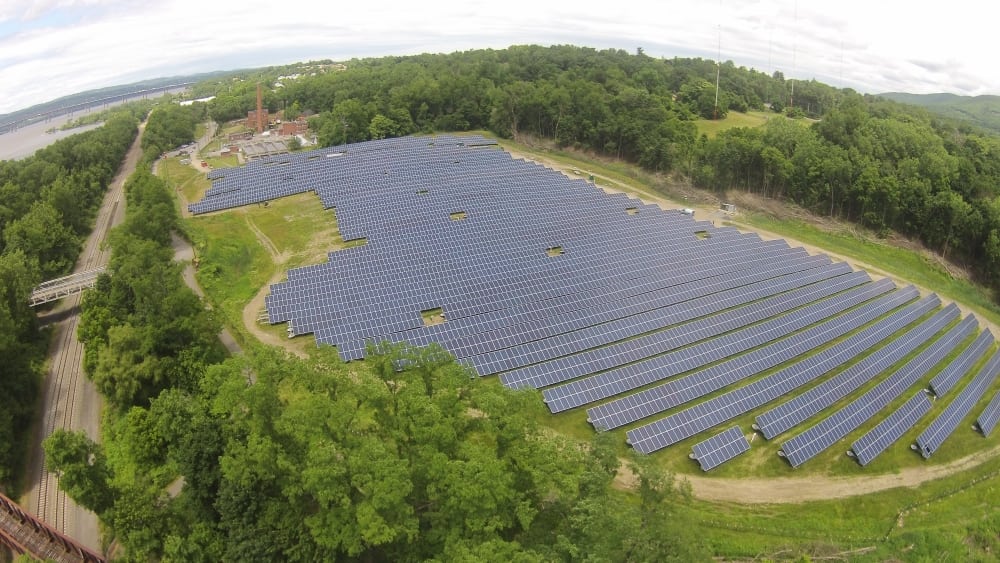

The issues aren't safety, waste, and environments opposition. There are plenty of climate hawks that support nuclear too. It's all excessive costs.
They briefly mention the cooling retrofits for Diablo Canyon in San Lui Obispo, but they don't mention that they bids from Bechtel to simply build a modern cooling system were all billions of dollars of expense. Just the cooling system is more expensive than alternatives.
And this is a trend we will see in the future. For primary generation of electrons, steam based thermodynamic cycles are pretty much obsolete. The number I typically hear is that it's $1-2W to build, say, a cooling system for coal steam. A nuclear plants cooling is pretty much identical. Solar and wind are going to undercut that cost very soon.
So the name of the game is now storage. Attaching four hours of storage to a solar generation farm, just enough to get through the duck curve, is now slightly cheaper than coal.
The best estimate of what the cheapest possible future grid looks like is: solar/wind capacity at 4x of total demand (thermal generators are roughly at 2x on the current grid), with 3-4 days of storage. This translates to world with abundant energy, at certain times, that's generated at zero marginal cost. There are still lots of transmission costs however. The future of energy is all about spatial and temporal arbitrage of renewable electrons.