I trained in traditional film photography for 8 years, worked in a darkroom and developed my own film. The 'technical' details that make a photo "text-book-correct" were some of the first things we learned. It was a given that you knew how to properly shoot a photo (and in our case, how to properly develop, enlarge, print, etc). This was the foundation for potentially creating something more than just a snapshot. You only ever really noticed these details when someone got it wrong.
With that said, after about the 2nd year, it became increasingly clear that once you knew what you were doing, you had almost no incentive to continue doing things "correctly." Critiques at the higher levels became increasingly abstract. It was understood that you could shoot a "technically correct" photo. No one needed to see that from you again, perhaps ever. You master the basics and you're suddenly let in on a secret that the basics don't really matter (at least in an artistic/scholastic context).
However, I can see why the engineer type would be attracted to the technical part of photography. It is a fun and rewarding endeavor to create things correctly, and not everyone wants to be an artist. Working in a darkroom is extremely rewarding in a technical sense because it rewards those who do things correctly and punishes those who don't. Ultimately, there are all kinds of reasons to fall in love with photography, and those reasons don't need to correspond with mine or anyone elses.
You need to be cognizant of the rules you are breaking, i think thats the real value behing learning those kinds of rules. You need to know the narrative thus far to know how to mess with it in an interesting way, and as you say, once you know, its obvious when someone else doesnt.
“You've got to learn your instrument. Then, you practice, practice, practice. And then, when you finally get up there on the bandstand, forget all that and just wail.”
You should know the basics to know why you're ignoring them. When you start writing, you have to use proper grammar, spelling, etc. Once you have that down, you can choose to ignore rules or making them work for another purpose. That is what really pushes the boundary in the arts, but having the basics is useful in and of themselves.
Hey, well I guess I you're right about different aspects being enjoyable to different people. However, I guess I feel like some people use technique to avoid and rationalize rather than grow and create.
That's his point. Some people don't want to grow and create, they want to relate, to transmit. I have absolutely no desire to make high-contrast lighting photos because they're "edgy," nor do I want to take "mysterious" photos of models intended to impress the viewer with its ambiguity.
When I see something I think is interesting, I want to be able to preserve it , for myself and for my friends. That's the difference between an artist and a hobbyist.
Hahaha, this reminds me of a conversation I had with my art teacher in 7th grade. I told her I don't care about the rules, I just wanted to do my own thing that I had in my head. She said that this only gets you so far, and that you have to actually know the rules in order to know how to break them... I think this carries some relevance here, and that there is some truth to it.
I read Norvig's intro as the equivalent of your 'first year'. You wouldn't have gotten to the third year without the first year, nor will the other parents in Norvig's kids dance class get to be conscious about violating the rules of technically correct photography if they don't first learn those basics.
That's a fair point. I think it's a great thing to read slowly for engineers new to photo (for the average person it's way too technical). I'd say as a rule don't try and put everything in there together at once. By the time you're done thinking about all the technical considerations the dance will be over and you'll be standing in an empty auditorium.
The best thing to do is assess your skills, and try and take the best photos you have given what you know.
Learn one new thing at a time, and don't move on till you're comfortable with it. Tools enable creativity, if you take on the whole shebang you'll drag yourself down.
Do experiments with new techniques if you want to, but don't just go looking for excuses for techniques full time, that's where people get in trouble and wind up creating a photography textbook rather than good photos.
One thing I've noticed in the Valley is engineers with super-expensive DSLRs, taking pictures of the most mundane things, mainly birthday parties and pictures of wine glasses. I guess it's like any other hobby, and I guess the belief that the best technology out there will result in the best output, and that's what makes Silicon Valley what it is.
But there's something decidedly obnoxious to me about engineers pulling out their 5D Mark II's and talking about the particular specs or lenses, and not understanding the artistry behind it. You do not need a $2000 camera to take your 2 year old daughter's birthday party photos. PERIOD.
I have a friend who is a true photographer, who just started a photo business specializing in family photos. She has an entry-level DSLR that is about 7 years old, but her photos are amazing and even though I don't know who her customers are, some of her pics make me jealous of them because I wish those were my pics.
Of course there are technical aspects to taking photos, but it's more in lines with knowing the LIMITATIONS or the boundary conditions of your camera and lens combo, understanding the light conditions you are in, and taking photos that match the conditions. A more expensive camera will get you a bigger sweet spot in order for you to take more pictures in different light conditions, but it's like tennis rackets with a bigger sweet spot, it's allows beginners to pretend they actually know what they're doing. My friend has take amazingly beautiful photos with a disposable film camera that you get from Walgreen's or CVS. You can get amazing photos from point and shoots or even your iPhone, as long as you have a sense for what pictures you can take.
But the more important aspect is developing an eye for what is truly a great photo, and a moment that needs to be captured. Some of the world's greatest photos were taken on cameras whose resolutions were dwarfed by the iPhone, so technology isn't really the deciding factor.
A more expensive camera will get you a bigger sweet spot in order for you to take more pictures in different light conditions, but it's like tennis rackets with a bigger sweet spot, it's allows beginners to pretend they actually know what they're doing.
What's wrong with that? If a person's goal is to get nice-looking photos of moments that are important to them, what's wrong with using a camera with a bigger sweet spot? If it means spending less time fiddling with the camera to get all the settings just right, that's more time spent actually participating in life instead of behind a camera.
Why does everyone taking photos have to be expressing themselves artistically? What's wrong with people who just want to capture a moment where someone they love has a sparkle in their eye?
> Why does everyone taking photos have to be expressing themselves artistically? What's wrong with people who just want to capture a moment where someone they love has a sparkle in their eye?
This is a brilliant reason to use a camera. Almost any camera is good enough for this; using a prosumer DSLR will usually be a hinderance (they're big and bulky and have many buttons and switches and levers) and using a little digital compact is cheaper and easier.
A little digital compact is not able to shoot at ISO 3200 with low noise, so you'll end up using flash for indoor shooting which ruins the mood. It will not be able to shoot at 5 FPS, which is the only way (in my experience) to consistently get candid shots with magical looks on people's faces instead of closed eyes or momentary grimaces. And it won't be able to shoot with a narrow depth of field, which makes portraits way more beautiful.
If you take a nice DSLR, put it on aperture-priority with the lens all the way open at high ISO, turn the flash off, and shoot at 5 FPS while interesting things are happening to people (preferably from a bit of a distance so things are more candid), you'll get shots that people beg you for copies of. When I do this at weddings, I've have two different couples (friends/family) tell me that they liked my pictures better than the pro who they hired, and I'm not really that talented.
In your first paragraph, you're assuming that there are predetermined rules for what a good photo represents. You even mention a mysterious "mood."
In the second, you hit the nail on the head. The only thing that truly matters is whether the photographer likes their own photos, and if the people important to him like their photos.
If this doesn't happen, in the first case, they will seek to improve their images, and will naturally come by the same information that you and me consider defines "good" photos.
In the second, they may either care that others dislike their images (in which case, see above), or they may disregard their opinions and keep taking the same quality of photos (which we may subjectively judge as "good" or "bad," among other nuances).
> One thing I've noticed in the Valley is engineers with super-expensive DSLRs, taking pictures of the most mundane things, mainly birthday parties and pictures of wine glasses. I guess it's like any other hobby, and I guess the belief that the best technology out there will result in the best output, and that's what makes Silicon Valley what it is.
It's really a shame that photographers are not out-there on the streets taking photos of places and people that do matter, documenting every day life.
For example I bought this photo (http://3.bp.blogspot.com/-L3tT3HbZcsU/TeAwqf6XyxI/AAAAAAAAAf...) for 15 Euros a couple of months ago from an antique bookstore. It was taken in Bucharest in the late 1930s' in front of a night asylum, by Jewish photographer Teddy Brauner (the brother of the better known Victor Brauner), using a normal Kodak camera and probably not thinking too much about aperture or light or any things like that. He just knew to be at the right place and to catch the right moment.
I cannot see this kind of work being done by today's photographers in America. I mean, I'm sure that there are people out-there documenting the worst recession in the last 80 years, but judging by what gets promoted on Google+ as being "state of the art photography" it seems like America's problems would be solved by taking photos of nice sunsets and beautiful mountains. There's a great opportunity for us people who like to take photos to help the others around us make sense of what's happening, but it seems we're more interested in technicalities and in kitsch photo-art.
(if anyone's interested to learn more about Teddy Brauner, I could only find this NY Times article about his later work: http://www.nytimes.com/2001/10/05/arts/photography-review-an.... He was not allowed to take photos anymore in Bucharest when the right-wing came to power, but he managed to escape to Palestina in 1942 or so).
     You can get amazing photos from point and shoots
     or even your iPhone
When you capture rare moments, the best camera in the world is the one you have with you.
However, I do not agree with the statement above. Expensive cameras with expensive lenses allow for more composition freedom that you just can't get with a cheap camera. For instance, I'm pretty sure that if your friend would take pictures of sports events or pictures of landscapes, or macros, she would use more expensive gear.
However your friend is also a professional. Good professionals are using the cheapest equipment they can get away with. A cheap DSLR can be replaced every month. You can also have a backup with you in case accidents happen (and in case of events like weddings, you really have to be prepared for everything). Plus, a cheap DSLR is more practical - for instance I love my Nikon D3000 - people bitch about how it isn't ergonomic because of its size, but I like how easy it is to carry with you, while also have the advantages of a DSLR. As I said, the best camera in the world, is the one you have with you.
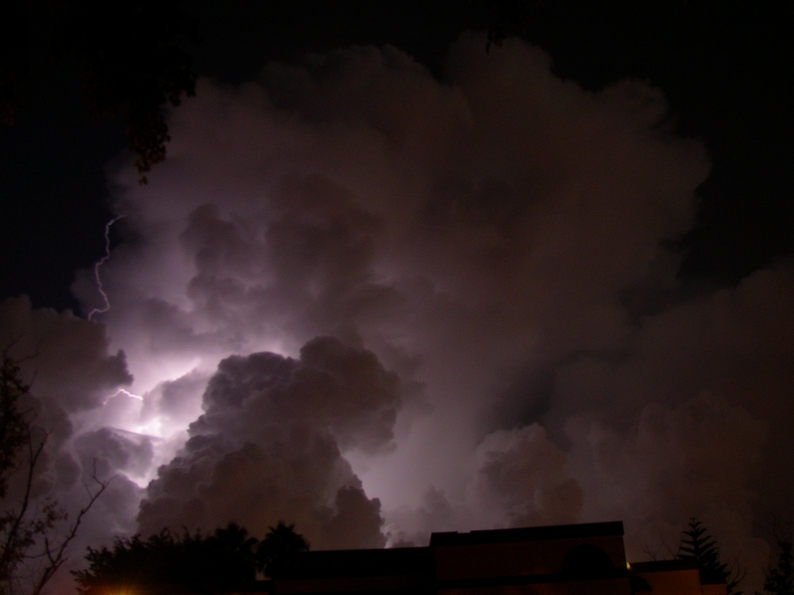
It's less the equipment (although nice equipment certainly makes it easier---I found it vastly easier to take pictures of lightening with a 35mm camera than a digital one, but it's not impossible as you can see) and more what you do with what you have.
I majored in Computer Science, but I did take two semesters of photography in college (this was back in the early 90s, so no digital cameras). The first semester was all about the technical aspects of photography, the relationship between aperture, shutter speed and film speed, along with guidelines on how to compose the shots (The Rule of Thirds, etc.).
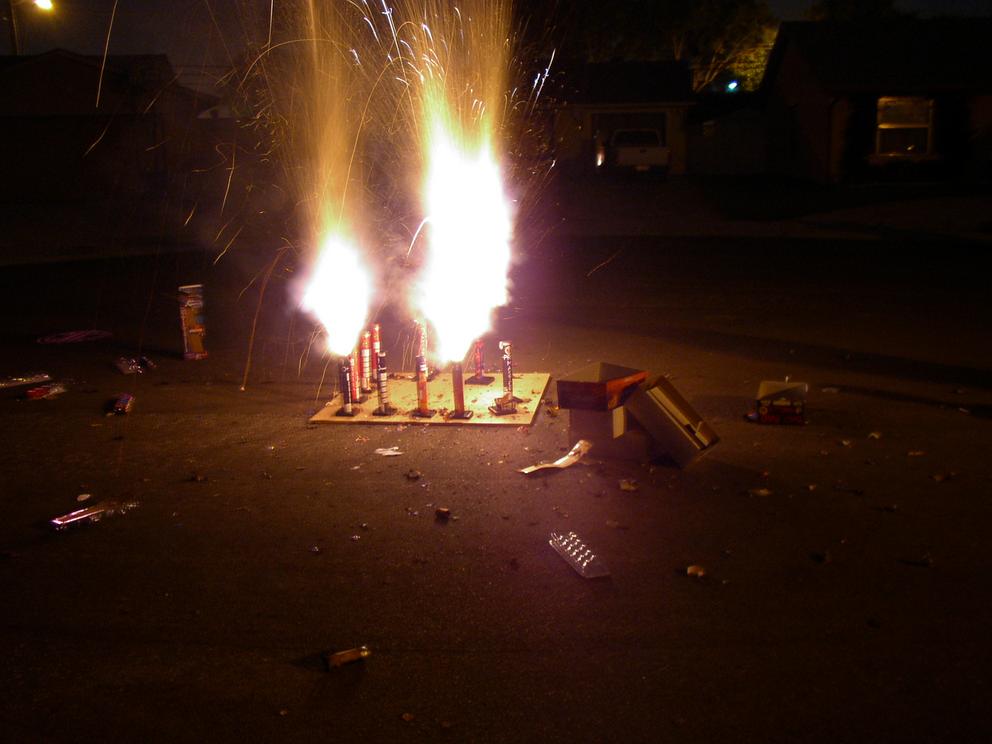
While some of the stuff I learned there is no longer applicable (such as developing film and photographs), much of it still is (aperture, shutter speed, the simulated film speed, composure). And one other thing---the first semester he had us use just about every feature of our cameras. And that's something I still do to this day---whenever I get a new digital camera, I play around with all the settings, and take notes of what settings were in play for what pictures. That way, I can concentrate on getting the shot. And yes, playing around with night shots on a digital camera allowed me to shoot fireworks.
Regarding your last point, there's a series of videos on YouTube where pro photographers are challenged to take the best pictures they can with 'subpar/cheap' gear; the results are pretty incredible.
Yeah, and one funny thing I'll point out is, a lot of the most talented photographers I've met could care less about learning about what a Bayer filter is, the differences between a CCD and a CMOS, or even how to use curves properly in photoshop. Hell, some can barely turn on a strobe pack by themselves.
Technology definitely isn't the deciding factor in taking a good photo, but having that "bigger sweet spot" doesn't hurt.
And the market for high-end camera gear has expanded down from pros to prosumer, it hasn't been created for engineers with lots of free money; many pros use that kit too, just like pros use the most high tech tennis rackets with their large sweet spots.
moms and dads (who aren't engineers) with high-end DSLRs when they should be carrying around point and shoots.
DSLRs have near-instantaneous start-up time. Focus speed, exposure calculation, and flash charge can be dramatically faster than a point and shoot.
For these reasons alone, if I were photographing children (i.e. unpredictable, moving things), I would absolutely use my DSLR over my P&S. And that's not even getting into the vastly superior lens quality of all but the cheapest DSLR kit lenses, or the much larger sensors, capable of gathering more light.
During the dotcom boom I worked at a small company that had already IPOed a year or two previously. In the parking lot, I saw a silver Ferrari, and being new to the Valley, I was completely amazed and intimidated.
But after a few months, I actually went to the car to look inside, and in front seat was a baby seat, and it was littered in garbage, McDonald's wrappers, magazine, etc. It looked like someone who really wanted an Accord (a very nice car, I had one for 10+ years), got too big for their britches, didn't understand his-or-her situation, and spent money on a Ferrari instead, and had to live with the consequences. It's the same for the person who buys a Porsche just to get stuck in 101 rush hour traffic every day, they didn't understand their situation.
This is exactly what it is when engineers buy Mark II's to take photos of birthday parties. Sure, people are allowed to do whatever they want, but they look like posers, and more often than not, they don't know what they're doing. Instead they think that throwing money at the problem and getting the best technology will result in the best output, and will vault their level of success instantly. Sure the Mark II will be more forgiving, as will the assortment of lens that you can get for it, but more often than not, they'll still take mundane photos that could have been taken with a point-and-shoot.
> looked like someone who really wanted an Accord (a very nice car, I had one for 10+ years), got too big for their britches, didn't understand his-or-her situation,
Are accord owners supposed to liter their cars with garbage? Or is it that Ferrari owners aren't supposed to ride with babies? Or what? I'm completely confused as to your reasoning.
Also, as the owner of a fairly pricey car I've always said that these cars are built to drive, and are a thrill to do so in. If simply lock it away in a garage, and avoid using it in your real life--then what's the point?
It looked like someone who really wanted an Accord (a very nice car, I had one for 10+ years), got too big for their britches, didn't understand his-or-her situation, and spent money on a Ferrari instead, and had to live with the consequences.
It sounds like someone who is really passionate about cars, and Ferraris specifically, and who has made the car fit his or her life.
If the person can afford a Ferrari, I'm going to go out on a limb and say there is probably little obstacle to also owning a commuter box, if that person were so inclined.
they look like posers
That is entirely in your own head. If you go around judging people that much, how can you possibly feel about yourself?
You're better than this. Stop searching for reasons to look down on others.
You do not need a Porsche to commute to work. You do not need a steak for dinner. You do not need air conditioning. You do not need toilet paper.
And yet, I think there's something obnoxious about people who buy Porches to sit in urban traffic and show girls they can spend money, I'm also irritated by those who constantly eat at Nobu to validate their status, and as for AC, well I love AC, but I'm sure someone else finds it obnoxious.
It's a big world out there, and a lot of us get on each other's nerves. Welcome to the human condition.
People understand that. People [generally, and I talk to a lot of them due to being a photographer and having lots of friends who want to get into photo] do not understand that you don't need a $2000 camera to take good photos.
The guys running around with $5000 worth of gear producing mediocre pictures make people that don't know what they're doing throw their hands in the air and say:
"Well if he can't do it with $5000 worth of gear that is NO WAY I'm going to do it with $300 worth!"
False dichotomy; technique and artistic quality are orthogonal concepts. You can have a technically perfect shot that is perfectly bland, and you can have a shot that would've been beautiful if only you knew how to set your shutter speed. It's certainly not like understanding the technique takes away from the beauty, and it's true that the beauty doesn't come from having perfect technique. Norvig's post was clearly about the technical aspects of the challenges of shooting dancers.
I agree it's orthogonal, I make it clear in my post that it's an option, but only one of of many. Some shots need technique, others are fine with a polaroid. There's nothing more to say about it.
How do you know this is true: "Engineers who become photographers generally spend an outsized amount of time making their images sharp, have true color, be adequately lit, etc."
Not all engineers are robots. It doesn't take an artist to realize art has both technical and human/emotional components.
When you respond to a sentence using the words "generally", "tend to", or "usually" with one using the words "not all" or relatives, you are effectively conceding the point. Correlation cannot be denied with a mere counterexample.
Can correlation be assumed without sources and facts as was done in the article?
"Not all engineers are [figurative] robots" is certainly a fact and was meant as an upper bound on the number of engineers who believe that photography is merely technical in nature. I'm questioning whether the lower bound is statable as "generally engineers believe this", and claiming that I don't believe it is.
To further clarify my opinion: the line drawn by the author is too black and white. Its inhuman and unemotional itself to assume that another large group of humans can't see the emotional and human side of art.
I mostly agree, and in some parts of the world, the art is in the craft more than in some other parts of the world. That being said, I think people are more able to look past bad execution than they are able to look past vapid technical displays. I know there isnt a definitive answer, but i usually think of the thing that makes art different from engineering is that artists have focus more on "what" than "how", which is kind of the opposite of engineers. Its cool, though, the way each discipline kind of turns into the other at various points along the way. Often you have to figure out "how" to actualize "what", just like you have to figure out "what" to answer "how" sometimes.
As someone who has done quite a bit of photography (I had a darkroom and made money shooting during high school and college with no formal training but managed to get photos in the local big city paper) I agree with your points. Back in the darkroom days tech skills though were much more important otherwise your photos ended up washed out or over and underexposed just as a result of the wrong chemistry or fogging etc.
The technical aspects of photography are obviously important but I find to many people concentrate on the "specs" of the camera and memorize camera review articles.
They worry about white balance before understanding composition and a host of other creative issues. Shutter speed, fstop and focus are important as well as the lens you are using and when to do flash fill in. Maybe I'm missing a thing or two but the rest you can wait to learn.
A friend of mine constantly buys new cameras. His photos really suck but he knows those cameras inside and out because he thinks that's learning photography.
It reminds me a little about people who obsess over creating what they think is an all important one line piece of code instead of just getting the job done. Sure efficiency matters but it doesn't matter in every situation. (Imagine if every reply post to HN had to hold to the standards of a final college paper...)
Like hell I can't hack photography! Photography is one of my favorite things to hack! I will admit that I am not great at composing pictures but I find that good, hard work in the darkroom is essential to make even a well composed photo
"pop". I have hacked a pinhole camera out of a big flour container and some photo paper. This photo was exposed for probably 10 minutes - note that the focus is the same inches from the aperture as it is 30 feet away. [1] Getting even more technical, I did some high speed photography where the shutter is left open in a dark room and a high speed flash (just several to tens of microseconds in duration) is triggered to freeze the action. I used an AVR with a microphone to wait a programed delay after hearing the report of a pellet rifle before triggering the flash using a relay. [2] You can get some cool results with this fairly simple setup while having a lot of fun. [3] [4] So I repeat: am I not doing "real" photography if I take more interest in its technical aspects?
"You're doing art differently me from me, therefore you're wrong."
This is a silly argument. There is nothing wrong with enjoying photographic equipment and settings without enjoying the "art" of capturing moments on film. People with $2000 cameras taking bad pictures have a $2000 camera because they think playing with fine machinery is fun: the output is irrelevant to them. It's a hobby and the goal is enjoyment, so there is absolutely nothing wrong with this.
I'm not even sure how it's worth the time to write an article like this. All I got out of it is "I'm bad at my hobby and so is everyone else, but everyone else is having fun without me! Don't they understand that they're bad!?"
(I hear this a lot on bicycling fora: don't play with the components on your bike, go ride! That's great, but some of us like playing with components and riding, so we're going to do both. Do I need a $3000 bike for my two hours a day I spend on it? Nope. Do I have one anyway? Yup. Why? Because I think it's cool and it makes me enjoy life more. If that's a problem for you, don't tell me, because I don't care.)
I didn't mean to be condescending in calling Peter a developer. The article really isn't about Peter, it's about the legions of technical photographer developers out there, probably why that title was on my mind.
What a needlessly posturing rant. Who cares if some nerds buy expensive cameras and take pictures of babies and flowers? How is this different from guitars, or pastel sets, or any other art form where gear is required? As long as they're getting something out of it, mind your own damn business. It's not like every techie with the scratch to buy a DSLR is talentless.
As in all creative endeavors, it's a lot easier to talk shit than to bring it.
The author disparages Norvig, from the shaky ground of apparently having barely one decent photograph to his name.
I restrained myself earlier from posting a comment to the effect that Norvig had demonstrated, but not strongly enumerated one key idea, that you should restrict yourself to taking pictures of things that you care about.
Andrew says this
"When it comes to photography, engineers spend a disproportionate amount of time following compositional rules, shooting photos with straightforward narratives, and thinking about their photos as bullet points of technique before, during, and after shooting. It's as if the aim is for an acceptable, homogeous pastiche with the consistency of oatmeal."
then shows us pictures of coffee cups on the grass. Thanks for demonstrating oatmeal.
There's obviously nothing wrong with taking pictures of a lemon, but to criticize Norvig for writing a great tutorial on available light photography, illustrated with great portraits of a superb subject, then to have almost nothing of comparable worth, seems like putting yourself on very shaky ground.
I'll make no claims on my own account, but if you're going to put yourself out there, you should expect to be called.
Obviously, I've been hammered by collective opinion, so the YC crowd obviously digs your Starbucks container in the park or whatever. Good luck to you!
I find this rant completely unconvincing. My experience compels a very different interpretation. Learning from the pros helps, but in the past 10 years the gap between amateurs and pros has shrunk so dramatically, and quality camera gear has become so much more affordable, that thousands of people worldwide have hacked their way to surpass the skill of most pros. And yes, having a 64-point tracking focus and metering system and a 16MP 3200 ISO low-noise sensor behind a stabilized f/2.8 telephoto lens really does make up for a big gap in skill - so much so that hacking the rest of the way is quite a bit more conceivable than before.
Carry a small camera in your pocket at all times. ALL. TIMES. It has to be one that can turn on and take a photo within two seconds tops. You also have to be able to get it ready to snap the photo while it's still in your pocket, using touch alone. And the shutter has to react instantly when you snap the photo. Unfortunately, most smartphones can't do these things, but a Canon Powershot or similar style of camera can.
Now, whenever you get a sense that something interesting is about to happen or someone is about to do something amusing, put your hand in your pocket and get the camera ready. And when the moment seems right, whip it out and snap the photo right away. Do not let anyone know that you are about to take a photo before you shoot, not even an instant before.
This is the only way to get fly-on-the-wall photos when you are part of the action, which you usually are when you're with friends. Some people might get a bit annoyed at first, but they will forgive you when they see the great photo of them where they look relaxed and natural.
I've captured some strange and magical moments this way. It's a shame that my camera has been displaced by my phone, which can't do it.
Well, I'll agree that I kinda trailed off toward the end of the post. The point I was trying to make was that you'll have to figure out all the non-tech stuff for yourself as an individual experience.
Wow, this guy is so pretentious. Engineers are a creative bunch, and Peter Norvig's post seemed more like an overview of why your images turn out less optimal than they could be. How the composition and what you decide to shoot aren't even touched there and this guy thinks that's all we care about in photography.
Yes, I agree, Peter Norvig gave a fantastic, all-points overview of why most people struggle to get pictures to come out in poor situations, then gave buying recipes for tools that actually work in low lighting.
Of course, back in the days of film, very few people would even attempt to take pictures in such poor lighting, unless equipped with high-end lenses and fast film.
Norvig even threads the fantastic exemplar of capturing dancers throughout his piece, which acts as a fabulous counterpoint to all the technical detail.
I think you may have missed my point. Norvig's post, in and of itself is mostly fine--though I'd say the tips on composition in there, which you must have missed were poor--but within the context of the present day, with boatloads of engineers who take up photography to become camera junkies, it's problematic.
By the way, if it wasn't clear I'm an engineer as well.
The only part of the equation you have any control over is the quality of your own work, and when you see others who value technical expertise over compositional sensitivity, you can choose to take it as an indication of what you intend to do and avoid, rather than something you need to be deeply offended by.
The internet is full of amateurs who fetishize their gear, as well as many very talented people, and there's no shortage of material for you to get worked up over, if that's your thing. If you're truly concerned that this is endemic in the tech crowd, and that concern comes from a place of compassion as opposed to judgment, you can always write your own tutorial on photographic composition -- think of how many people you'd be helping! On the other hand, if it makes you feel better to put others down for what you perceive as their artistic shortcomings, and offer nothing in the form of advice, one might get the impression you're trying to compensate for your own insecurity at the expense of others, hence the tepid response here. As an artist you stand to lose nothing on account of the creative decisions of others.
I enjoyed Norvig's post a great deal because he broke down a fascinating and complex topic into easy to understand pieces. By doing so he also revealed some of the beauty inherent in photography and dancing and the mastery great photographers display in their work.
I'm not a photographer but I imagine that many enthusiasts and pros would find his writing very helpful in learning to become better photographers. People got to learn the basics before they can find their own voice, they need to know the rules before they understand how and why they can be broken.
The fact that the author doesn't seem to realize any of this makes me think he's over-valuating the importance of being artistic, artistic discovery of the basics and the fact that his and Norvig's views of photography continuously complement each other nicely as they do in any context of learning and mastery.
Speaking as a photojournalist-turned-engineer, I think the idea of hacking photography is what got me into hacking software in the first place. I started collecting old cameras and fixing/modding them, making them do different things depending on what I liked, as opposed to what they were designed to do. Admittedly, being a gearhead doesn't help in the slightest, but playing around with cameras does lead to some interesting photography. Of course, all that hinges on having a somewhat relevant subject matter.
I had it explained to me once by one of my photoj professors that the photo consists of a message you're trying to convey about a subject. That can be done through technical proficiency or some strange artistic effects, so long as they all point towards the same message. Anything outside of that is just noise. Either technique for technique's sake or artistic effects for the effects' sake.
There is a certain point here and there's certainly a huge crossover between engineers and photographers (and also knitters, but that's another story).
You need to develop both technical skills and an artistic vision. Engineers by their nature, tend to focus on the first and neglect the latter. There are some great book on the artistic side, but I particularly "Vision and Voice: Refining Your Vision in Adobe Photoshop Lightroom" by David duChemin[1]. This is most definitely not a book about Lightroom but rather about your artistic intent which starts when you first think of the shot and how you carry that "vision" through to Lightroom and express with your post-processing "voice". The discussion are priceless and it works as a book even if you don't use Lightroom. His other books and ebooks are also very good.
As a technically-inclined person, I picked up photography back in the early 2000s, and I went all the way in terms of trying to achieve something that others thought was great.
I eventually did start producing decent photos, but it took inordinately more work than getting the technical details right was. There is a technical aspect in photography, but it's weight compared to the remaining aspects is about the same as the weight of a fly compared to that of an elephant. The elephant being: figuring out what smart people will like, and what matters.
If you take the long view, it's possible that photography as a technical hobby is merely a stepping stone to gaining a better understanding of the art form, with the eventual goal of improving the hobby both technically and artistically.
I agree that photography as a technical hobby is an "incomplete" picture, but having an absolute rock-solid understanding and experience of the fundamental technical foundation cannot possibly be a bad thing.
Most technical hobbyists will probably remain just that -- but it's possible someone will surpass them and tie together the artist and the engineer into something that will astound the world. Or whoever they show their work to, which is possibly nobody.
It's possible this has already happened, we just don't know about it yet. And maybe we never will.
This is slightly off-topic, but is perhaps the best opportunity to clarify something I've recently started wondering about, and will no doubt be valuable to others on HN:
I've been studying web design for the past few weeks, and naturally broached the issue of images. Is it possible to take 'professional' (i.e., 'website-worthy') pictures using consumer range equipment, such as the Casio Exilim and Sony Cyber-shot? For example, pictures of dishes for a restaurant website, or product pictures for an e-commerce site?
Yes, so here technique really matters. You want a photo that looks professional. So, my article was written with a fine art perspective, but you aren't making fine art, you're making a brochure.
This is where you need to learn about lighting. What you want, to keep it simple, is nice, even light.
Here's some tips that will near guaranteed get you a decent photo, even if you leave your camera in full auto:
1. Get a tripod
2. DO NOT use a flash
3. Learn what 3 point lighting is
4. Light your food mostly evenly, don't have a dramatic difference between key and fill (maybe 1/2 stop - 1 stop at most). Soften the light as much as possible. If you need lights, cheaply, you can probably get away with home depot work lights bounced off walls. Be sure to adjust your camera's color balance.
5. Look at other food photos, copy other people's layouts as closely as possible, don't get creative
6. Learn how to use curves in photoshop, and try to get one point in the photo pure black, another pure white. At the very least use auto-adjust. DO NOT OVERDO IT with curves.
7. Focus
All of those rules can be broken once you know what you're doing, but you don't know anything yet. These instructions will hopefully get you a fairly generic looking commercial food photo. If you practice, you can get 90% of what you need with this. These photos won't be amazing, but they'll be OK. That's a basic starting point for taking these photos.
What that doesn't cover is all the weird ways they cook food for food photos, a lot of the time what they photograph isn't edible, and has been cooked specially to look good on camera.
One reason to learn the science behind correct technique is to allow creative use of 'wrong' technique - weird depth of field can look nice; HDR photos are an interesting concept (but for sure there are way too many!); tilt-shift is a neat gimmick; etc etc.
And these creative uses of wrong settings are, surely, hacking?
There is photography as an art and then there is photography as a hobby. Please stop conflating the two and, what's worse, judging those who indulge in such a hobby.
Do you "need" an expensive rig to take family, vacation, hiking, etc photos? With certain exceptions clearly not. As such snobs like to point out, the likes of Ansel Adams did quite well with pretty basic gear. We know. We don't care.
The simple fact is that a DSLR still does things that a compact camera does not:
- larger sensors by the laws of physics will have shallower depths of field making shots possible that just aren't physically possible on the small sensors typically in compacts (let alone phones);
- high ISO without being awash with noise;
- generally speaking, faster continuous shooting. This is important, at least to me, because I typically take a burst of 3-5 shots because the first will suffer most from camera shake and it increases the chance of getting a good shot;
- a flash gun is vastly more versatile, particularly in being able to bounce flash to avoid red eye (yes I know some "prosumer" cameras have a hot shoe); and
- an optical viewfinder, particularly in lowlight, is vastly superior to any electronic viewfinder.
- the metering/AF (particularly continuous AF) are significantly better.
I don't own a 5D Mark II. Personally, I can't justify the cost. But I do own a 7D+15-85 and I've previously owned a 20D and a 300D. Not because I need them or because I have delusions about making some great artistic statement but because I enjoy them.
Fact is, I earn a good living. Buying a 7D (or even a 5D Mark II) does not represent a massive investment. I have to wonder if the self-important pseudo-artists who like to rant about people like me are, at least in part, jealous of this economic freedom that we engineers enjoy.
I also have an iPhone 4S. Bear in mind I also bought the iPhone 4. I largely bought the 4S for the better camera. As well as having reasonably decent image quality it also addresses the burst fps issue I have with compacts and phones, to the point where I will in the future have trouble justifying buying another compact.
In my experience there are two kinds of artists. The minority are true artists, who tend to live on a blurry line between genius and madness, often so oblivious to things and people around them (since they're obsessed with their vision) that they probably wouldn't even notice what tools other people use, let alone would complain about them.
The second are what I call "lifestyle artists". These are people who aren't really artists but are simply attracted to the lifestyle. They socialize with other "artists", are often "hangers on" to true artists and write blog posts like these. They're the kids in the playground who pick on the unpopular kids just to affirm their social status among the "popular" kids.
It's not that these people realize they're frauds (IMHO). I'm sure they truly believe they're artists. They just don't know the difference between being a true artist and "going through the motions".
This isn't unique to the art community either. There are a lot of pretend engineers out there. These are the sort who will often get into wars about Python vs Ruby or Django vs Rails or jump on the Java-bashing bandwagon like it's some kind of street cred. None of these things matter.
Perhaps these failed artists should spend less time whining about the financial successes of others and more time figuring out why they're failed artists.
The second are what I call "lifestyle artists". These are people who aren't really artists but are simply attracted to the lifestyle. They socialize with other "artists", are often "hangers on" to true artists and write blog posts like these. They're the kids in the playground who pick on the unpopular kids just to affirm their social status among the "popular" kids.
Apparently you've taken a single blog post of mine about photography, extrapolated an entire (fictional) life history from it, and then extracted an ad hominem from that.
Do you understand how senseless and insecure that comes off as?
Just to clue you in a bit on how backwards this whole assesment is...
I'm a rubyist who thinks python is quite nice, and really enjoyed picking up Java this year (though its verbosity does get tiresome) and Flex (though the flash runtime is a joke, but we all know that). Also, I can afford nice cameras, just got an X100 earlier this year, so I'm certainly not jealous of your income. Lastly, I wasn't picking on you in school, I was one of the kids being picked on myself and befriending the other kids in the same boat. Yes, that was me with the other kids in Anime club who played Magic, and no, there was no hipster irony to it at that time.
Well, he divides the world of photography cleanly into two sorts of people. And given the tone toward my piece, it definitely sounds like I'm in the group that's in the author's good graces.
Some people love photography because they like gadgets. Others enjoy coming to understand a technically challenging subject. Others because they can capture a flawless, sharp photo of their mountain climb summit. Others because it allows them to capture warmly-corrupted photos of their friends in an anachronistic way. Others because it lets them capture an overhead shot than really emphasizes their chest. Others...
Just stop judging everyone else. Different strokes for different folks. Nobody is correct about an entirely subjective thing. Stop and ask yourself why you are getting so upset by someone else's enjoyment. It doesn't affect you.
It reminds me a lot of the music folks who abuse anyone who doesn't listen to whole albums: "You're not listening to music right/the way the artist meant it to be heard".
The right way to listen to music is to listen to it the way you want to. Sure, if you're unaware that albums are a series of tracks worked together in a sympathetic whole, you might benefit from trying it out and seeing if it appeals to you. But if you don't like that, then there's nothing wrong with picking and choosing what you want to hear.
You are absolutely correct! Photography means different things to different people. It can range from something creative, something human and social, something technical and even to something related to another hobby (cave photography, bird photography, etc). Just enjoy doing it and enjoy other photography that excites you.



With that said, after about the 2nd year, it became increasingly clear that once you knew what you were doing, you had almost no incentive to continue doing things "correctly." Critiques at the higher levels became increasingly abstract. It was understood that you could shoot a "technically correct" photo. No one needed to see that from you again, perhaps ever. You master the basics and you're suddenly let in on a secret that the basics don't really matter (at least in an artistic/scholastic context).
However, I can see why the engineer type would be attracted to the technical part of photography. It is a fun and rewarding endeavor to create things correctly, and not everyone wants to be an artist. Working in a darkroom is extremely rewarding in a technical sense because it rewards those who do things correctly and punishes those who don't. Ultimately, there are all kinds of reasons to fall in love with photography, and those reasons don't need to correspond with mine or anyone elses.