Hello everyone!
I'm a solo developer who's been doing UI/UX work since 2007. Over the years, I watched design tools evolve from lightweight products into bloated feature-heavy platforms. I kept finding myself using a small amount of the features while the rest just mostly got in the way.
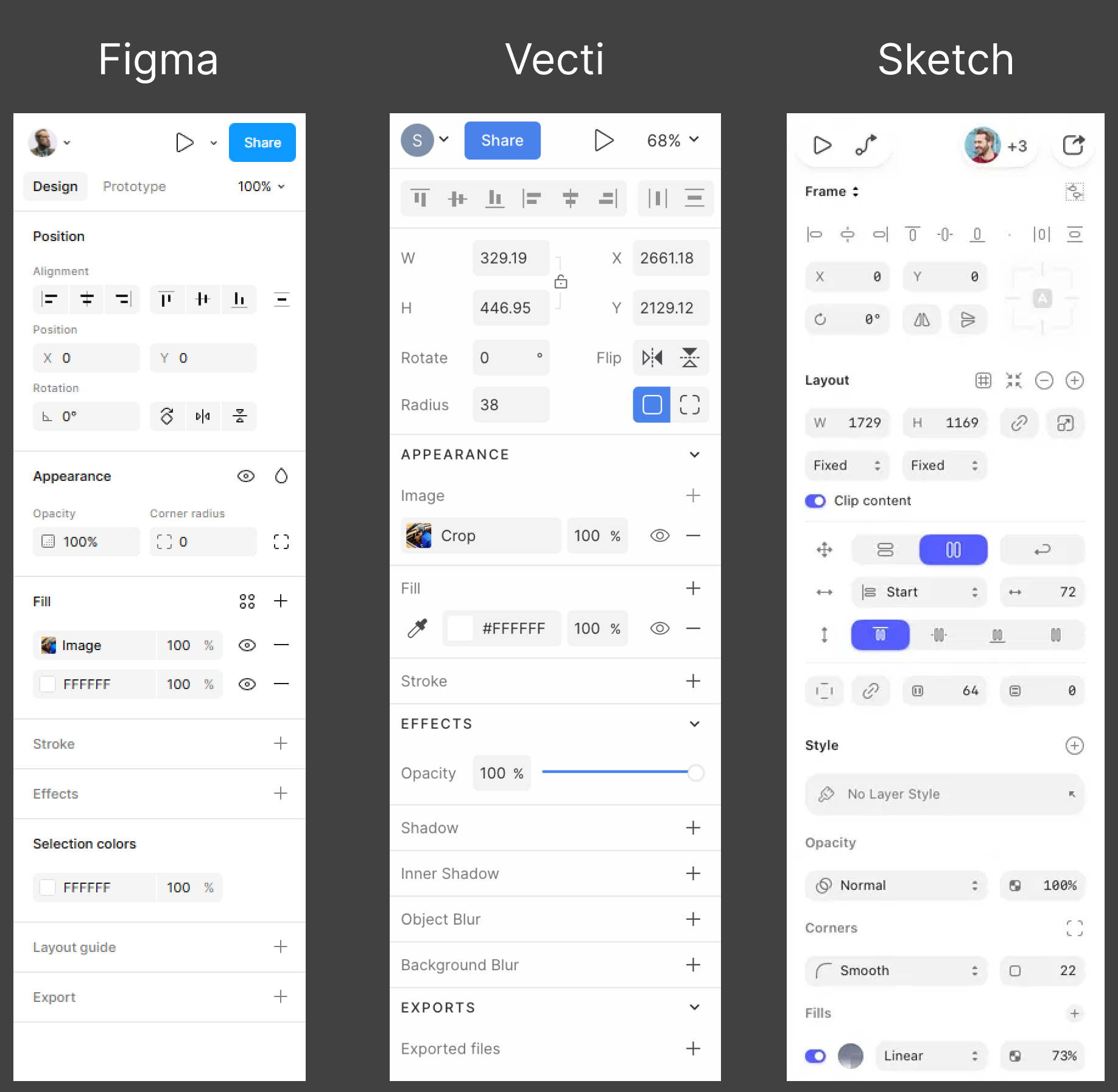
So a few years ago I set out to build a design tool just like I wanted. So I built Vecti with what I actually need: pixel-perfect grid snapping, a performant canvas renderer, shared asset libraries, and export/presentation features. No collaborative whiteboarding. No plugin ecosystem. No enterprise features. Just the design loop.
Four years later, I can proudly show it off. Built and hosted in the EU with European privacy regulations. Free tier available (no credit card, one editor forever).
On privacy: I use some basic analytics (page views, referrers) but zero tracking inside the app itself. No session recordings, no behavior analytics, no third-party scripts beyond the essentials.
If you're a solo designer or small team who wants a tool that stays out of your way, I'd genuinely appreciate your feedback:
https://vecti.com
Happy to answer questions about the tech stack, architecture decisions, why certain features didn't make the cut, or what's next.


Joel Spolsky said (I'm paraphrasing) that everybody only uses 20% of a given program's features, but the problem is that everyone is using a different 20%, so you can't ship an "unbloated" version and expect it to still work for most people.
So it looks like you've built something really cool, but I have to ask what makes you think that the features that are personally important to you are the same features that other potential users need? Since this clearly seems to be something you're trying to create a business out of rather than just a personal hobby project. I'm curious how you went about customer research and market validation for the specific subset of features that you chose to develop?
reply