Based on my anecdotal experience this seems to very much understate inflation.
How is housing up only 3.8%? This site says over 17% rent increase nationally over the last year: https://www.apartmentlist.com/research/national-rent-data which seems to be more accurate. Anyone with a web browser knows that home prices have experienced a monumental increase.
Also a trip to the grocery store appears to cost me 50% more now for essentially the same goods. Every trip to the store pre-covid cost me around $100, now its $150. I do buy primarily proteins so that is the source of the increase but to ignore that seems ill advised.
Not generally a conspiracy theorist but unless the people that built this report are using some accepted formula that is very different than the real world this report seems to be intentionally underselling inflation.
The BLS has a very well-documented method [1] of measuring core consumer inflation. The basket of goods they track likely does not reflect your personal consumption patterns.
Core inflation excludes food and energy. So as long as you're dead, you only experience core inflation! Everyone else who is alive is exposed to core inflation and also the one that takes food and fuel into account. Perhaps that's why people don't "buy" the numbers. Because the numbers aren't representative of the reality that alive human beings experience.
Core Inflation is needed so that they can apply the right monetary policy. If you want your 'personal' inflation, they have data for that too.
Fed releases all kinds of data (unemployment and monetary) and is pretty transparent.
It is disingenuous of you (and contributing to the erosion of institutional trust of Federal institution) by falsely accusing them.
Federal agencies aren't perfect, but at least educated people in HN should take the responsibility of giving constructive criticism based on facts rather than being brainwashed by random YouTuber/Blogger who is generally clueless about economics
Still waking up and it's possible I misread GP, but their comments didn't seem disingenuous on my reading. It's healthy to be skeptical of something that varies that much from one's personal experience. Your reply about data available for personal inflation was exactly the kind of information they needed to verify if the underlying data matches their personal experience.
I understand the sensitivity to folks spouting "fake news", but let's not discourage critical thinking in a time where there is precious little to go around.
It's NOT healthy to assume you're the 'average' when you are not.
Almost no one on HN is reflective of the 'average' American and that lack of understanding is part of the reason the poor suffer so much in policy decisioning.
I don't know enough to comment on "healthiness" of assumptions about ones' self and where they fit into analysis like in the OP's link. My commentary is purely on how we communicate with each other in a time where divisiveness, misinformation, and polarization are common and pervasive.
It's hard, but if we want to have productive discussions we need to treat each other with empathy and talk to the best possible interpretation of each other's arguments. This assumes people are coming to a dialog in good faith, but everything needs to start with a little trust somewhere. Trolls are also not too hard to spot.
The median salary for software developers in 2019 in the US was $107,000, with 50% between $82,000 and $136,000. The mean salary in California was $134,000 and the mean in San Francisco was $145,000. (https://money.usnews.com/careers/best-jobs/software-develope...)
The median household income in the US in 2019 was $69,560 with a 90% confidence interval of <$1000. The "median earnings of all workers aged 15 and over with earnings" in 2019 was $42,065. (FWIW, the median household income for black people in 2020 was $46,000, and for Asian people was $95,000.) The median household income of those with no college education was $47,000, some college was $64,000, and at least a bachelors degree was $107,000. (https://www.census.gov/library/publications/2021/demo/p60-27...)
(The median household income in California in 2019 was $78,000.)
The median salary for software developers individually in 2019 therefore puts them in the highest 40% of households. (In 2019, 1/5th of households made less than $28,000, 2/5 made less than $54,000, 3/5 made less than $86,000, and 4/5 made less than $143,000. 95% made less than $270,000.)
For many of the people frequenting HN, this is your mileage in the act of varying.
If you want productive discussions that you need to enter them in a good faith.
Building an argument based on personal anecdotes and applying it to national policy not good faith. Science literally exists to limit subjective bias and to separate actual trends in reality from notions in your head, subjective experience basically worthless for understanding large-scale trends.
It's always alarming to me to see how many people on HN don't acknowledge the bubble they're in.
If you're a well-paid engineer, and nearly everyone you interact with is a well-paid engineer, you're going to think everyone lives like you.
And I wonder how many of them grew up poor. And I mean, poor as in "half my meals as a kid were rice and beans", not "One time my dad didn't get the bonus he was expecting, so we had to fly coach rather than First Class when we to France during Christmas".
Questioning the BLS data without being able to explain how the data is collected and analyzed is not a way to fight misinformation, it's a way to encourage it.
If OP had made some more detailed arguments, like 'the methods for imputing homeowners rent seem biased' or 'it seems disingenuous to keep a static weighting during COVID, despite the major observed shift away from services and to goods' then I would love to engage on that.
But randomly saying 'this EXTREMELY transparent dataset seems fishy' is just encouraging people to 'do their own research' on things they have no expertise in.
"In 1996, five economists, known as the Boskin Commission, were tasked with saving the government $1 trillion. They observed that if the CPI were lowered by 1.1 percent, then a $1 trillion could indeed be saved over the coming decade. So what did they do? They proposed a way to alter the formula that would lower the CPI by exactly that amount!
This raises a question: Is economics being used as science or as after-the-fact justification, much like economic statistics were manipulated in the Soviet Union? More importantly, is anyone paying attention? Are we willing to give government agents a free hand to keep changing this all-important formula whenever it suits their political needs, simply because they think we won’t get the math?"
This was written by Edward Frenkel, a math professor at UC Berkeley who was born in the USSR in 1968 and so, we can assume, had some familiarity with statistical games played by regimes trying to hold onto power.
I invite you consider that you might extend too much faith toward federal institutions that have presided over a ceaseless rise in inequality and erosion of rights in recent decades.
And he is not an economist, yet he is a well known econ crank.
Here's an actual economist [1], looking at the evidence one decade past the Boskin report - concludes the same thing.
And, the really cool thing about inflation over that length of time, is you can check it for yourself (which I have showing people why ShadowStats is complete nonsense).
Get some old ads from the start of the period (say 1996, the year of the Boskin Report), and look at prices. Put them in excel. Do the same for now. Compute a reasonable basket.
And here is the really neat part - see if the BLS reported CPI over that period matches reality, or if adding 1.1% annually matches reality.
I will spoil the result - BLS is correct.
From the CPI calculator, Jan 1996 to Jan 2021, inflation is a 1.69 multiplier, for an annual rate of 2.12%. Add back the supposed 1.1%, take the 3.22% over the same 25 years, get a 2.21 multiplier, quite a difference.
And, for the record, there are lots of other places tracing inflation, like the Billion Prices Project, that reach the same conclusions. If the govt lied about it, there would be awesome arbitrage opportunity (and like all such things, people have even investigated that - no such lies - papers on Arxiv).
Google any inflation linked asset, from bonds, ETFs, swaps, all sorts of derivatives. If you know inflation is consistently wrong, all such things are mispriced. Then it's simple to hedge against non inflation versions of the same, or buy derivatives constructed against them, to extract the risk free difference.
If you dig around you'll find finance papers measuring such things, demonstrating no one has found any such exploitable gaps. Plenty of groups try.
>In 1996, five economists, known as the Boskin Commission, were tasked with saving the government $1 trillion. They observed that if the CPI were lowered by 1.1 percent, then a $1 trillion could indeed be saved over the coming decade. So what did they do? They proposed a way to alter the formula that would lower the CPI by exactly that amount!
I know this is a direct quote from a Slate article, but it's a blatant lie. The commission was officially the "Advisory Commission to Study the Consumer Price Index", i.e. it's founding purpose was to evaluate the accuracy of the CPI, not an open-ended mission to save the government money.
This is why cryptocurrency was invented. Satoshi even signed a statement about government bailouts in the first bitcoin transaction.
The truth is that the game is rigged. Like entropy, government power always increases over a long enough timeframe. Anytime the spotlight is shined on government they manipulate the game or blame corporations. Then they introduce regulation to "protect" citizens but these regulations add up to just keeping big business entrenched.
Satoshi doesn't get any credit for stating what people have been stating literally for decades before "he" came along. Let's not give him credit for anything other than the bitcoin algorithm.
> It is disingenuous of you (and contributing to the erosion of institutional trust of Federal institution) by falsely accusing them.
There are trillions of dollars tied to these inflation numbers. Many social services are tied to these values. So if an agency could get reported inflation down just a few basis points based on their subjective decisions on what to include and what to substitute, that could save the government billions.
That's not saying that they are necessarily doing that, but its wise to be suspicious when there are such large stakes
That suspicion should motivate people to educate themselves before pushing conspiracies. Public debate needs a core set of facts to reason about the world so politicizing BLS numbers is... really bad.
That suspicion should motivate people to think about the incentives they're setting for government agencies and try to create clear objective measures that cannot be gamed.
> Public debate needs a core set of facts to reason about the world so politicizing BLS numbers is... really bad
When it becomes tied to trillions and the agencies are selected by politicians then its by definition political.
> create clear objective measures that cannot be gamed
There is no perfect world where nothing can be gamed. We have a respected institution in the BLS and setting an impossible bar only promotes misinformation by discrediting what's credible.
> the agencies are selected by politicians
This is why there are specific roles for political appointees and others for career civil servants.
In this specific case, we're talking about the usual noise of someone not understanding the point of core inflation, not knowing that there are other measures of inflation, and jumping to a conclusion that the numbers must be bogus. Regardless of what you think about inflation numbers, the reasoning was bad.
None of us posting here has any responsibility to upholding the trust of federal institutions, which have already been eroded far more than one could do on HN by both parties to hold power.
Really? They don't want to track the inflation that results from the new money just being buried in stocks and real estate for safekeeping? Isn't that an indicator they're printing too much?
I don’t drive, I’m mostly on a plant-based diet, and I’ve been on 100% renewable energy for years. I’m very much alive, and also am willing to believe we’re not close to double digit inflation based on my costs.
And I live in one of those high-priced metros, so I actually experienced a rent cut since everyone fled to Miami and Austin (thereby increasing prices there).
Obviously your experience may be different, but remember econometrics tracks the entire economy, not just your budget.
“ experienced a rent cut since everyone fled to Miami and Austin ”
Obviously not in a California metro where the state decided to subsidize rents to compensate for preventing evictions resulting in a windfall for landlords and massive rent increases throughout the state.
That's the thing, there is no one "average" American that this inflation number applies to! It aggregates over all of them, including the ones living on plant-based diets and using 100% renewable energy
The average american has 1 breast and 1 testicle. The term "Average American" tend to be used by people claiming to talk on behalf of them, without actually doing so (given that the "Average American" is as different from the "Average American" as everyone else)
The consumer price index does include food and energy. It's in the main table of the post we are discussing. It's not clear why you are not 'buying' them.
What we need is tools that help individuals plug in their budget and track how inflation affects them. These overall inflation figures are pretty much useless because they have to exclude information in order to not be too highly amplified in either direction. Creating a budget of how much I typically spend on food, gas, utilities, and such and being able to backtest that budget would be really helpful, and perhaps that data could be used to crowdsource inflation figures that are more representative of what the average person is actually experiencing.
Inflation is not the same thing as cost of living. Inflation measures changes in the price level, while cost of living is the expenditure that is needed to sustain a particular standard of living.
* factoring in technology as deflationary. yea, your phone is 20% more expensive, but it has twice the computation power, so it's actually a deflationary component
makes sense, considering that most people own their homes, aren't exposed to the housing market, and aren't buying houses every month.
>* factoring in technology as deflationary. yea, your phone is 20% more expensive, but it has twice the computation power, so it's actually a deflationary component
Why do you have to get the flagship phone? Why not get a low end phone today, that has about the same capabilities/speed as the phone you had 5 years ago?
It's not about WHY you "have to" get a flagship phone. It's about the fact that the flagship phone is 20% more expensive than it was 5 years ago, yet that isn't counting toward inflation with the CPI. Christ, we could use a standard of computation from a 1980's calculator and REALLY offset rising food prices. Hence the gamesmanship. Maybe I can offset the rising cost of my food basket by switching out to lower quality (or shrunken) goods for the same money, but you can't look me in the eye and tell me I have the exact same buying power as before with the same money.
The point is that if you want a phone with the capabilities and performance of a good one from five years ago, you can buy that today. It will cost you substantially less (in nominal dollars) today than it would've cost five years ago. How does that not represent a person with a given number of dollars being able to buy more, in this instance?
“ factoring in technology as deflationary. yea, your phone is 20% more expensive, but it has twice the computation power, so it's actually a deflationary component”
I guess you could also make increases in health care costs go away with this approach. It’s way more expensive than 20 years ago but the tech is way better so it’s actually cheaper.
I'm not sure where you're getting "technology is deflationary" since I basically need 1 phone at least, doubling it's speed doesn't really give me any more utility for the most part as I, and most people, don't really get any added benefit out of that. It also doesn't let me get by with half a phone, since a half phone is useless.
Given how much is at stake when it comes to government spending and the economy at large, I highly suspect CPI has been a victim of Goodhart's Law for quite some time.
Its not about the documentation, its about the complexity and subjectivity (e.g. substitute goods, weighting of regions, remove outliers, and quality adjustments). I'd much prefer a simpler "less accurate" measure like the change of a fixed basket of goods from two periods within a short time period and an updated basket to be used for the next period. That way you're not stuck w/ buggy whips on your CPI index. Instead we have an indiscernible mess that doesn't reflect reality and that no one trusts.
The basket of goods it tracks may not reflect popular consumption patterns and it’s possible the measurement severely minimizes the inflation most people observe.
If that's the case and I tend to agree that it is, then it should essentially render this report useless as a means of gauging how the economy is affecting most people and should be rebuilt with very different measurements.
They update CPI regularly to reflect what people are currently buying. The economists and professionals who work in this industry aren't idiots.
The CPI index has been running continuously for decades and yet you've decided based on one uninformed HN comment that we need to scrap it and rebuild it with different measurements? Peak hubris.
I spent ten years building and maintaining one of the most important economics time-series databases in the world (tracking the US chain store sales index), if that's a credential.
You can search around for plenty of criticism of the CPI if you're interested. The former is reviewed by a guy with a doctorate in economics from Harvard. Is he "uninformed"?
This is all fair and there are hundreds of economists who will admit that CPI has plenty of shortcomings - I don't think anyone would say that it's perfect or even hugely accurate. However the value of CPI comes from the fact that it's the accepted "compromise" for weighting and measuring inflation across the largest economy in the world.
If you believe that CPI isn't accurate and your methods more accurately represent real-world inflation conditions, there's a ton of money to be made betting on the TIPS spread.
> The basket of goods they track likely does not reflect your personal consumption patterns.
Or anyone's, really.
It's not really consistent either, because hedonic adjustments are effectively "arbitrary". BUT at least they are published, so you can, if you had the time, look at all of the fudge factors they drop in and decide for yourself how much skepticism to apply.
You're noticing what's gone up. I just did a Home Depot run and everything there was the same price it was last year.
A 7% inflation rate is not everything going up 7%, it's a small number of things going up a lot. The human mind is a lot better at noticing things that change rather than things that don't, so inflation always seems larger than it is.
Inflation is worse depending on your region. If you live in a coastal state, you are experiencing less inflation than if you live in the flyover states.
The observation actually strikes me as the ground truth. Inflation feels trivial on the coasts and brutal in the interior.
But I don't buy the explanation.
I think a better explanation is that the midwest and south have benefited from being in an incredibly low-friction trading bloc with a few extraordinarily productive states, while not having to compete for resources (land, goods, or services).
A variety of forces have caused that trading bloc's productivity to more uniformly distribute.
It's easy to sit in MO and say that we need "more Main Street less Wall Street". Until a hundred phd-holding 40+ year olds who've been making mid six figures and barely affording rent on 600 sqft shoeboxes for the last decade show up in on Main St and are willing to best any offer on their preferred houses. In cash. Suddenly "spreading the riches" sounds more like "oh shit I have to compete with all this wealth and education that used to be concentrated in midtown manhattan/SFBA".
Turns out that the massive rent/service disparity in the USA was unsustainable. But, instead of prices "normalizing" on the coasts, the middle won't stay cheap. Not sure there's any good solution to that, other than the midwest and south becoming more productive and better educated.
This round of Inflation is just the midwest's snow white main street realizing what gentrification means.
So the bulk numbers say it's up apparently, I'm getting roofing quotes currently and roofers say it's back down to pre-pandemic levels, at least where I am. There are a lot of different wood products out there I guess.
I'm not sure if this is the case with these data sets, but one common difference that causes confusion are current advertised rates vs total inventory. It could both be true that apartments on the market cost 17% more, but all rents (including those not marketed or not renewing) are only up 3.8.
Another methodological difference might be mix of goods. For example, you probably can afford to pay 150/grocery-visit, but someone else might have just cut their meat intake, or switch to cheaper cuts, or have otherwise substituted such that maybe they pay $120. If you measure by the visit, or gross store receipts then the numbers will seem lower than they would comparing the same exact goods.
It's because they measure the item to an equivalent item from 1970. Take a car for example. Modern cars have various electronic contraptions that didn't exist in cars in 1970. A car today will have electronic control of windows, rather than the mechanical control from 1970. So, the BLS considers inflation by replacing a modern car's electronic control of windows and replaces it with what you can buy with a mechanical window today. It does this for all parts of the modern car to make it an equivalent product of 1970. Only when all parts are equal, they will calculate inflation.
Yes, I thought that CPI series were bullshit and to prove it I decided to start looking at ads in newspapers from many decades in the past. I thought that while technology has advanced, some things are the same as we've always had so I could just compare real advertised prices over the years.
Turns out that is not the case. Somehow a quality men's overcoat used be comperable in cost to a piece of land on the west coast that is now worth tens of millions of dollars ( and has been for decades now) When you consider where that coat came from then and what it took to get it to where it was offered vs what the practical value of that land was at that location and time... trying to compare prices of things over 50 years is like trying to compare the minutia of two different worlds you don't understand. It's impossible to cleanly bucket like for like over time when the price depends so much on "this level of thing, at this place and at this time" just as it's impossible to centrally replace the "invisible hand" in setting prices now. It's super complex to reverse engineer in hindsight why the relative prices of things were as they were at some point in the past.
Not saying that government stats don't cheat. I think they do because they have motive to do so. But I fully agree that the task of creating a useful price index over a long period of time, even a short few decades, is far from a simple problem. Anyone who doesn't agree: please go try to make one.
You should look into how they calculate the numbers haha, it’s comical. They send letters to homeowners and ask them “How much do you think you could rent your house for?”
There’s no need for this idiocy I’m sure one of you could scrape the Zillow website in an afternoon and come up with something better.
You are confusing "rent" and "imputed rent". The former is easy to calculate, and the BLM does calculate it accurately by simply asking a whole bunch of renters how much they pay each month.
But imputed rent is a more subtle and difficult number. The goal is to know what the market rent would be for all the homes not currently on the rental market. I'm sure you can find other sources on why this value should be included in the CPI calculation (in addition to rent), but once you recognize that, it should be clearer why the Zillow approach wouldn't work: Zillow and similar sites only know about what homes sell for, or rent for.
Now could an expert come up with a model of what a home might rent for given sale price, number of sqft, bedrooms, etc.? Of course. But doing so very much isn't an afternoon project because the data is tricky: the owner occupied homes differ from rental units in important and hard to evaluate measure. For instance, apartments around my city are more poorly maintained than similarly aged ownership units.
>The goal is to know what the market rent would be for all the homes not currently on the rental market
I don't understand why this is necessary, or why asking someone who hasn't been on the housing market for 15 years what the value of their home is might be good data collection.
I'll let someone else comment on the data collection part. But for why this is necessary, how else would you compute the housing costs of someone who purchased a home 15 years ago and hasn't moved since? That number is needed to compute the overall CPI, so you can't just skip it
Why can't you just skip it and calculate a median of all the nearby homes and rentals that have transacted on the market over the past x months? That seems more objective than asking people who have no idea what rent is what they'd rent their home for.
I bet if you asked a panel of 1000 homeowners that haven't bought or rented in 10+ years what rent was going for in their cities, they'd undershoot it by 20% or more.
To quote the BLS [0] on why home prices are the wrong metric:
> the CPI views housing units as capital (or investment) goods and not as consumption items. Spending to purchase and improve houses and other housing units is investment and not consumption. Shelter, the service the housing units provide, is the relevant consumption item for the CPI. The cost of shelter for renter-occupied housing is rent. For an owner-occupied unit, the cost of shelter is the implicit rent that owner occupants would have to pay if they were renting their homes.
If I'm reading that fact sheet correctly, they actually don't ask homeowners at all. Rather they just ask a bunch of renters whet their monthly rent is (which the vast majority of them should be able to answer accurately) and then use fancy math to extrapolate what the nearby home ownership units would rent for.
I'd suggest reading/skimming that whole fact sheet if you want more details, though the summary seems to be that they've actually put a bunch of thought into this stuff.
sure but they could easily scrape Zillow in 2020 and compare the numbers to 2021. Those numbers would show a ~17% increase. If they are unable to adapt their model to modern data sets then the model is pretty much useless.
Edit: General response to the responses. I am not advocating for Zillow to be a source of truth, I was responding to the parent comment of my post and their mention of Zillow. What I am saying is that we are not limited to using methodologies of the past, there are vast datasets and modern data collection methods available to us now that can be used.
Considering the financial issues Zillow is experiencing, I'm not sure that it makes sense to trust their pricing models. Zillow and Opendoor bouncing off of each other has given some neighborhoods the real estate equivalent of Amazon's book about flies that was algorithmically priced at $24 million (https://www.wired.com/2011/04/amazon-flies-24-million/)
Zillow's model is fine in the aggregate, which is what the parent was suggesting it for. They ran into trouble profiting from it because adverse selection hits them hard -- they'll only be able to buy from the very homeowners whom the model most overpredicts the value of, because of unobservables it can't model.
None of that relates the question of whether Zillow, on overage, correctly predicts how much the market, in the aggregate, has moved.
I think you're confusing separate issues because they both merge into a narrative of "zillow bad".
> I'm not sure that it makes sense to trust their pricing models.
Zillow, Redfin, etc list at prices that may be inflated, but they always list the purchased pricing as far back as they can and raise estimate to last sale if higher.
I live in Berlin Germany. I've been manually tracking all my grocery costs over 2 years now in an Google Spreadsheet. I'm a single person and I buy organic food. I work from home and I don't eat a lot outside. I cook probably on average 1.5 times a day. My general monthly bill on food is 600€. My methodology has been this:
- I pay all my groceries with my debit card
- Then, to get the cost for a month; I take all debit card entries in my online banking and sum them up
- I then compare the finding to older findings.
Last time I checked, the costs of my groceries hasn't gone up. So far, it has never gone up in any significant form over the last two years. Maybe by 5% but by no means +50% like the parent post suggests.
I sometimes also get anxious about "inflation" when the cashier quotes an unexpected price. And it's why I've started double checking my intuition with the above-outlined process.
Indeed, some times the shopping ends up more expensive as e.g. I bought an extra pack of coffee or meat.
Humans aren't robots folks, if there's consistently some excess food being disposed of it could simply mean there's slightly less going into the wastebin.
And regarding TP, I don't know about you, but I tend to be wasteful with TP when the roll is fresh and increasingly frugal as the roll approaches empty.
This is all highly subjective but the fact is people tend to be inconsistent and wasteful.
You need to track normalized unit costs for such data to be reliable. Package sizes are constantly being manipulated, period.
Wouldn't it though? I mean, caloric intake doesn't fluctuate much. If smaller sizes were ending up leaving this person hungry, presumably they'd end up buying more to compensate.
Not generally. Vast majority of people eat well past simple hunger satiation. In regards to non edible goods, a few less sheets per paper towel role would likely not be noticed in the short term but taken over a year would like reflect an extra role or 2 purchased.
You would also need to consider if you changed any purchase habits. If you comparison shop, or focus on buying whatever cut of meat is on sale, or similar, then you might actually be buying a different distribution of items.
Like OP said, they live in an expensive West European city and buy almost only organic products which consists, in part, of meat and imported products.
I myself live in a West European cit and buy almost only organic products that are plant based and mostly locals. It costs me around ~300€/month.
Still, OP pays double that. But :
- The city I live in is way smaller than Berlin so it's obviously cheaper (going often in Paris for work, I can assume by how much)
- I don't eat meat. Organic meat is probably (after luxury restaurant) the most expensive way to feed someone so I have no doubt that if I added meat to my diet I would be paying (a lot) more than 300€/month
- 80% of my vegetables come from a local farmer with whom I have a yearly contract, which divide probably by two the vegetables cost compared to buying them in a store
- Except for a few things that can't be cultivated locally (at a country scale), most of the food I buy didn't to make more than 1000km to arrive in the shop
- I'll take a wild guess but while 80% of what I buy is "raw food", OP is probably buying more prepared product which again makes it more expensive
- Another guess but OP is probably making their groceries in a in-town shop where prices are higher (because of rent and delivery constraints) than shops around town made for suburban people, while in my case I go in those cheaper shops to take advantage of the longer route to ride my bicycle more
All that combined, I'm not surprised by the figures given by OP since they're eating one of the most expensive diet a Western European can eat. And I'm not saying it in a bad way. I'm just trying to see facts.
That's not at all crazy. Spending 600 euros or dollars monthly on food for a single person is actually quite reasonable—as another commenter pointed out, it's about 20 euros per day for all three meals.
In my experience, "moderately expensive" restaurants (I don't actually go to what I'd term "very expensive" restaurants) come in at $40-50 per plate. That means that just for dinner, if they were going to very expensive restaurants every day they'd be paying roughly twice what they quoted.
They said they were talking about "grocery costs", and later clarified it was groceries only [1], which is very different from restaurant prices.
For comparison, our household (US) spends ~$200/person/month on groceries (also with very little eating out). Food here in the US is cheaper, and we aren't mostly buying organic, but we are using Instacart. I'm also surprised they are getting such a large number.
I don't really see anything crazy about this. Poster eats organic food and lives in an expensive city. If he works out he probably consumes a good amount of food.
I know the prices in Germany. I can see how one would spend €300 or even €400... but €600 just seems a lot. Maybe if you eat a lot of expensive imported items and such.
"Anyone with a web browser knows that home prices have experienced a monumental increase."
An asset cannot experience inflation. The word inflation suggests something that loses values. A home that gains in value is clearly not suffering inflation, rather, that is the opposite of inflation.
If you earn $200k a year, and there is 5% consumer inflation, and a year later you still make $200k, then in a sense you are 5% poorer.
If you've a house worth 200k and its value goes up 5%, then a year later you are 5% wealthier.
We might joking and informally refer to "asset inflation" but please remember, under any formal model, there is no such thing; it would be a contradiction in terms.
Are you really 5% richer, if realizing that appreciation means selling the house, and buying a comparable one on the market that has also appreciated 5% in value? Plus, depending on your locality, your property taxes went up due to the new valuation. The only way you're unlocking that value is if you sell the appreciated asset for some good/service that hasn't gone up in value, say, televisions. Otherwise, you're just trading it for other expensive goods and your purchasing power hasn't changed.
I'd argue even if absolutely all housing went up 5% in value, everyone is still at least a little richer (albeit not effectively 5% richer and mostly on paper still).
Most people buy a house with a down payment. A conventional down payment is 20%. If you bought a house for $100,000 (with $20k down) and it's now worth $105,000. You can now sell the house, and put $25k down on another house, which means you can now qualify for a $125,000 house. For simplicity I'm ignoring principal that had been paid down on the first mortgage and transactional costs.
Those are all valid concerns, but unrelated to the conceptual issue of whether an increase in the nominal price of an asset can be coherently understood to be a form of "inflation."
>If you've a house worth 200k and its value goes up 5%, then a year later you are 5% wealthier.
That doesn't follow. A nominal rise of 5% doesn't make you 5% wealthier. Asset PRICE inflation is a real thing. You're conflating value appreciation and depreciation (rise or fall in real value) with price inflation/deflation (rise or fall of nominal value).
Houses are not consumer goods, they are assets, like stocks on the stock market. If the stock market goes up 2%, we do not make a habit of saying "Terrible news today, the stock market suffered 2% inflation."
This sentence is unmanageable:
"You're conflating appreciation and depreciation (rise or fall in real value) with inflation/deflation (rise or fall of nominal value)."
First of all, I'm explaining the government's definition of consumer inflation, which you seem to misunderstand. The government does not formally model rising asset prices as consumer inflation, the government models that increasing wealth.
Second of all, you're conflating nominal appreciation and nominal depreciation with the concept of the "real," which is to say, inflation adjusted value. If the value of your house increases by 5% then you are 5% wealthier. Whether this has kept up with the pace of inflation is a separate issue. We need to talk cleanly and cogently about nominal value versus real changes in value. You can do that by adjusting your changing value of wealth by the consumer inflation, but clearly you cannot do that mental adjustment if you're trying to base the calculation off the real value of your assets -- in that case you would be double counting the inflation.
To put that differently:
Suppose your house increases a nominal 5% and consumer inflation is 6%. You might say "Oh, I'm 1% poorer in real terms." But you can't say that if, as you seem to want, asset values are included in the calculation of consumer inflation. In other words, if the 5% increase is already part of the 6% increase, then you've mushed the concepts together to such an extent that the calculation becomes meaningless.
>Suppose your house increases a nominal 5% and consumer inflation is 6%. You might say "Oh, I'm 1% poorer in real terms." But you can't say that if, as you seem to want, asset values are included in the calculation of consumer inflation. In other words, if the 5% increase is already part of the 6% increase, then you've mushed the concepts together to such an extent that the calculation becomes meaningless.
You've mushed them together, not I. We were talking about asset price inflation, and then you tried to mush it together with consumer inflation.
On the whole you are right and no disagreement from me. The measure of inflation uses shelter though so rising home purchase prices generally means that when those same house purchased at a higher price are rented out the price they rent for is likely going to be higher, raising costs for non owners. So yes, you are correct but rising home prices while a good thing for the owners that got in before the prices rose is not a good thing for anyone else. With that said I am a home owner that is happy my house has increased in value but at the same time, it generally means nothing to me as if I wanted to move I would have to buy another house that has increased in value as well. Its only positive return for me is if I take out a loan on the house it allows me a lower LTV and subsequently a lower interest rate on that loan.
Absolutely true, and I was in no way suggesting that rising prices for homes was good or bad. I've tried to stay neutral on that issue. The point, which is important to this conversation, is that nominal increases in the price of an asset cannot coherently or conceptually be understood as a form of "inflation."
The phrase "asset inflation" is one that we can use jokingly and informally, but formally it would not make any sense in any real attempt to judge changes in the standard of living.
By contrast, these are all valid questions:
Are wages going up faster than the nominal price of homes?
Is labor productivity going up faster than the nominal price of homes?
Is the share of national income going to labor increasing or decreasing?
Is asset wealth increasingly held in liquid or illiquid forms?
Is average rent going up faster than average wages?
Your nominal profit is 5% and your real profit is 0%, good point, but unrelated to the conceptual issue of whether an increase in the nominal price of an asset can be coherently understood to be a form of "inflation."
But housing costs money. If you're a homeowner, if you bought a house for $250k in 2019 vs. a homeowner who bought an identical house for $300k in 2021, its pretty hard to argue the second homeowner isn't comparatively worse off.
Of course, houses have to be maintained. At least where I am, the cost of plumbers, electricians, HVAC, etc. have exploded in the last 18 months.
Renters are a much more straightforward case. The costs of housing (i.e. the costs of purchasing and maintaining the asset) are passed on to them in the form of rent increases.
While your concerns are valid, that is simply not the definition of consumer inflation. Houses are not consumer goods, they are assets, like stocks on the stock market. If the stock market goes up 2%, we do not make a habit of saying "Terrible news today, the stock market suffered 2% inflation."
>we do not make a habit of saying "Terrible news today, the stock market suffered 2% inflation."
If the real value of the underlying equities/assets of the market stay the same but the nominal price goes up 2%: As a cash buyer I would absolutely say "terrible news today, the stock market suffered 2% price inflation today."
Just because the government doesn't put that into the "consumer inflation" figures doesn't mean it doesn't look like inflation to me as someone who may desire to own certain equities.
The word "real" has no meaning in this sentence unless you've first developed a concept of consumer inflation that is separate from asset values increasing. If you say that asset "inflation" should be a component of the consumer inflation that the government measures, and therefore consumer inflation includes the increase in the value of homes, then the word "real" has no meaning. You cannot say "Houses went up 5% but inflation also went up 5%" if the 5% increase in homes is already counted in the 5% inflation. You are mushing these concepts together and creating a conceptual mess.
>If you say that asset [price] "inflation" should be a component of the consumer inflation
First of all I never said that, because by definition they are two separate things.
Asset price inflation refers to a fixed quantity of currency buying less and less real assets. Consumer inflation refers to a fixed quantity of currency buying less and less of the basket of consumer goods and services.
You keep confusing yourself by sometimes mushing the concepts inflation, asset price inflation, and consumer inflation and then getting upset when one doesn't fit neatly into the other. You are mushing these concepts together and creating a conceptual mess.
You can play this disingenuous game all day where you mix the 3 concepts around, and yet at the end of the day asset price inflation will still be real.
What is a real asset? If by "real" you mean "adjusted for inflation" then, again, you are double counting the inflation. If by "real" you mean "an object with a clear category and a clear value" then I'm curious how you would derive the clear category and the clear value? If one person says "I hate that house, I would only pay $300k for it" and another person says of the same house "I love that house, I would pay $600k for it" then who is correct?
If you want to have a sane conversation about this, I would suggest that you stop using the word "real." Use "inflation adjusted" if you mean that, and then use "actual" or "countable" when you mean those things.
About this:
"You keep confusing yourself by sometimes mushing the concepts inflation, asset price inflation, and consumer inflation and then getting upset when one doesn't fit neatly into the other."
I am not upset with you, nor did I say anything to suggest that I was upset with you. I'm simply pointing out that you don't seem to understand the words that you are using.
Also, I've avoided bringing politics into this, but it might be worth thinking of some of the notorious incidents of hyper-inflation, the political effects it had, and how such effects are simply not rational or possible or connected to increasing nominal prices for assets. I wrote about the late Soviet era hyper-inflation here:
There are different classes of assets but when I refer to real asset inflation it refers to real assets. I use real assets here since we are talking about houses. So to your question:
> If by "real" you mean "adjusted for inflation" then, again, you are double counting the inflation. If by "real" you mean "an object with a clear category and a clear value" then I'm curious how you would derive the clear category and the clear value?
I don't precisely mean either in regards to "real assets", see below.
>What is a real asset?
"Real assets are physical or tangible assets, such as infrastructure, real estate, natural resources and precious metals, whose value is based on their physical properties or utility." [0][1][2]
If I said "actual" or "countable" assets it would most definitely not have the same meaning. IOUs friend bill or a dollar bill are both actual and countable assets but not real assets.
>I would suggest that you stop using the word "real."
OK but to do so I'm going to need to see lkrubner's personal dictionary, since we are dispensing with the terms used in the financial industry.
>I hate that house, I would only pay $300k for it" and another person says of the same house "I love that house, I would pay $600k for it" then who is correct?
You can argue who is correct but when a house is for sale
the title is generally transferred to the highest bidder, all else equal. It really doesn't mean dick if I walk up to a house for sale and tell the owner I think it's worth $1000 bucks, nor does it mean anything if I think it's worth $1M and never pony up the money. When on a macro level we see the executed transaction for similar houses trend towards a price, it's safe to say the market roughly values houses similar to that house near that price.
>If by "real" you mean "adjusted for inflation" then, again, you are double counting the inflation.
Today I own one drill press as a capital for my manufacturing business. Tomorrow the .gov prints 1 quadrillion dollars. Tomorrow drill presses aren't any harder to come by nor harder to make nor any more or less useful for industry or for me or anyone else. The price inflation still rises. You can single, double, or triple or even fractionally count your idea of inflation in whatever made-up definition soup you want to conjure up, but the price inflation from more magic dollars entering circulation will still be there.
Interesting read. My take based on your writing is we should remove the money supply from the government, and instead decentralize as best we can to minimize the bad acts of a few actors. Widespread adoption of commodity money and privately issued notes (both fiat and asset backed) are a couple ways to reduce the influence of a single powerful government from having full control of the money supply.
"Today I own one drill press as a capital for my manufacturing business. Tomorrow the .gov prints 1 quadrillion dollars. Tomorrow drill presses aren't any harder to come by nor harder to make nor any more or less useful for industry or for me or anyone else. The price inflation still rises."
Future tense is compatible with a correct model, but present tense would be incorrect. No inflation has occurred even if the price goes from $100 to $100,000 for the exact same item. Again, as I've said several times elsewhere in this thread, when we are speaking jokingly or informally it is perfectly okay to say "asset price inflation" and everyone will informally understand what you mean. But I've been trying to explain how the government calculates inflation.
If the price goes from $100 to $100,000 for the exact same capital good that you own, you've become wealthier in nominal terms. However, you will need to pass along this price increase to those further down the line, either another company or a final consumer of some product of which your product might be a part. Once the final consumer sees the price increase, then the government will declare it to be inflation. But the government does not regard it as inflation in the CPI till it reaches the final consumer.
It might be a technical point, but it is worth keeping in mind: even those events that guarantee consumer inflation are not consumer inflation until they reach the final consumer. The distance in time might be weeks or years. Sometimes an event occurs and consumers feel the effect within a day -- gasoline prices are often like this, a terrorist attack in Saudi Arabia can see an uptick in prices within a day or two. Other times some event occurs and it takes years before consumers see the increase in prices; over fishing of the oceans is an event that almost guarantees consumer inflation, but typically takes several years to settle in, as the effect among the fish is multi-generational.
>But the government does not regard it as inflation in the CPI till it reaches the final consumer.
I think this really drills down into the crux of the problem that was posed. If you merely want to survive and not build up investments and capital for your later life and heirs, then consumer inflation gives you a good picture of how prices are raising around you and what your purchasing power looks like.
If you actually care about having some security for the future, land or assets for your business, preserving wealth for general use in any asset class, or something to pass on for your family, or being a PART of the world rather than just a consumer, then the CPI looks like a poor indicator of your changes in purchasing power.
The problem is these numbers get reported in headlines as “inflation”.
People are experiencing greater than 6% inflation in their pocketbooks. So I suppose I’m objecting to something different from what you’re talking about.
That is a valid issue that you raise, but unrelated to the conceptual issue of whether an increase in the nominal price of an asset can be coherently understood to be a form of "inflation." Hopefully everyone on Hacker News is smart enough to know that housing has special features that are different from other asset classes.
Define "housing". When it comes to shelter, that is taken into account.
> Anyone with a web browser knows that home prices have experienced a monumental increase.
Because the "C" in CPI stands for consumer. Home prices reflect asset prices. They are not counted in the CPI just like stock and bond prices are not counted: these are all asset classes.
> House prices are an interesting case. Houses are considered capital investment by the [US] BLS. So, when the value of your home increases that's a good thing as you didn't consume the house. In other words, you don't need to replace the house. Consumption goods are different in that you need to replace the thing you bought. Inflation is very bad for consumption goods because it costs you more to replace that thing each time you need it (food, for instance).
> The BLS views housing as a mostly “investment” item as opposed to a consumption item. So, for instance, when you consume a hot dog and have to replace it then the cost of replacement is a direct reflection on your well-being. A $1 hot dog that costs $2 one year later is a material change in living standards, all else equal, since the hot dog is an asset that you literally consume. A house is much more complex. [...]
>
> Of course, anyone who owns a house knows that it’s not that simple. You do basically consume your house over time. For instance, my home has appreciated substantially since I purchased it just 5 years ago and underwent a hellish remodel. At that time the cost of replacement was roughly $300 per square foot. But in the ensuing years the cost of replacement has increased to $400 per square foot. As my physical home falls apart over the years I will need to replace it. But the key point is that, as I replace these components the housing market is likely to revalue the total home value to account for this investment. So even though I am consuming my house over time I am very likely to recoup those costs.
Some company builds machines that make buttons. One of those machines lasts (say) 20 years. The machine is not buttons; the machine provides buttons. The company sort of provides buttons, but at one step removed.
We say that machine is an asset.
The machine is eventually "used up" over its lifetime, but that doesn't make it "consumable" in the sense used here - that's true of many assets (we call it "depreciation").
I think "house as button machine" is a consistent model that matches dragonwriter's usage.
> That's like saying homes don't provide shelter, construction companies do.
No, it's not. Food isn't a durable good that provides “nourishment” for consumption on an ongoing basis; agricultural real estate is, in exactly the same way as residential real estate is for shelter.
Housing prices have only gone up for people that have purchased a new house this year. For people already living in a house, mortgage payments have mostly been stable, or possible even lower, when refinancing for a lower rate. So i can imagine that the average housing costs have only gone up 3.8%.
I remember reading somewhere that only accounts for new contracts. Rents usually only increase when negotiating new leases or extending existing ones close to expiration. So the majority of renters are not paying that much more.
Mine in Seattle has not, even if I believe you in the general sense. I think my landlord valued having a renter with stable income from one of their former employers, so that might explain the lack of an increase.
And most people you know? It's exceedingly unusual for someone to drop rent. This is what rental/lease agreements stabilize. If you move or that there might be windfalls from some specific situations, is not the norm.
But houses are capital goods that generally appreciate in value, for the purposes of calculating CPI, treating them like consumption goods or like other consumer durables (e.g. vehicles) that generally depreciate seems odd to me.
the purpose of CPI, at least in my mind, is to calculate the change in the price of goods from year to year. Making your monthly mortgage payment isn't the same thing as buying a new house, so the fact that the payment might stay the same over the life of the mortgage contract doesn't seem particularly relevant. What seems relevant is how much it would cost to buy the same house again today.
For instance, if we suppose for the sake of example that the average American buys a new TV every five years, it would be true to say that the cost of TV for most Americans didn't rise this year even if TV prices increased 15%. But saying that seems to provide zero insight about CPI.
> Making your monthly mortgage payment isn't the same thing as buying a new house, so the fact that the payment might stay the same over the life of the mortgage contract doesn't seem particularly relevant.
In a thread about inflation, it's highly relevant. One of the biggest benefits to a mortgage is that you lock yourself into an inflation-resistant housing cost.
Lots of good replies here. One other thing to be conscious of is that inflation expectations play a large role in determining how actual inflation will pan out, so to raise the alarm on it in earnest is to the play a very dangerous game.
This is in part because they changed how CPI is calculated in the 80s and 90s, which, as luck would have it, lowered the rates. You can see what CPI looks like with the older formulas here to compare:
Shadowstats is one of the dumbest websites on the internet. It doesn't remotely compare to the older formulas, it just applies a random consistent number to US stats and says "They're undercounting!". If they really "recalculated" it wouldn't be a mirror of the official numbers.
Think about it logically, per their dumb chart, inflation has averaged ~10% since 2000? and something like 7% in the 1990s? That easily gets you to over 1,000% total inflation in the past 30 years. Are you paying 10x for anything compared to the 1990s? TVs? Computers? Food? Gas? Furniture? Cars?
The "C" in CPI stands from consumer, not assets. It is a measure of the cost of goods and services that people consume. Assets are not consumed so therefore not in the CPI.
> Also look at shrinkflation
Contrary to popular opinion, the people who calculate the CPI are not complete morons. See StatCan's (who do the CPI in Canada) handbook:
> 7.10 Quantity adjustment entails accounting for changes in the quantity (e.g. package size, number of tissue ply, etc.) of observed POs. This is another implicit method of quality adjustment because it is assumed that the quality per standardized unit is the same over time.
> 7.11 Quantity adjustment is the default treatment for nearly all of the POs in the food major aggregate as well as some of the products in the household operations, and personal care supplies and equipment aggregates.
Even in the most expensive cities in the US, rents are "only" up something like 250% in the past 30 years. And in most of the country, it's a small percentage of that.
Do you think that the economy has shrunk in half in real terms in the last 20 years? Because that’s essentially what it would mean for those numbers to be true.
Perhaps but even if that is the case, the general consensus appears to be that home purchase prices increased ~17 - 19% over the last year so right in line with the estimate by this site. If anything it would drag the estimate upwards.
OTOH, low interest rates have balanced that out, and let people who already have mortgages lower their monthly payment drastically. I wonder if monthly payment is perhaps a better metric than purchase price? At least for me, that's what actually determined how much home I'd be able to buy.
I also make trips to the store to buy proteins, maybe just not your kind of proteins. I usually get chickpeas, beans, edamame, lentils, etc) and I haven't noticed a change in price.
Soybeans are selling for $12.68/bushel today, compared to $11.53/bushel on December 10, 2020. So, yeah, they've gone up.
They have come down somewhat from their peak earlier in the year (though still significantly more than they were a year ago). In May they were over $16/bushel.
Lentils have just about doubled in price. $18.20/hundredweight in December '20, $36.20/hundredweight today.
The way inflation is measured is imperfect, but provides a consistent indicator. You may have more or less exposure to inflation which determines someone’s actual spending power
The Fed was initially saying the inflation was transitory, but have recently dropped the "transitory" label.
Back in July, Siegel pointed out that the M2 money supply is 30% over pre-pandemic levels and predicted that would translate into 20% cumulative inflation over the next 3 years. Here are my talk notes / video links if you're interested: https://neapowers.com/investing/jeremy-siegel/
In July Siegel said "There is zero need for the Fed to be buying $120 billion in bonds every month given market conditions." I don't know why the Fed is buying mortgage backed securities in the midst of an apparent housing bubble.
There's also an element here people don't talk: Covid created insane amounts of hard-to-repay debts. If interest rates go up quickly, the Govrermnent will suddently have to spend a lot of its budget on interest - expected, of course, but not something they are used to.
In NYC, many restaurants and property owners survived thanks to debt which will eat into their profits for years to come and may even bankrupt them down the road.
What is the answer to overwhelming debt? Inflation. Inflation makes the principle that you owe a lot cheaper and if you have borrowed in fixed interest rates, it makes the interest payments cheaper as well.
It would help both the government and the businesses mostly affected by Covid to run high inflation for a few years. This may or may not be part of the Fed calculation but I don't understand why nobody talks about it.
The poor have their week's worth of money that then gets taxed an extra 10-30%. The middle-class may sell some assets and be partly hit as a result. The wealthy will just hold their assets until the market settles down and lose nothing.
This is the exact opposite of a good economic solution.
The poor owe a fortune in debt to the wealthy, inflation wicks this away
As long as wages increase with, and they have to. If the poor can no longer as a whole afford to pay $1k in rent because the money goes on food, then they won't, and rental prices will have to come down because the demand for rental at $1k crashes (as nobody can afford it)
> This is the exact opposite of a good economic solution.
The system is built by and FOR the wealthy. The system is working exactly as designed: to hold down the middle and lower classes, giving them just enough to be happy but not enough to emerge from the rat race.
GDP per person in the US is around $50K. Some of the GDP has to go to investment and the government, so at best people can consume on average $30K worth of products/services per year.
Would you be happy consuming just $30K/year? I didn't think so.
The ratrace is not a matter of absolute numbers, it's because everyone wants to have more than their neighbors have and more than what their parents had. Also, everyone seems to want to spend 20% more than what they are making hence most people in the country are in (consumer) debt. Government is no exception and mirrors the behavior of the citizen.
This whole thing about the rich not giving enough money to the poor to keep them working is BS.
> It would help both the government and the businesses mostly affected by Covid to run high inflation for a few years.
The government is screwed if interest rates are high. They roll over their debt on an ongoing basis, and if interest rates go to even just ~5 percent then a huge chunk of the annual tax revenue will go to just repaying interest on the debt. The government (read: the people) cannot afford to have that happen unless drastic spending cuts accompany it. Recent events show that most legislators are interested in ramping up spending, not ramping down, which basically means that inflation would have serious consequences for the budget and economy.
I don't know if you were being rhetorical, but the Fed's motivation doesn't seem like that big of a mystery. They're succumbing to political pressure not to induce a recession or allow asset prices to drop.
As far as I can tell, the political class decided that no cost was too high to avoid being the one left standing when the music stops, after the '08 crash. So we'll just inflate until someone gets unlucky and is the one stuck with the blame for a massive crash rather than 2-3 smaller recessions inconveniencing some other politicians, who are actually the ones to blame for the whole situation. [EDIT] actually, arguably, the '08 crash was already an in-the-works recession delayed and made worse by exactly this kind of thing.
Another possibility is that someone realized something really awful, like that the global economy had shifted such that anything like the "asian contagion" crash (no, nothing to do with COVID[0]) can't be contained next time, so they're desperately trying to keep the plates spinning until they can figure something out, because they expect the next major crash will be a true global depression and don't know how to stop/mitigate it if it's triggered.
If the bubble pops, those securities are generally worthless. If I didn't know better, I'd say this is a move to bankrupt the US government. As it stands, it is idiocy and will bankrupt the government if things go sideways in the housing market.
Though, given the rate of inflation, the housing market may not pop as land is a secure asset that the wealthy are getting into.
They're buying those securities with printed money. It won't bankrupt the government, it will tank the dollar and everyone who has dollars, gets paid in dollars or loans dollars. Those borrowing dollars to buy assets and offload liabilities will be fine.
The first people getting those borrowed dollars (government contractors, banks selling treasuries and MBS, old people on social security) will be okay.
Since the dollar is an entirely Fiat currency, its supply is dictated purely at the whim of the U.S. Government.
This means that they can turn on the presses (or these days, make some keystrokes) and instantly have as much money as they want. Because of this, if there are outstanding debts that are denominated in USD, the government will always be able to have that money on hand, or create it.
The problem is that this puts more dollars out in the world. And if there are more dollars in circulation, everyone (on average) has a little bit more they can "bid" on consumer goods. Because of the law of supply and demand, things inflate in price.
The Federal Reserve is not the US Treasury. The Fed buys these mortgage-backed securities with money printed out of thin air. Likewise, the dollars disappear again as the mortgages mature. If the securities default, everyone who owns dollars bears the cost in the form of inflation, not the Fed.
It was obvious to anyone with an iota of critical thinking that it was not transitory. The way the government just printed billions of dollars was bound to result in inflation.
A lot of this is due to fuel prices. The price of fuel affects the price of everything else. It's a benchmark since everything requires fuel. Manufacturing, transportation, agriculture, etc. It all requires fuel. It doesn't help that OPEC refuses to increase production in order to make up for their budget shortfalls last year. Also doesn't help that the US government is sending signals that it is no longer on board with fossil fuels. The shutting down of pipelines, ending of fossil fuel leasing, etc. sends a market signal to producers and traders that the US is hostile towards the industry, leading the producers to cut production and maintain their profits.
Best option would be to have a diverse portfolio of energy production: oil, natural gas, solar, wind, hydroelectric, and nuclear. Don't go all in on one, that's how you arrive at the situation we are currently in.
> sends a market signal to producers and traders that the US is hostile towards the industry, leading the producers to cut production and maintain their profits.
Great! Puts us one step closer to slowing global warming and giving us a chance to turn this boat around.
Rising oil prices makes the market naturally move away, which is really really good in the long run.
That will disproportionately affect lower income households who can't as easily withstand these rising costs, which further drives income inequality.
> Rising oil prices makes the market naturally move away
This is trivialization of the transition as the worlds depends oil in many ways: development of cars (electric or otherwise), airplanes, solar panels, vaccines, acetaminophen, etc. -- these are all petroleum-derived products.
Given this dependence, axing our production just means we have to rely more on other countries and given that climate change is a global problem -- what's the difference? If we do it here, perhaps we innovate on making its extraction more eco friendly (which has been the case for the last 20 years)
> That will disproportionately affect lower income households who can't as easily withstand these rising costs, which further drives income inequality.
I see your compassion, but income inequality isn't driven by prices, it's driven by the employers not paying enough to their employees. Prices can't fix that.
> This is trivialization of the transition
Is it? I read it more as this being an important step toward addressing the climate crisis.
> as the worlds depends oil in many ways
How much oil is used in making acetaminophen? Why even bring it up? Nobody is saying "no oil," they're saying "stop polluting so much".
> perhaps we innovate on making its extraction more eco friendly
The extraction is a small problem. The global warming it causes is the large problem. Less pumped oil means less burned oil which means fewer greenhouse gases.
> I see your compassion, but income inequality isn't driven by prices, it's driven by the employers not paying enough to their employees.
Not exactly, it's also driven by price increases. If employers give their employees a 50% pay increase, but prices increase by 50% then that pay raise is rolled back by inflation. Wealthier people more often have their money in assets, with values that increase alongside inflation. This is largely the dynamic we're seeing in the US: labor shortage means people get paid more, but those increased wages are getting eaten by higher prices.
Very low income people frequently have more debt than assets. They also see their net worth increase from inflation.
Also the sources I see show nominal wages growing faster than inflation for low income households, meaning that their real wages are actually increasing.
> I see your compassion, but income inequality isn't driven by prices, it's driven by the employers not paying enough to their employees. Prices can't fix that.
The two are intertwined. Every big-ticket item costs at least $1000 round numbers these days. If you halved that threshold to $500, you would put more valuable goods in reach to more people without adjusting wages.
You can do the same by increasing wages, but that threshold might go up in response to $2000.
It’s all about prices relative to wages, not either in isolation
this is why focusing on the wage part of inequality is the wrong approach.
Figure out how to make products cost less and cheaper -> more can enjoy them and everyone becomes richer.
Print more money to give to people to fight inequality? If you don't invest to make supply more efficient, all you'll get is inflation.
Rich people don't buy the same products as poor people. In fact, most rich people (Elon) own capital that is being invested in part to make production more efficient.
If you were to tax all of Elon's wealth and give it to the poor, it's just not the case that everyone could suddenly afford a Tesla. What would happen is that nobody could afford it, even people that can afford it today, because you are moving capital away from investment and into consumption.
it does, but you also have to tax some people so that they spend less.
Recent narratives is that you can do welfare for 'free', either by printing money and not worry about inflation or default, or by taxing 'billionaires' so nobody feels it except 100 people.
Climate change will also disproportionately lower income households.
> perhaps we innovate on making its extraction more eco friendly
Wait what? Fossil fuels will never be eco friendly. The best thing for renewable energy is to be more economical than their competitors, which is far more achievable when oil is expensive. It should be obvious that oil prices doubling do not cause electric cars or solar panels to double in price, even if they do become slightly more expensive.
Well that's just false. As of 2020 US reduced its emissions by over 20% below 2005 levels which was mostly due to fracking natural gas instead of coal.
Not saying that's all rainbows either but you're suggesting there can't possibly be any improvement here. Sounds like a bad bet.
You claimed that the best way to make oil consumption more eco friendly was by reducing the environmental impact of extracting it, rather than letting high cost motivate consumers to switch to renewables. Now you've backtracked to supporting natural gas to replace coal. It is true that switching from coal to natural gas is a big win for CO2 emissions, but there are clear diminishing returns on that. Since 2005, the US has already gone from 50% coal power to 20%. The problem is that our current levels of oil and natural gas consumption are incompatible with hitting emissions targets. The mere act of burning those fuels at the current rate already puts those targets out of reach -- before even considering the cost of extracting them.
> The shutting down of pipelines, ending of fossil fuel leasing, etc. sends a market signal to producers and traders that the US is hostile towards the industry, leading the producers to cut production and maintain their profits.
That's the point isn't it? From an environmentalist perspective, policy that discourages fossil fuel production makes renewables more economically attractive by comparison, encouraging attrition away from fossil fuels into renewables, thus reducing emissions.
> Best option would be to have a diverse portfolio of energy production: oil, natural gas, solar, wind, hydroelectric, and nuclear.
Pretty much everyone can agree with this statement, the devil is in the details as usual.
Interesting, I thought the US was now "energy independent" but Forbes is claiming we're now short.
> However, thus far the price surge is primarily a result of 3 million barrels per day (BPD) of oil production that was lost in the spring of 2020 that hasn’t fully recovered. Demand has fully recovered, so that is the fundamental reason for the surge in prices. Further, that surge began in the fall of 2020 — five months before President Trump left office.
The shutdown hit oil production quite a bit. Recovery and startup lag by months.
All the Democrat candidates put themselves forward as anti-oil. If you thought Trump would lose, it would be smart to buy oil and then hold for a while.
When Biden won, the speculation took off. Signals matter.
Biden signaled that everyone must move away from gas-driven vehicles. He banned a pipeline (getting sued by Canada over that one). He banned as much fracking as he could. Even worse, he defied congress and the law by allowing the Russians to build their pipeline which will pipe money straight into Putin's pocket
The result of these changes (and others) was a lot of people shutting down oil production. Others speculated even more that the pipeline and fracking decrease would mean less supply, so they bought up the oil while the prices were still down.
With OPEC refusing to up production, there's even less reason for the speculators to sell. Biden released part of the strategic reserve, but it amounted to less than two days supply of oil for the country and nobody who knew anything about the oil market cared very much.
Crude prices have been a lot higher in the past, 2007-2008. The production is fairly in line with the demand.
US actually needs higher crude prices to make sure the incentives exist for shale production to get back to pre covid levels.
The supply chain sluggishness (worldwide) combined with excessive, irresponsible spending (although I hear it "costs nothing"...) explain these figures.
Euro area has higher inflation than pre covid but nowhere near these levels.
It's becoming increasingly clear that the "it's transitory" narrative is dead wrong. But now all the policy makers are committed to the lie. I fear this will make any reaction much slower and weaker than it otherwise might be. Are we going back to the stagflation of the 70's? How should one prepare financially for that possibility?
You could ask your employer to match the inflation with a raise every year (on top of the actual raises you might've earned). I think this is a reasonable ask, though understandably not all companies are able to cover the inflation by raising their prices etc.
When it comes to protecting your assets from inflation, I suppose investing in companies that pay good dividends and are able to cover the inflation in their business model should be a relatively safe bet, as they continue to provide a steady cashflow. If you think the inflation is here to stay and you want to take on more risk, you could take out a loan and leverage that by investing it, as the inflation should cover the interest.
Note that this is NOT financial advice -- I'm anyway not qualified to give that, so take this only as food for thought.
If the value of the dollar is at risk then preparing financially means getting out of the dollar by getting some assets that are not priced in dollars or physical assets that have intrinsic value.
I am leaning more heavily on physical assets as even foreign stocks will suffer to some extent in the event of a dollar crisis. With USD as the current global reserve it's failure will ripple through financial markets and economies around the world.
The best thing you can do is learn how these kinds of things have played out in the past and make a plan to "weather the storm" as it were. I have really been enjoying stories of living through high inflation in other countries on https://www.youtube.com/c/StarPathAcademy. Not saying that is where we are certainly headed but all of the indicators are the same as other high/hyper-inflation periods in history.
Wrong and wrong. This is transitory in the sense that the biggest helicopter drops have already occurred, savings are already dwindling in the bottom 20%, and CC debt is beginning to rise again. I'd also argue that this was not irresponsible spending. We'd have had a near economic depression when we shut down for COVID were it not for this money printing, instead we have some inflation...which is still magnitudes away from what is reasonably called hyperinflation. The poor and middle classes have had stagnant wages and salaries for decades, and our inflation has been *too low* limiting growth and burdening debt holders, which most are with student loans. We've just witnessed a large transfer of wealth to the lower and middle classes, and the economy is booming. Transitory inflation will be seen until production increases. As you know, supply shortages can be overcome by increasing production and we do not have major wars disrupting production capacity.
All this hysteria over moderate inflation is being stoked by those that have been rent seekers sitting on their wealth, enjoying that the value of their lent money barely decreases.
edit: We've had higher inflation just for a few months and to those saying that its now clear it isn't transitory, 'Transitory' for an economy is a year, at the minimum, not several months.
> All this hysteria over moderate inflation is being stoked by those that have been rent seekers sitting on their wealth, enjoying that the value of their lent money barely decreases.
Inflation doesn't really affect the wealthy, though. The people at the bottom are the ones who don't have 7% margin in their budget. Blaming this on the hysteria of rich people is to overlook the plight of the margin.
Thank you. Covid-era policy was choosing between bad and worse outcomes. The Fed and both the Trump+Biden administrations correctly learned the lessons from 2008 and decided that we could handle a year or two of inflation in exchange for avoiding a 10+ year sluggish recovery from a recession.
I'd take higher consumer prices while supply comes back online 10 times out of 10 over a prolonged economic downturn.
Agreed. It's way too early to say that this inflation is not transitory. Check back in a year and if it's still at this level then it's not transitory, but for now it's too early to make that call.
There wasn't inflation (outside of housing perhaps) prior to the pandemic event. Then the event hits which perturbed the system and led to monetary and fiscal responses. We saw some deflation early in the event (remember those low oil prices in May/June of 2020?) and now we've been seeing inflation for about 6 months. We're still too soon after the perturbation to know for sure if this isn't just ringing in the system.
Inflation actually disproportionately affects the poor. They don’t have assets which scale with inflation like property, equities, or bonds.
Meanwhile their rent and basic cost of living increases and wages don’t always increase to compensate. As property and wealth building assets appreciate, the lower class has an even larger barrier to financial independence.
The goal here for congress and the fed seems to be propping up the insanely overheated markets rather than assisting the poor. Kicking the can down the road isn’t a good long term strategy and we’ve been running on empty since ‘08.
> We've just witnessed a large transfer of wealth to the lower and middle classes, and the economy is booming.
Nonsense. The wealthy have a diversified portfolio of assets, not just money in a bank account. Most of these assets are at least hedged against inflation, if not appreciating over time. The lower and middle classes then take debt to buy some of these assets from the rich.
Why? A great proportion of physical goods we buy are overseas, only loosely linked to the cost of labor in the US. Prices increasing 5-6% may decrease demand in the US but on a global stage we only consume something like 25% of world GDP; prices aren't going to fall in the same way they would if the whole world's wages fell equally.
5-6% increase in price could just mean less is produced, or the US commands weaker exchange on the world market. In that case it would be real inflation as appears to the consumer.
> US actually needs higher crude prices to make sure the incentives exist for shale production to get back to pre covid levels.
This reminds me on an interesting take on international politics I read last week. Shale has enabled far greater energy independence for the US. Energy independence has partly led to a de-prioritization of the Middle East, which made withdrawing from Afghanistan/Iraq more probable.
We need to get away from oil. Global Warming is very serious. Higher prices will encourage it and lowering prices will postpone it. We don't need to increase production.
It’s not that simple. Oil is the most important commodity in the world. We can’t just “get away from oil” as the technology isn’t there to replace it.
Your entire lifestyle is dependent on oil. It powers global supply chains and critical societal infrastructure which is simply not optional.
Renewables and batteries are great, but they come with their own set of problems which haven’t been solved yet. For example, electrical grids currently do not have the capacity to run completely on renewables as renewables cannot generate scalable energy locally. Overhauling our power grids is a massive undertaking, and we’re going to need to use a ton of oil products to make that happen.
Attempting to reduce the worlds dependence on oil via market manipulation is not the correct or effective path towards sustainability.
Letting people live closer to work, shopping, childcare, etc. would greatly reduce the need for gasoline.
Also it would greatly reduce air pollution that is directly harmful to humans, since the majority of that comes from tire and brake dust. And for areas near water, greatly reduce microplastics, as tires are the greatest source of that. And on the pacific, it would allow salmon populations to increase, as a tire softener has been found to degrade into a potent neurotoxin in water that is severely limiting salmon populations.
In short: we need to remove car dependency from our land use planning ASAP. And that's not even considering the climate implications...
I’ve mentioned tire pollution here in the past. I don’t think you are going to get people to give up personal transportation any time soon. Also living closer to work simply doesn’t work the housing just isn’t there and many live out farther because cost of living close to work increases. I think those are nice goals but the real solution has to be we change what tires are made of. If they are not as safe then we need to lower speed limits and redesign road systems.
> Also living closer to work simply doesn’t work the housing just isn’t there and many live out farther because cost of living close to work increases.
The specific intervention under discussion is to change the housing situation. Allow more housing to be built close to jobs. This is not set in stone, it's just the arbitrary laws that were made in the mid - to late-20th century as a way to enforce racial and economic segregation in communities.
And we don't need to ban all cars to greatly reduce their harms. Cutting VMT in half would provide great benefits, and could be done without forcing anybody to give up their car.
The number of e-bikes I see on the roads today is absolutely immense compared to pre-pandemic days, and this will hopefully continue as we make biking safer by providing more protected lanes. And as fewer people drive, biking also becomes safer. And as we have fewer long stroads because there's less demand for driving, biking also becomes safer and more attractive.
But it all starts with city planning, and allowing the people who want to live close to groceries and child care and work to live in mixed use neighborhoods. And the major blockage to that is a small law that can be flipped quickly.
> Also living closer to work simply doesn’t work the housing just isn’t there
The OP was specifically recommending adding such housing:
> Isn't a 'quick fix', but legalizing the production of various shapes and sizes of housing would help a lot of people, especially long term.
The reason the housing isn't there is because massive parts of our cities are zones to prohibit building dense housing, or housing+commercial together.
The other issue is the new housing that is being built in my inner city is very expensive to rent. They are capitalizing on the shortage of housing so being closer to work isn’t the cheaper option. The areas outside of town are older houses but are often much cheaper. Way too much investment purchases happening. People who don’t ever intend to live in a house just make money off of it. And I’m not against investing but we are getting to the point now that large swaths of the population are struggling to get by. If housing eats up all of ones money they certainly are not going to be contributing to the greater economy which can’t be good for all other sectors.
These concerns: 1) high housing prices of new housing, and 2) non-resident investor ownership of housing, 3) housing costs eating up all the incomes of those with less income, all result from the same cause: too little housing and intense opposition to more housing from those who financially benefit from the shortage. So there's a great solution to stop all these problems: legalize more housing to be built, but with some caveats. We should make the approval process more clear and with less bribery and discretion, and it can happen faster so that there's not a multi year delay between securing financing and actual start of construction, in which time costs change and financing options may expire.
Those who are hardest hit by housing shortages are those with the least. And those who benefit the most are those with the most skin in the financial land-ownership game. And when those new luxury apartments are stopped, that isn't turn hurts those with the lowest incomes the most, because rather than the high incomes financing new building, those high incomes chase whatever else housing they can find, which raises prices all over, in addition to kicking out those with lower incomes in a game of musical chairs. And since in a market economy, if we only trickle out a tiny supply of new housing, that newest supply will only go to those high incomes, since newer housing is generally far more desirable than old housing that is worn down. So complaining about the high cost of new construction, without complaining about the ever rising cost of the existing housing stock, is tremendously damaging to housing affordability.
I also favor a controversial option, but I think that there should be state- or federal-level agencies that build housing countercyclicallt, to ensure that when there's a construction downturn, that labor can continue to be employed, and the workforce remains steady, competent, and capable. The boom bust cycle for construction drives up construction prices significantly by labor shortages followed by labor shrinkage, which is hell on labor's personal lives too.
Shelter is 33% of the basket weight. Gasoline is like 1%.[1] This is not an energy problem.
This is just textbook populist dumb inflation from printing too much money and handing it out for no work/productivity.
[1]https://www.bls.gov/cpi/tables/relative-importance/2020.htm
And even at 33% of the basket weight it doesn't represent the truth for many Americans: Which are paying more than 30% of their net income as rent. As of 2018 49.7% of the US is rent burdened.
17% of the US spends more than 50% of their income on rent.
There is a major, major housing issue in the US and it's only getting worse.
I really want an opportunity to unpack this with a real economist, because it doesn't make any sense. How do you define a short supply of goods? We are far above the 2019 supply of goods in nominal terms, in real terms, in terms of shipping containers and actual ships and trucks moving. At what point it stops being a supply issue and becomes an issue of excess demand? And wouldn't this demand be fuelled further by the fear of goods costing more tomorrow than they cost today, again due to the accelerating inflation.
> We are far above the 2019 supply of goods in nominal terms
You're looking at aggregate. There are specific types of goods, the lack thereof, that's driving up the CPI. Right now I hear the car prices in US are pretty high and the production is lower because of the chip shortage.
The supply for a lot of other things is pretty elastic.
Again, how do you define a shortage? Chip production is way above the 2019 levels. Moreover the utilisation of the fabs, new and old processes combined is much higher[1]. Semiconductor fab worker count is at all time high, 10% above 2019. Why isn't this excess demand (caused by too much free money) as opposed to a "shortage"?
Appeal to authority isn't going to change the fact that this isn't a "money supply" problem.
The inflation fear is what is driving up the bitcoin prices which in turn is driving up the chip demand. This inflation is partly a supply chain latency issue and partly hysteria driven
It is amazing to me that people don't get this. Government spending of something like 40-50% of GDP over the past few years. That spending has been leaking into the money supply because the market can't absorb the debt (this is amazing given that all the big exporters own massive amounts of dollars). Handing large stacks of cash to business and consumers. What could possibly go wrong? The last time there was something like this was in the late 60s: the US was consuming heavily, was a huge importer, exporters collecting dollar balances, fiscal expansion into infinity...it is very exceptional (and to be clear, the level of expansion today is something like 4x what happened then).
The supply of goods hasn't really changed much. Labour supply is lower by a couple of percent. Raw materials prices up a bit. Demand is up by something like 20-30%.
Also, it is worth noting that what you are seeing in the US is worse because there has been the highest level of growth in govt spending (over the past few years, to be clear), and the most amount of fiscal leakage. Even Canada, which really went balls to the wall, isn't seeing the same level of inflation.
It was. You don't understand what you have linked me.
Trump's tax cut - 12% of GDP
CARES - 12% of GDP
Further stimmy (iirc, this was a bill passed in December after the election) - 5% of GDP
Biden Stimmy - 10% of GDP
Infrastructure Bill - 15% of GDP
This is why the CBO's projections have suddenly become very controversial. As I made clear, this is not all current spending. It is difficult to talk concisely about all the packages above because the cadence is totally different but the quantum of the effect in the medium-term is 40-50% of GDP (it is probably a bit higher tbh). This only becomes apparent over the medium-term and future % of GDP, obviously, depends quite heavily on GDP growth elsewhere in the economy. The size of the fiscal stimulus being applied however is massive (the chart you linked me shows 10ppts of growth...you realise this supports my argument? 25% growth is a lot in one year...it hasn't happened outside of wartime afaik).
> seemingly from putting multiple chips on everything.
This irritates me so much. I don’t need or want computer chips in most of my appliances. Outside of what is needed for the efficient operating of an engine, I don’t want a bunch of electronics in a vehicle. If the shortage is just chips, could we go back to manufacturing goods without them? It’s what I wanted anyway.
Your steering wheel is fly-by-wire these days. So is the pedals. Antilock brakes, sensor network (NOx sensors and the like), and more are all computer chips.
Purely mechanical designs are more expensive and harder to make.
The gasoline you personally buy at the pump is 1%, the gasoline that runs all the vehicles used to produce and transport everything else is not included in that 1%. That means more expensive food, manufactured goods, services involving travel, etc.
Doesn't the price of energy factor into literally everything else? Every production and supply chain in the whole economy takes energy: gas, gasoline, oil, coal, solar, nuclear, etc.
If energy prices are up significantly, I'd expect that to have a much larger than 1% impact on prices as a whole. Much more than the impact of gasoline prices in isolation on the basket of goods.
So does shelter though; at least anything produced by human hands or human minds has a shelter cost baked in somewhere. Every factory has to pay for the land it occupies and the land their workers sleep on. Bay area salaries could probably be slightly lower if Bay area rents were slightly lower. Et cetera...
It's also driving fertilizer through the roof, which is driving food prices. About 3x higher than a year ago. I just purchased 1/2 a cow for the deep freezer and freeze dryer. Some places are even using human waste now as fertilizer.
> Prices of synthetic fertilizer, which rely on natural gas and coal as raw materials, have soared amid an energy shortage and export restrictions by Russia and China. That’s adding to challenges for agricultural supply chains at a time when global food costs are near a record high and farmers scramble for fertilizers to prevent losses to global crop yields for staples.
> The Green Markets North American Fertilizer Price Index is hovering around an all-time high at $1,072.87 per short ton, while in China, spot urea has soared more than 200% this year to a record.
> In the U.K., not only are farmers scrambling for animal compost, but many are even trying to get their hands on treated sewage sludge containing human excrement, or biosolids.
So there is a price point, and I think we have reached it, where you can utilize raw sucrose to culture nitrogenous bacteria, which then is added back to the soil, not only increasing nitrogen concentrations but adding catabolizable biomass back into the soil. This is compared to anhydrous ammonia at $800/ton.
Shelter in CPI may cover rents instead of just home value?
> Shelter, the service the housing units provide, is the relevant consumption item for the CPI. The cost of shelter for renter- occupied housing is rent. For an owner-occupied unit, the cost of shelter is the implicit rent that owner occupants would have to pay if they were renting their homes.
Rents are obviously a lagging measure as they're typically only increased once per year (and by a regulated amount in some markets.) We're in for a world of hurt in terms of housing and rent over the next couple years.
Leases are typically renewed yearly, but is there reason to believe that the start/end date of leases wouldn't be roughly equally distributed by month? They're not all going to renew tomorrow.
That said, the difference in rents and home values is disconcerting.
If house prices went up 50% it would cost me hundreds of thousands of dollars, a lot more than the same gas price increase would. Comparing just by percentages doesn’t tell much of a story.
The consumer price index has all sorts of stuff built into it, like the price of televisions, which holds the number down. Sure, television prices have dropped substantially, but I’ve spent under $300 on televisions in the last decade so it doesn’t even begin to factor into what my money is worth.
Houses are the opposite, it’s such a huge expense that practically everything else is inconsequential in comparison.
And how much money did you lose on your house properties going up in price?
Ah right, you made money and/or equity actually. That didn't really affect your price of housing. Your 30Y mortgage was locked in years ago, so you only benefit when prices go up.
It affects the price of anyone looking to buy a house in my city. My house is right in the median price for the area. Rent prices have also risen accordingly.
There is no way to pressure OPEC without military force. They know this is the sunset phase of petroleum, and they want every dollar they can get per barrel of oil before the death spiral accelerates [1]. Shale will, of course, take considerable time to start back up.
Better to lean hard into electric mobility; in the short term, mandate employers allow remote work if the role supports such a config. This prioritizes oil for uses where it must be used (moving atoms versus bits), and is the only practical short term action that would be effective for managing the oil demand run rate.
We had the 70s oil embargo, we've had numerous oil price spikes since then that cause outsized diversion of productivity to acquiring energy for consumption [2], it's time to get off of oil. No more bandaids.
Yea exactly, main reason I have a fully electric car. It’s nice not caring about random bullshit that goes on in the Middle East affecting the cost of my commuting. My home has electric heat as well (in addition to oil) should oil become too expensive.
A better short term and long term solution is to prioritize EV micromobility such as E-Bikes and Scooters for short trips. This may mean reconfiguring roadways and investing money differently. Half of trips are 3 miles or shorter, which is perfect and easy E-Bike/EV scooter distance. Micro-mobility is massively cheaper than car travel which makes it a great solution. Long term transition to EV cars should def be a priority for longer trips though.
The price of used cars is going nuts far more than new cars, so I don't think the increase in car prices is good news for sellers of a class of new cars that is already at a premium.
New cars are pretty bad too. I've been shopping for one all week, and one dealer yesterday had a mystery $1800 charge added to the price. When I asked what that was he explained, "our inventory is currently very low so we're adding this charge to make up for lost inventory". That's right - there was an $1800 "there aren't a lot of cars right now so you'll pay whatever we charge you" charge on the quote.
Be happy that's all it is. The idea of "negotiating" a car price has died in this economy. You let the car sales-person decide just how badly you're going to have to bend over for them - or they find someone else. You should see the markups people paid for a RAV4 prime (a kind of nice soccer mom subcompact SUV). I saw 20000$ markups in some places.
Dealerships and car sales people have always been scum - but an economy like this turbocharges their virility.
EVs cost half the cost per mile as an internal combustion vehicle [1], even less as renewables generation increases driving down the price of power.
EVs do have a higher upfront cost, but lower total cost of ownership. Issue green bonds to subsidize the capital cost for borrowers, and increase the tax on internal combustion vehicles sales. EV supply is currently manufacturing constrained; provide incentives to rapidly scale EV and battery manufacturing.
For now. Because they are new. But there's every reason to believe this is temporary. Electric cars are way simpler to manufacture. Far fewer moving parts. Literally.
I suspect it's going to be quite a while before they reach price parity. Even with the current high capital costs supply isn't matching demand. We have to build a lot of battery factories and that isn't going to happen overnight.
Right, you use the green bonds financing to negate the EV/ICE price delta and capital carrying cost of that price delta until manufacturing learning curve reaches the point where the financial engineering isn't necessary.
I don't follow. It's already WAY cheaper to drive EVs over the life of the vehicle. The amortization schedule is different, for now. In the long run that will change: manufacturing EVs is way cheaper and simpler than ICE cars.
By 2024 every major car manufacturer will have a solid lineup of EVs and mega manufacturing capacity. EV Corollas will be the normal lowest-end car purchase by 2030, and with a tiny fraction of the operating costs.
Nah, we were energy independent by the end of Trump's term. Biden's mandates have put a big crimp in oil pumping/exploration here in the US, so now we are, once again, a net importer.
Covid was a part, but Biden put OPEC back in the driver's seat.
This first chart on this page [0] says differently. It seems clear that oil production fell off a cliff in 2020 because of COVID, and has slightly recovered during 2021.
An article from December 2020 [1] illustrates the massive dropoff in specifically shale oil production from peak 2019.
And I'd direct you to an interactive chart that shows that in Jan 2021 (the end of Trump's term), we consumed more than we produced. But that is frankly misleading, since as you can see for yourself [2], we have been at or near energy parity for some years, and we remain so, under Biden. It is true, and to Trump's credit, that during his term, we for the first time in the 21st century became net exporters of energy products. However, that remains true today under Biden (as of Aug 2021, the latest data series).
I remain skeptical of the idea that Biden has caused overall price spikes, as opposed to world demand recovering faster than world production and delivery channels.
>Gasoline up over 50% over the year, increasing delivery costs and the price of damn near everything else.
This is one of the reasons why we need to electrify the economy ASAP, especially long haul commercial logistics vehicles.
Unlike gasoline electricity can come from at least a dozen or more (thus, diversified) sources. This means that electricity should remain cheap, as any cost increase in terms of c/kwh only makes other sources more profitable. For example, if electricity doubled then the payoff period for solar just halved etc etc.
It would help a lot of people, but it also hurts a lot of people with mortgage.
Liberalizing zoning and implementing LVT would help, but it would means massive structural change in our society. It's a true fix, but that true fix requires that we have important and difficult conversations about said structural changes.
People with mortgages have been making out like bandits for decades, and have recently locked in historically low interest rates that leverage their economic gains even further.
This is a huge drain on the economic productivity of the younger generations, and anybody who was not able to afford to buy in to the scheme before the recent climbs.
It's time to make housing behave at most like a savings account, rather than an investment account.
> People with mortgages have been making out like bandits for decades, and have recently locked in historically low interest rates that leverage their economic gains even further.
Depends on jurisdiction. Canada's housing market has most of the same problems as the US's, but you can't really lock in low interest rates for longer than five years - so if you raise interest rates, you leave people five years from now underwater and having to renew for the next two decades at high rates.
How so? The only downside (for people who already own a house) I can see of building more housing is that prices wouldn't rise as much as they historically have. AFAICT rising house prices only benefit real estate speculators, not actual homeowners who live in the house - my taxes are a percentage of the appraised value of the house, and they go up every year to the point where I'm starting to wonder if I'll be able to afford them in 10 years. I can't really "cash out" the value I have in the house either - or I could, but then I'd have to buy another house to live in at the same inflated prices.
In something that I'm sure is entirely a coincidence, states with raging housing crisis like California and Oregon limit the amount taxes can go up every year, so that homeowners see a lot of benefits and fewer direct costs of the rising prices.
Texas limits the increases to 10% per year. And it goes up by the full 10% every year. 10% every year for just 5 years is a 61% increase. Compound interest hurts taxpayers the same way it helps investors.
Yikes! You're wanting to raise my monthly payment by $170 per month after 5 years. I saved for years to buy a house so I would have a stable platform for raising a family, not to get rich.
It sounds like you're just wanting to punish people who saved their money and put it in a wise investment, when actually, that's what everyone should be doing.
A stable investment is not something going up 25% a year. Taxes are 'skin in the game' for homeowners in terms of being part of a society that isn't making it impossible for many people to ever own a home.
It's not going to hurt owners that much, really, not those in it for the long haul. It's unlikely that in a liberalized market, all else being equal, prices would truly crater, as builders would pull back. You'd probably get something more like Germany has been, where prices are fairly stable and boring, rather than an exciting market to speculate in.
> It would help a lot of people, but it also hurts a lot of people with mortgage.
My buddy's dad owns 20 properties, preventing younger generations from owning a place for themselves.
Just imagine how much value and how many jobs he could've created by investing that money into manufacturing instead of increasing rents and making younger people's lives more miserable.
Inflation (especially asset inflation) is as much expectations about future price rises as it is anything else. If investors expect to a vast expansion of housing stock in 3 years, they'll start exiting the market today, to get ahead of it.
The evidence for the expectations model has changed significantly over the past two years or so. Obviously, central banks are going to move slower given that expectations has been the consensus for two decades. But I think academics are realising (about seven years after markets realised) that central banks have a huge role in signalling and the consumers form their expectations about inflation based on the past (note: the last point is compatible with evidence for expectations when inflation is falling...in other words, if inflation was falling over your sample you would be unable to distinguish between an expectations-based theory and a moving average-based theory of inflation).
Also, investors won't start exiting the market if they expect expansion in housing stock. Financial markets trend, they absorb information imperfectly, they overreact, and there is massive volatility as all this occurs. Indeed, there are some investors who base their investment strategy on the inability of markets to react to capital cycles (Marathon Asset Management have written books about this). Investors have different time scales, if the housing stock was going to expand then you would see capital pile into the sectors because people will chase that growth expecting to flip at a higher price at the top.
We should start taxing vacation, abnb, secondary empty homes at 100x the property tax rate. That would provide housing VERY quickly. Rental housing can be taxed at 10x UNLESS it is offered 10% below market rate.
I'm not sure it would fix inflation, but it could at least help people actually hold wealth and encourage them to participate in the labor force (putting aside the many obvious reasons why it is currently not worth their time to do so).
When you own a home, whether you've paid it off or have a mortgage, you can sell that home and convert it back into currency that you can use for other things. Even better if you can improve upon the home in ways that increase the resale value. Depending on the state of the housing market, it gives the potential to hedge inflation. Homes can be inherited and passed on to descendants. Perhaps one could hold their wealth in precious metals as an alternative, but those metals don't provide value until they are cashed out. A home, on the other hand, provides constant value because you get to live in it and do with it as you please (HOAs and other regulatory bodies notwithstanding).
When you rent a home, you are paying to pretend like you own the place. You cannot sell the home, any improvements you make to it benefits the landlord, and you cannot put your home in a will. In other words, when you hand in your rent check every month, that wealth might as well have disappeared into the ether.
It's hard to speak for other parts of the world, but my experience in California is that the concept of a "starter home" is a thing of the past. Yes, there are swaths of small homes that may become available, but one that isn't horribly dated can be hard or in disrepair to come by, and these days the price of an existing starter home is pretty outrageous. Whenever you see new construction, typically it's one of 4 things: mansions, McMansions, condos, and large-scale apartment complexes. My assumption is the reason you don't see new starter homes being built is because the only way for developers to make a meaningful profit after years of fighting for municipal approvals is to build one of those 4 types of homes I mentioned because they have the highest return upon sale.
Seriously, just take a tour of the Southern California area. You are unlikely to find new single family homes being built that aren't McMansions. Nearly all of the starter homes that would be appropriate for a young couple and a couple of small kids are occupied by retirees, are in need of renovation, and are in less favorable areas.
Maybe it's different around the rest of the country and the world, but with the way the housing market and the economy are going, as well as the direction that UN governments want to take things, I predict that will be a spreading and continuing trend.
If it wasn't so costly, time consuming, and an overall hassle to build homes of various sizes, more people might be able to maintain and build wealth even in the face of inflation. Otherwise, their currency mostly sits and rots, or gets lost in bad stock market gambles.
Hell, just try building a "tiny house" and see how that goes. Many of the people that build those have to build them on wheels for a reason, and not necessarily because they want a quirky portable home.
EDIT: Oh, and about the labor force thing... if people have the hope of being to able to own a home and build their own little fiefdom like their parents and grandparents did, they might choose to participate as opposed to being part of the mass workforce exodus we've seen recently. After all, if you have no hope of owning a home and you probably won't retire, why spend your life working hard rather than just working minimally to get by? Even I would work way harder if I didn't think that home ownership would be futile or at most a Pyrrhic victory.
People that advocate this are advocating for lowering the quality of life. Long term it raises the price per square foot and makes it harder to have the space you want and need.
Sorry, but that doesn't make any sense. More housing means less sqft per person? The chain of reasoning to get to that conclusion must be long, because it is certainly not obvious.
At a minimum, more housing means some people have more than zero square feet.
But I believe that the GP's point is that "more housing" usually means "more, primarily smaller, units". And that may in fact be true. Though, if you can get a small apartment rather than live in your car, you're still moving up, even if the average square feet per unit moves down.
Almost all "moar housing" discussions, at least on HN, call for building medium-and-dense urban apartments, which tend to be smaller than average sizes of housing. You never hear YIMBY advocates calling for building more 3500 sq.ft. single family suburban or rural homes.
I don't understand how my quality of life will improve if I go from my current 1500 sqft home to a 3500 sqft home. Living near shops, walking around town with my family and being able to ride my bike brings me more joy than a larger home office.
I suppose if I had a larger family I would want more bedrooms. But we are done growing our family at this point - and mine is roughly the size of the median, so I don't see why we need to flood the market with homes that are too big.
Perhaps slightly off-topic, but as someone who has spent most of my time living in European cities these house sizes are just mind-blowing to me.
1500 sqft is 140 m^2, my first apartment was 30m^2. I can't imagine what you would put in a 3500 sqft (325 m^2) house, never mind something like answering the door if you were at the other side of your house.
This is the entire point! Let the market provide the different things people want. No one is telling ranchers in Montana that they have to live in a walkable neighborhood in San Francisco. But most places do have laws on the books preventing more of those kinds of walkable neighborhoods from being produced for those that prefer that.
But it’s not an option when investors buy up and chase away people who want to be where they are the way they are. It’s a race to the bottom for the most density. It isn’t people building what they want for themselves but investors incrementally getting people accustomed to less and less for increasing amounts of money.
If you zoned more places to be walkable and lowered rent for the kinds of places people wanted to walk to you wouldn’t have to cram people into a few desirable places.
i.e. make them an offer to buy their property which they, of their own choice, accept.
> If you zoned more places to be walkable and lowered rent for the kinds of places people wanted to walk to you wouldn’t have to cram people into a few desirable places.
I'm unclear on what your point is now. Lowering the rent means allowing supply to respond to demand (since we don't set market rent by fiat), i.e. allowing developers to make offers to buy parcels and upgrade them to higher density. Are you for this or not?
I get your worry, but I think you have some of the cause/effects backwards. Investors invest in places that do not allow enough housing. The best way to stick it to the investors is to produce abundant housing.
> If you zoned more places to be walkable and lowered rent for the kinds of places people wanted to walk to you wouldn’t have to cram people into a few desirable places.
Yes, we should absolutely relax zoning! But rents are set by the market, by and large. You drop them by allowing housing to be built to meet market demand.
There isn't a shortage of 3500 sq.ft. single family homes in suburban or rural areas in the way that there is a shortage of apartments/condos in high-rent urban areas. There isn't much opposition to this kind of new development. The major limiting factor for demand for this type of development is commute times (to everything, not just jobs). This is not the first choice of many people who would prefer to live closer to an urban center if not for higher prices caused by low supply of housing in such high-demand locations.
YIMBY advocates push for medium and dense urban apartments because dense cities are where housing shortages are most severe, and the only way to effect a net-increase in the supply of housing is to replace less-dense housing with more dense housing. Or convert public spaces like parks into more housing, but people tend to like parks. Rural areas aren't experiencing a chronic housing shortage, in fact they're typically experiencing population decline.
This is a distraction from GP's nonsensical point. How does building more 500-1500 sqft apartments increase the price-per-square-foot of any type of housing, big or small?
It's entirely possible to build large and dense. I knew a pretty wealthy guy in Padova whose family had an enormous home that all happened to be on the 2nd floor of a 4 story building.
Plenty of people live quite well in denser environments, and in any event, it should be a choice. Right now, in so many places in the US, it is not. Forcing people to have space is wrecking our environment, causing prices to go through the roof, which in turn contributes to homelessness and various and sundry other problems.
Forcing people to have space? Who aspires to have less living space? (Outside of aging retirement types who don’t want to continue keeping up the home they raised their kids in)
Living space is just one dimension, the value of which varies for people. Other dimensions include light, noise, and proximity to amenities and jobs -- and the last factor is by the far the most important for most people.
Why is proximity to amenities and jobs so important? Many people spend hours of their lives driving themselves from home to work, the grocery store, really anywhere of interest and back. Driving is such a strong requirement we rarely revoke drivers licenses, even when drivers kill others through their negligence. Driving is expensive (costs thousands per year), dangerous (drivers kill 30,000 people a year), and leads to a sedentary lifestyle that is bad for your health. The quality of life impacts are massive.
From personal experience: living and working in San Francisco I would easily hit 10,000 steps per day just going about my daily life. When visiting the car-dependent suburb I grew up in for the holidays, that dropped to almost zero. It's no wonder obesity rates, life expectancy, and therefore quality of life is lower in these areas.
Only the wealthy with the money and time to spend on exercise (in addition to the extra transportation costs) are able to mitigate these deleterious harms. Car breakdown? You are literally unable to do anything, and incur massive costs in emergency repairs in addition to possibly losing your job. The poor are more likely to defer maintenance and buy older vehicles, so they are likely to fall into a vicious cycle of payday loans due to a something like this.
> Plenty of people live quite well in denser environments
Very few do.
> and in any event, it should be a choice.
It is a choice, if you can afford not to. That's why the people in those environments are disproportionately both the very poor who can't afford to choose and the very rich who can afford the expense of mitigating the harms; the people who aren't super rich but can afford to choose just tend to choose not to live in dense environments.
You’re basically supporting OP. OP is saying it’s not a reasonable choice right now because it’s not a good choice, and then you’re confirming his point by saying that it’s not a good choice.
OP is asking for it to become a good choice by fixing the problems that lead it to be a poor choice right now.
The main way of mitigating it is spending lots of money to make your own living conditions not dense, despite living in an area that is otherwise dense.
That is, it is convenient to live in an area where services and amenities and the people needed to staff them are dense, so long as you personally can afford not to be packed in a tin like the rest of the sardines.
No, Density is not the thing that makes it bad. Tokyo and plenty of other highly dense cities are perfectly livable.
The issue at hand is that many economic centers like San Francisco are adding several times more residents than housing units. There's onerous zoning and processes by which existing residents can block new housing. There's also price controls that disincentivize housing. These factors cause a chronic undersupply of housing, making housing very expensive even though San Francisco isn't all that dense. That's why almost all the YIMBY attention is on urban areas like these experiencing housing shortages.
Why would they push for more housing in suburban and rural areas that aren't experiencing chronic housing shortages? Most rural areas have shrinking populations.
>> Plenty of people live quite well in denser environments
> Very few do.
So the people living in NYC, LA, Chicago, etc are not living well? That's news. Tell me how else I'm not living.
Outside of the very core of these cities, you can live, and live well while benefitting off of all the things large urban centers provide (culturally, financially, etc).
> So the people living in NYC, LA, Chicago, etc are not living well?
Not the ones that aren't making significantly above national median income, no. High income work (and even more so large acal5 capital ownership) makes it possible for people to afford to mitigate the downsides of dense living, which is why the presence of high wage work and capital returns leads to more people voluntarily accepting sense living conditions.
Eliminating the choice of low-density living by reducing availability will force more people who can’t afford to mitigate the downsides of dense living into it.
(We need more dense housing in places where it will relieve the problem of people being unhoused; those people already typically experience dense conditions with added downsides; but forcing people who would otherwise choose to be housed in lense-dense conditions into dense conditions is reducing the quality of life.)
How will people be 'forced' to live in dense conditions? What's happening now is that people who would like to live in, say, Silicon Valley, where their job is, are forced to live far away and experience a very long commute every day. Many of them would choose to live closer at the tradeoff of having fewer square feet to live in. How is giving them this choice reducing anyone's quality of life?
When people talk about density, everyone has a different idea what it means. That said, you can have density without having crowding. Crowding is something that everyone agrees is bad, but density is neither bad nor good--it totally depends on so many factors. You can have enough population density to have a lot of walkable amenities and viable public transport and still have large living spaces and even personal gardens/yards.
Spot check, if I'm not mistaken the benchmark year was a pretty crazy low price year for certain assets classes (gas was absurdly low). Not saying this isn't an issue but just putting some cold water on the media hype storm.
I'm curious as to why this is being downvoted. The data seem to indicate that the EU is also experiencing significant inflation, with energy costs being the worst offender. What am I missing?
The standard two components of inflation are money supply + velocity of money (how often that money changes hands).
Inflation is roughly defined as more dollars chasing the same quantity of goods leading to price increases. It's clear how printing more money would lead to that, but what if the Fed prints more money and it just sits in bank accounts? Hence the velocity component -- people need to actually spend the money for inflation to come into play.
The confusing thing now is that since the US has been in a liquidity trap for a long time, velocity isn't even the right measure. This is a mirror of what happened in Japan in the 1990s and is still happening today;
Just creating money doesn't necessarily mean much:
> But this is what so much of the money supply represents – money that has been issued and is just sitting around unused. Why is this useful? It’s like calculating your weight changes by counting how much food you have in your refrigerator. No. That’s potential calories consumed and potential weight gain. The amount of food in your fridge tells you little about your future weight changes just like the amount of money in the economy tells us little about the actual price changes in the economy.
> It actually has to be used, which it generally has not been:
maybe it comes down to where does it need to be used (as in which level, capital investment and other long-term assets in contrast with consumer goods)?
This money is quickly finding its way to consumable (and other rent-like) purchases, so now it does trigger inflation whereas in the time around 08 the end consumption was not really affected (it is now because pandemic)
I've heard this a few times but I haven't heard any of the economists I follow on Twitter talk about it (which doesn't necessarily mean anything). Are there any more well-known sources of discussion for this?
This seems reasonable, lots of new money (currency) leads to inflation. As far as I understand this is how it works; this seems to be as basic as suply and demand based pricing.
If this is not the case, the reasoning is counterintuitive.
That was also a decade of explosive automation and globalization. There was much more cash floating around, but far more goods and services were produced than ever before too, thus the balancing of prices.
If they hadn't printed all that money, a lot of prices would have stayed flat - and perhaps a lot more folks would feel much richer right now.
The mortgage rate may be 3%, but the cost of your home increases at a much higher number causing the value you have in mortgage rate to be offset by the higher up front cost of a home.
People 'buy' a mortgage payment, not a home. Its why home appreciation 'slows' when rates are high, and we have had record increases in home values with mortgage rates super low.
Yes they are, in a sense that the outstanding mortgage debt grows at a slower pace than inflation.
However the 3% is guaranteed for ~30 years, so it's likely the bank would still come out ahead in the long run if inflation settles down. It's also not an infinite money slot machine -- you can only qualify for so many mortgages (which require large down payments) and houses are pretty illiquid assets.
This gets into a vicious cycle. Given that lots of people are effectively paid to borrow money, that boosts the money people can bid on a house, and so that itself pushes up the prices.
Low-interest rates on mortgages are a huge boon for sellers since the buyers have access to more money, and thus they can pay more. So, for the buyers, the "get paid" part only works if they flip a house and become sellers before the cycle bubbles and bursts.
Meanwhile, buyers who want to get a house just to live in it for the rest of their lives are having to pay much higher prices, and it has nothing to do with real supply and demand. Cut out all the speculators/investors/flippers and the situation would be very different.
Maybe we shouldn't even continue the premise that a person who doesn't live at a property can "own" it.
  all items ............  6.8%
  food .................  6.1%
  all less food & energy  4.9%
  energy ............... 33.3%

  energy commodities ... 57.5%
  energy services ...... 10.7%
Thanks. Another number to watch is core inflation in the last 2 years. From a few months before covid to the latest number: Nov 2019: 265427, Nov 2021: 283201
Annualized Core CPI is 3.29%. +1.3% higher than the target.
My first order guess is that Fed will decrease asset purchases gradually and an interest rate hike in the next summer might happen if the long-term core inflation is higher than normal. This seems to be what they are communicating.
My response to not getting a raise has been to reduce my hours proportionally. Working backwards to maintain the same effective hourly rate. I make enough money already, so it ends up just giving me more free time.
I think the increase (over a $1/gallon since last year) in gas prices is doing a number on not only shipping but a large group of low income folks. For a lot of the country, public transportation is either limited or non-existent. Higher gas prices not only affect the cost of goods but increase the cost of going to a job.
There's one cause of this inflation that the Fed doesn't like to talk about. It's the clampdown on immigration that started during the previous administration and is continuing with the current one. Wage inflation is then a logical outcome, and people should be celebrating it.
Is there any evidence this is true? For example, of the unfilled jobs today, what proportion of them were filled by immigrants vs. US citizens 2 years ago?
Will raising interest rates solve supply chain issues? Will it decrease demand for goods and increase demand for services to pre-pandemic levels? It seems to me there are causes of inflation outside of the Fed's control.
Businesses that are highly leveraged with debt would either go bankrupt or raise prices to account for higher debt costs, which wouldn't address the problem.
That's their problem.
If your business can't handle a 1% a year rate hike, you have no business in business.
Sooner or later, they will turn into a zombie company and weigh on the economy anyway. So better purge them sooner than later so capital starts flowing to more healthy businesses and sectors.
No one is buying a car for funsies in this market. Cars break down, people get into accidents, people have kids and need larger vehicles, demand for transportation is inflexible, and people will take out loans to get it regardless of the rate.
> ...people have kids and need larger vehicles, demand for transportation is inflexible, and people will take out loans to get it regardless of the rate.
I think this is true but only to a certain extent. People can make sacrifices to reduce transportation demand. Making a single trip, getting a smaller vehicle, or carpooling are options. The issue is that we've lived in a luxury transportation world for a long time, and people may be unwilling to make those sacrifices.
Reducing how much you use a car is one thing. Reducing to the point that you can eliminate the need for a car altogether is quite another. You can combine two trips into one, you can't combine two into zero. You don't need to drive a hummer everywhere, but you need something large enough to fit everything you have to regularly take. You can probably carpool to some places at some times, you can't carpool everywhere at any time.
Maybe there is some idiot out there who doesn't need a car but just likes having an autopayment burn a hole in his wallet every month, but is that person going to be dissuaded by a 1% increase on interest rates? There may be a few people right on the cusp of not needing to purchase a car who could be moved over the edge, but these are a tiny minority, and their shift in behavior won't have a serious impact on prices.
Regardless, the fact is trying to reduce demand is just a bad solution to shortages. Increased demand justifies the investment in new equipment and infrastructure to meet that demand, which in the long term leads to lower costs all around, and increased employment which in turn fuels more healthy growth. While in an emergency you might want to ration something just so nobody starves, cars aren't an emergency supply.
Interest rates are a base cost to everything. Base cost to business and base cost to consumers. Interest rate increases will raise prices (cause inflation), especially since many consumers are paying for things with savings and not debt.
'Interest rate increases will raise prices (cause inflation)'.
I hope you recognize this is so far outside current economic consensus that I can't even call it a heterodox theory. It's just wrong. This is the same logic used to justify repeated interest rate cuts in Turkey, which is causing disastrous inflation.
Interest rates also represent the opportunity cost of money. An increase in rates leads people to save rather than consume, decreasing the velocity of money and tending to lower inflation.
My feeling is that businesses might be way more sensitive to that given current unprecedented conditions. I’d like to know if they’ve modelled a scenario where interest rate rises actually make inflation worse by hitting supply.
How do you guys normally handle pay reviews? Curious how each company operates..
I know the saying is that if you don't get a raise AT LEAST on par with inflation, you are taking a cut, but at what point do you take this to employer?
There are a lot of opinions on what this means and its effects on our individual lives, but it should be noted that it usually has no effect on people's view of a ruling US party so long as there has been strong economic growth, and there has been extremely strong growth. If you didn't get that raise you want to offset inflation, there has never been a better time in many sectors to find a higher paying job.
Meanwhile, in Brazil: 10.74%. Now, the pandemic first made consumption decrease and it created deflation in the beginning. As people start buying again, and employment still hasn't fully recovered, it is normal for inflation to become stronger.
The next year pandemic will hopefully be over, but if employment still hasn't fully recovered, we can see even more inflation.
We've also seen a lot of "shadow inflation" in my country.
Pre-Covid I could send a parcel with two-day delivery for $X or next-day delivery for $1.5X
Now, I can still buy "next-day delivery" for $1.5X but the parcel takes two days to arrive. On paper, the service's price hasn't changed - but in reality, it's 50% more expensive.
Yes, this is an unspoken facet of inflation it seems. Many goods are both increasing in price and decreasing in quality or quantity. You're getting less for your money, but only the price increases are counted.
I'm curious if economists have a formal study of this.
This can occasionally result in odd things, like when the introduction of unlimited cell phone data plans led core inflation to drop one month for first time in seven years:
I've seen at least some of this effect covered by the term "shrinkflation", basically the concept of companies reducing quantities rather than increasing prices.
Customers tend to be most sensitive to price changes, so we'll probably see more and more of these non-price inflation changes.
This suggests to me if you don't get at least a 6.8% raise as an employee per year, you should start looking for another job. That isn't really a raise mind you. It should be added to whatever % raise they give you IMO.
Nearly all of the inflation is coming from energy prices (driven by the post-covid recovery in demand and petrostates declining to raise prices to protect their revenues) and cars (used and new; driven by chip shortages and the increase in demand for consumer durables as spending moved away from experiences out of the house). To reduce energy prices, the US will need to increase domestic production or pressure petrostates into increasing production. Biden has a testy relationship with MBS, so the latter is being a bit harder than it would be otherwise. Still, Saudi Arabia is one of several large producers, all of which depend on oil for government revenues. The government can't do too much about reducing demand for cars or reallocating chip producers abroad to make prioritize making chips for car makers. I suppose we'll have to wait it out, and it'll probably take a while for these underlying factors to settle.
If you're not driving or buying a car, it doesn't look as bad, though energy prices affect everything else, too.
We replaced a president that made mean tweets with one that has directly affected our lives via increased inflation and gas prices, to name a few. Crazy times.
Biden directly closed the Keystone XL pipeline after Trump had us at energy independence. Also, he and his democratic party pushed and passed the biggest spending bills in our nations history. You don't think that directly affects inflation and gas prices?
You must be living under a rock, or willfully blind.
  - an operational model of our economy that includes failure modes, like queue failures
  - open source software that can easily and reliably represent this model and simulate trajectories
  - government and news reports should reference the exact configuration of the model that expresses what they are reporting
In my view, anything less than this is unactionable and basically meaningless.
It is interesting that this site is blocked from Russia. I've tried using VPN and going there from different countries and yes, it's only from Russia.
  Access Denied
  You don't have permission to access
  "http://www.bls.gov/news.release/cpi.nr0.htm" on this server.
  Reference #18.14645e68.1639219418.12814b8e
The consensus view is that this is the result of QE. The Fed has "pumped trillions of dollars into the economy." And that explains the blistering inflation print today.
But consider:
1. gold, the traditional inflation hedge, is at the same price it was in 2011 (~$1,800) after having gone nowhere in the last year
2. the 30-year treasury is yielding 1.85%, a real yield of -4.95%
3. the Eurodollar futures curve recently inverted [1]
4. The dollar is up noticeably against other currencies [4]
The "pumping money" idea makes no sense based on what QE actually does. Here's how QE works. The Fed buys a Treasury from a bank. In exchange, the Fed credits the bank with a reserve asset. That reserve asset is held in an account at the Fed and can not leave the Federal Reserve system. Nor can it be used to buy stocks, bonds, or CEO yachts. This is not "money" in the sense that most people think of the word. It's more like a kind of utility token. QE is a way to turn treasuries into reserve assets. In other words, it's a swap with no net money creation.
Regarding (1), some say derivatives are to blame for gold's abysmal performance. Well, similar derivatives markets exists for stocks, and those have been ripping higher thank you very much.
Well, the consensus view says, (2) is explained by the fact that the Fed controls the Treasury market. But does it really?
Consider the observable effects of QE by taking a look at a chart of 30-year treasury yields since the early 1980s and you'll see a straight channel running down and to the right. QE had zero effect on this long term trend line.[2] If the Fed actually "controlled" the treasury market during QE, wouldn't the trend line be broken in some way?
The most esoteric of these factors is (3). Still, the Fed's balance sheet has no eurodollar futures. So why is that this market is signaling lower yields and slower economic growth ahead?
Bottom line: the Fed is being blamed for skyrocketing inflation. However, there's a case to be made that the Fed's actions have little to do with what's going on because QE's effects on the economy actually make little difference. See, for example, the Bank of Japan, which tried QE long before the US and concluded that its effects were mixed at best.[3]
All of this leads to the conclusion that this kind of inflation print is a blip, and the Fed had nothing to do with it. In other words, inflation really is transitory. Gold, treasuries, and the eurodollar market are all signaling slower growth and lower inflation ahead. Possibly much lower.
QE is largely a confidence trick. It's time to have a closer look at the man behind the curtain.
If the Fed is behind the inflation, there is something we are missing. For example, I have personally struggled to find what bank reserves are useful for.
I surely doubt they're totally useless. I can only assume that they are a more preferential asset with relation to the Basel requirements on further loan creation. But since banks are not constrained by these requirements right now (as far as I understand), it's unlikely to have a meaningful effect.
Another way to look at it is that this is putting a floor on Treasury asset prices, which could in theory somewhat translate to asset price inflation as more market participants are able to liquidate their treasuries at a higher price, whose dollars would then go into other assets.
An alternate take is Jeff Sneider's - where he says that QE (and central bank actions, in general) are more of a tool for instilling confidence in the market rather than anything else.
As the baseline comparison of inflation rate to all other examples of "year-over-year" is pretty obviously skewed by circumstances, it would be potentially less misleading to the general public to say something contextual like "2021-over-2020" than "year-over-year".
Oddly, the New York Times failed to send a breaking news push notification for the highest inflation in close to 40 years, while it did for some positive but fairly normal employment numbers a week ago.
(Oops, not true, I just didn't notice it. Good job NYT!)
Untrue, I just looked at my phone and I have an NYT alert from 3 hours ago: "Inflation hit the highest rate in a generation last month. Consumer prices rose by nearly 7%..."
I'm immediately turned off by "rewriting American History with the 1619 project."
It looks like the author is taking well-known, well-covered historical embarrassments by the Times, and plugging in current conservative talking points.
I was turned off by that too, but I'm actually the kind of person who makes a point of reading things written by intelligent people with whom I ideologically diverge. I also acknowledge that I lack the authoritative knowledge of history to evaluate whether assertion that the 1619 project is rewriting history is true or not.
I rather like the 1619 project and its narratives, so perhaps I'll add some books to my list for the coming year to be able to call bullshit on that or not.
In general my promotion of things that increase skepticism in statements made by authority (such as the NYT) outweighs my disdain for the brawlers in the current US culture war.
Weirdly, I tend to only read things which challenge my thinking, and avoid things which confirm it, so I haven't read the 1619 project itself, only the commentary around it. I understand the behavior makes no logical sense but … it's just the way I am.
What I've found is that there is no disagreement over the facts presented, only interpretations of those facts. I've searched, in vain, for reputable historians challenging specific factual claims made by the project. I haven't read one.
The largest, credible criticisms are more or less either a tone argument ("Slavery was A motivation of SOME") or alternate fact discussions, some of which are interesting but none of which I'd count as discrediting anything.
The rest of what I've read is mostly Founding Father Worship which I have zero time for.
Seeing how many critical stories NYT has filed on both China and Apple, I have no idea how that story has anything do to with the "party narrative". Likely, they haven't covered it yet because they haven't been able to source it themselves, or the story is taking a while.
Fox regurgitates others reporting. NYT does original reporting, so the shape and timing of "coverage" often looks different between the two.
I haven't seen anyone comparing that to the previous YoY index rise 2019-2020 of just 1.4%, the least in last 10 years (of also very subdued inflation).
When you average those two out (cagr), that's 4%. Nothing to sneeze at, but still a lot less.
It is interesting to note that energy costs are up in significant double digits, except for electricity. This may have environmental (and climate) benefits.
In a complex system, there's a lot of actors. Take ANY one actor as the only one with a choice, presume all the rest as a given, and you can blame that one actor.
The socialist argument does it this way: inflation obviously only happens when prices are actually raised, and that's done by the sellers of things, so if the sellers simply decided to keep their prices unchanged, they would stay unchanged. That's absolutely true and doesn't depend on anyone else. Biden didn't sign a law requiring anyone to raise prices.
I suspect you can find some way to complain about that argument, and maybe your complaint will make sense. But if you want to pick ONE blame point for price increases, the one that is best is the point where some person directly chooses to raise prices. Besides that, it's all very complex.


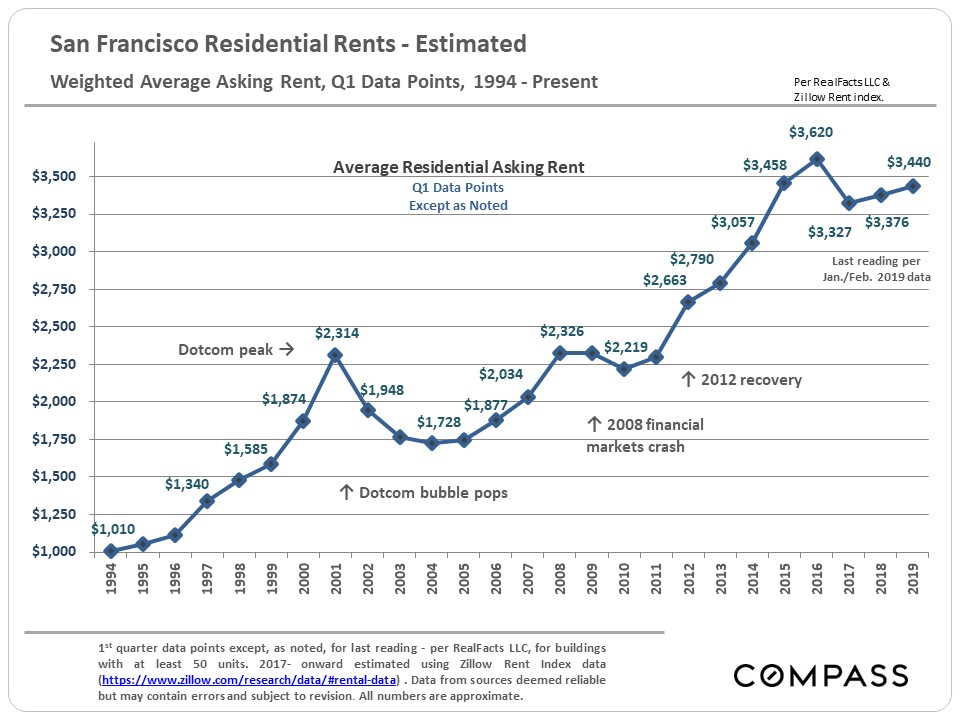
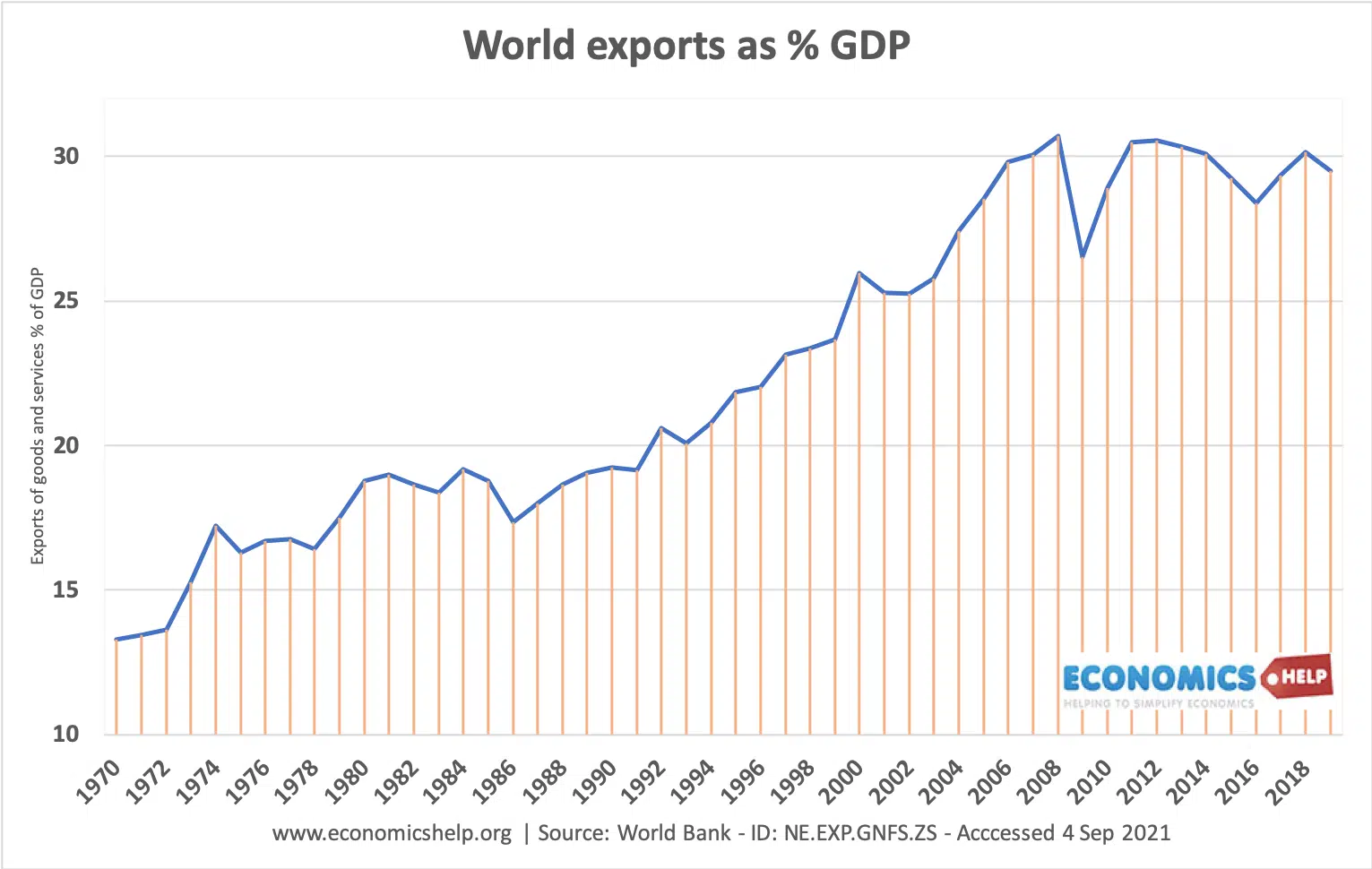
Also a trip to the grocery store appears to cost me 50% more now for essentially the same goods. Every trip to the store pre-covid cost me around $100, now its $150. I do buy primarily proteins so that is the source of the increase but to ignore that seems ill advised.
Not generally a conspiracy theorist but unless the people that built this report are using some accepted formula that is very different than the real world this report seems to be intentionally underselling inflation.